
Distribution Center Roofing in Topeka, KS
Home / Property Types We Roof / Distribution Center Roofing
A leak above a sort line or shipping lane changes the sequence before it changes the membrane. We locate the water path, protect the affected operation, and mark the roof area that needs testing. Central Crossing Commerce Park connects rail, road, and airport access and includes distribution uses; Harlan Industrial Park also supports freight-oriented development. Neither fact tells us what roof is installed at a given address. We inspect the actual panels, seams, drains, and occupied zones before fixing quantities.
Flow: How should the roof map match the operation?
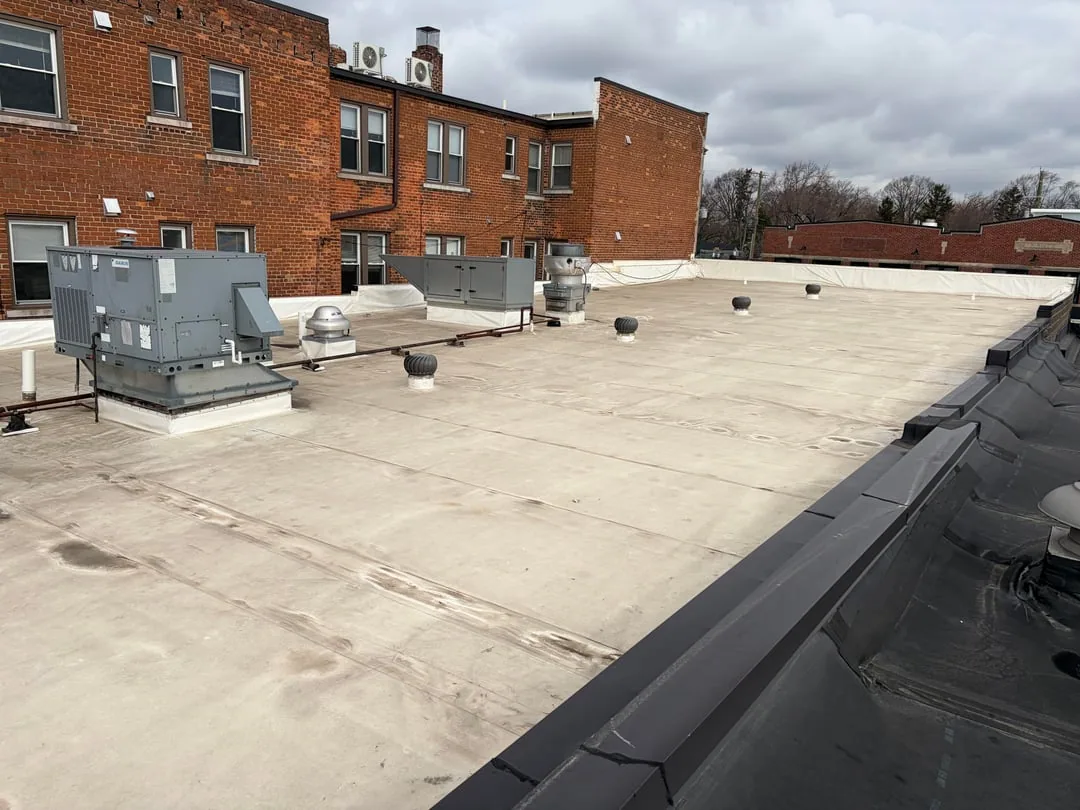
A distribution building may have separate dock, storage, office, and equipment zones. We map leak reports to those areas and mark drains, curbs, skylights, expansion joints, and roof transitions. A commercial roof inspection gives the facility a roof-zone record instead of a list of unrelated ceiling stains. Plans and site orientation help the crew reach a test area without crossing active work unnecessarily.
Central Crossing has named occupants in distribution, retail fulfillment, and food production, with direct BNSF rail service. That mix makes delivery timing and access a real local planning concern. We confirm the specific property's truck routes, staging space, escort rules, overhead obstructions, and approved roof access. We do not infer a tenant's schedule from the park roster. The facility contact defines which dock or aisle must stay available during roofing work.
Where racking or conveyance runs below the roof, interior protection and aisle closure need to be clear before the crew opens a section. We identify who moves or protects inventory and who can release a work zone. If a lift or crane blocks a shipping route, the schedule should name the delivery window and restoration time. These details control pace and labor more than the roof area alone.
Leaks: Where should the water path be checked?
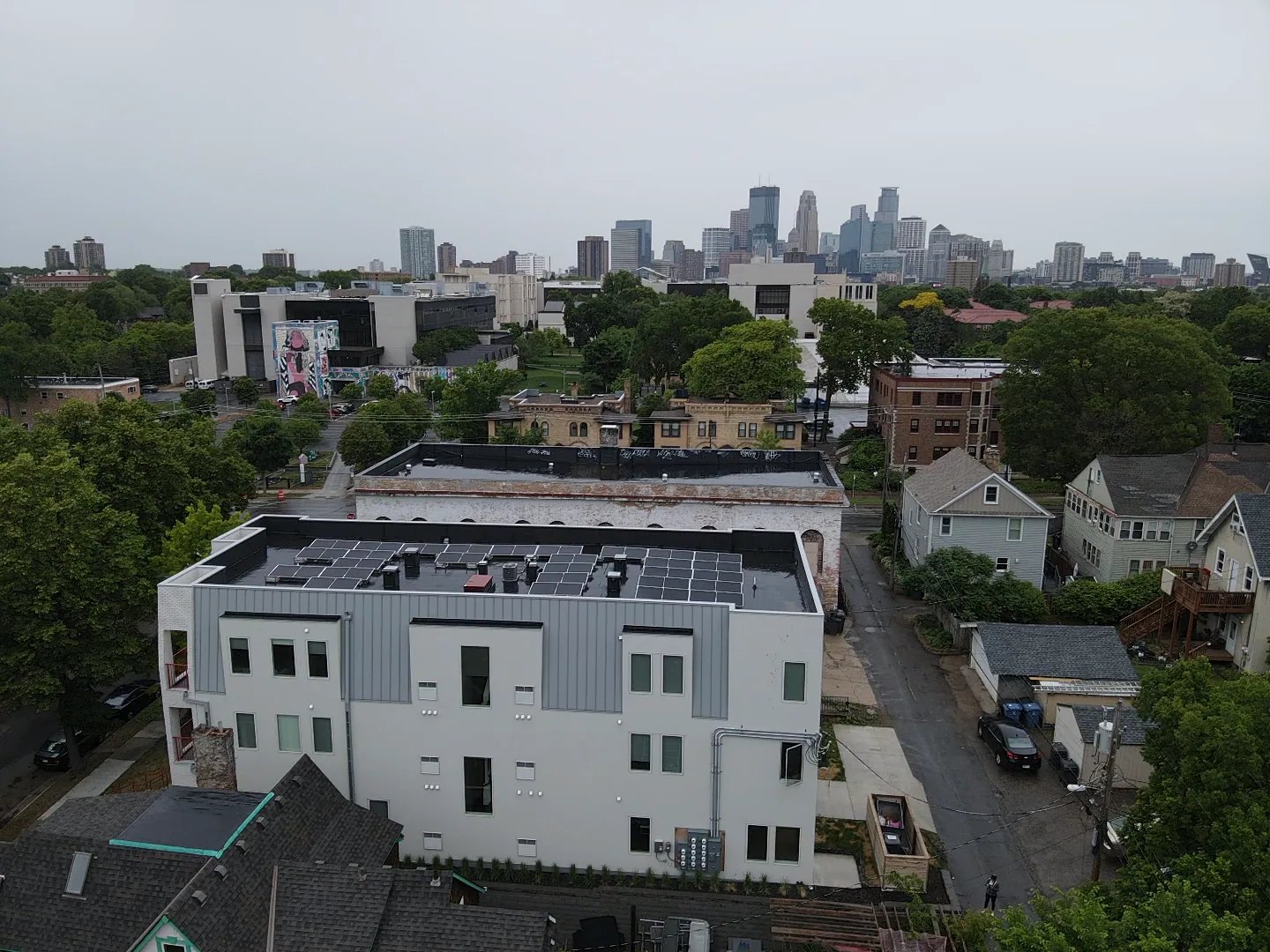
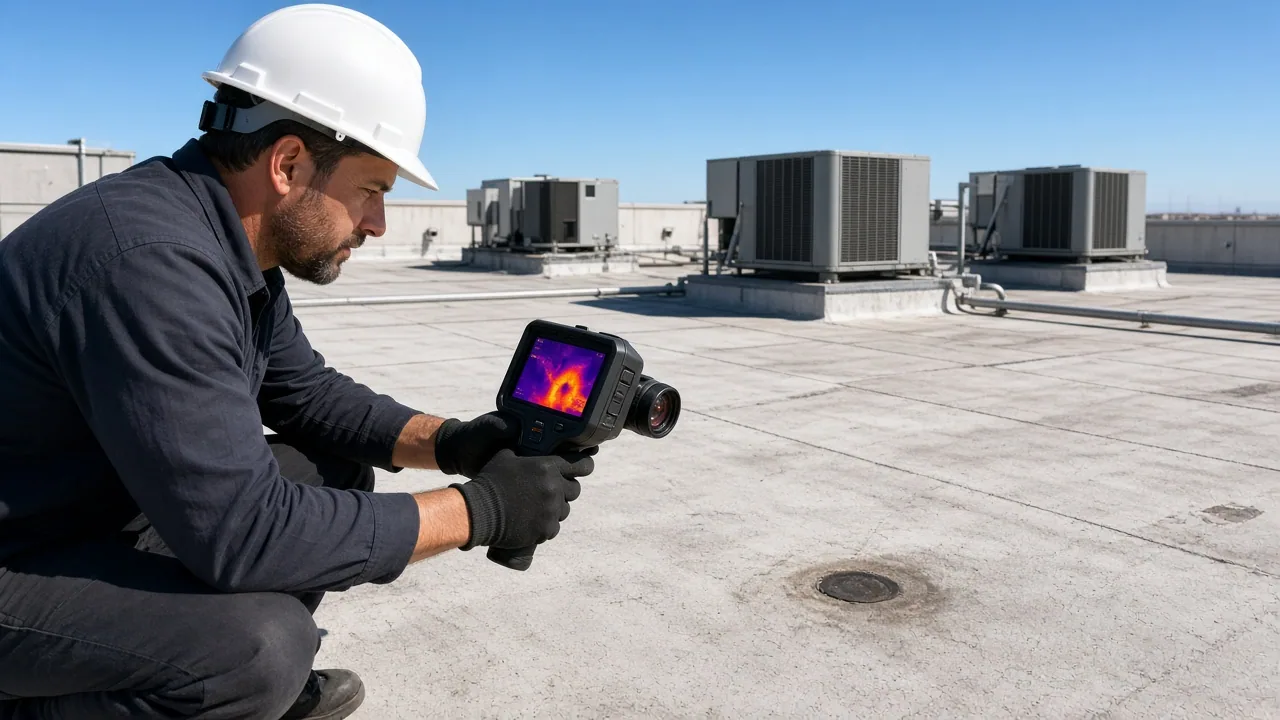
Water can move across a deck or insulation before it reaches a conveyor, office, or dock. We compare the reported time and location with slope, seams, drains, curbs, and previous repairs. An infrared moisture survey can identify suspect areas when readings are interpreted with roof details. Cores or other confirmation may be needed before setting a removal allowance.
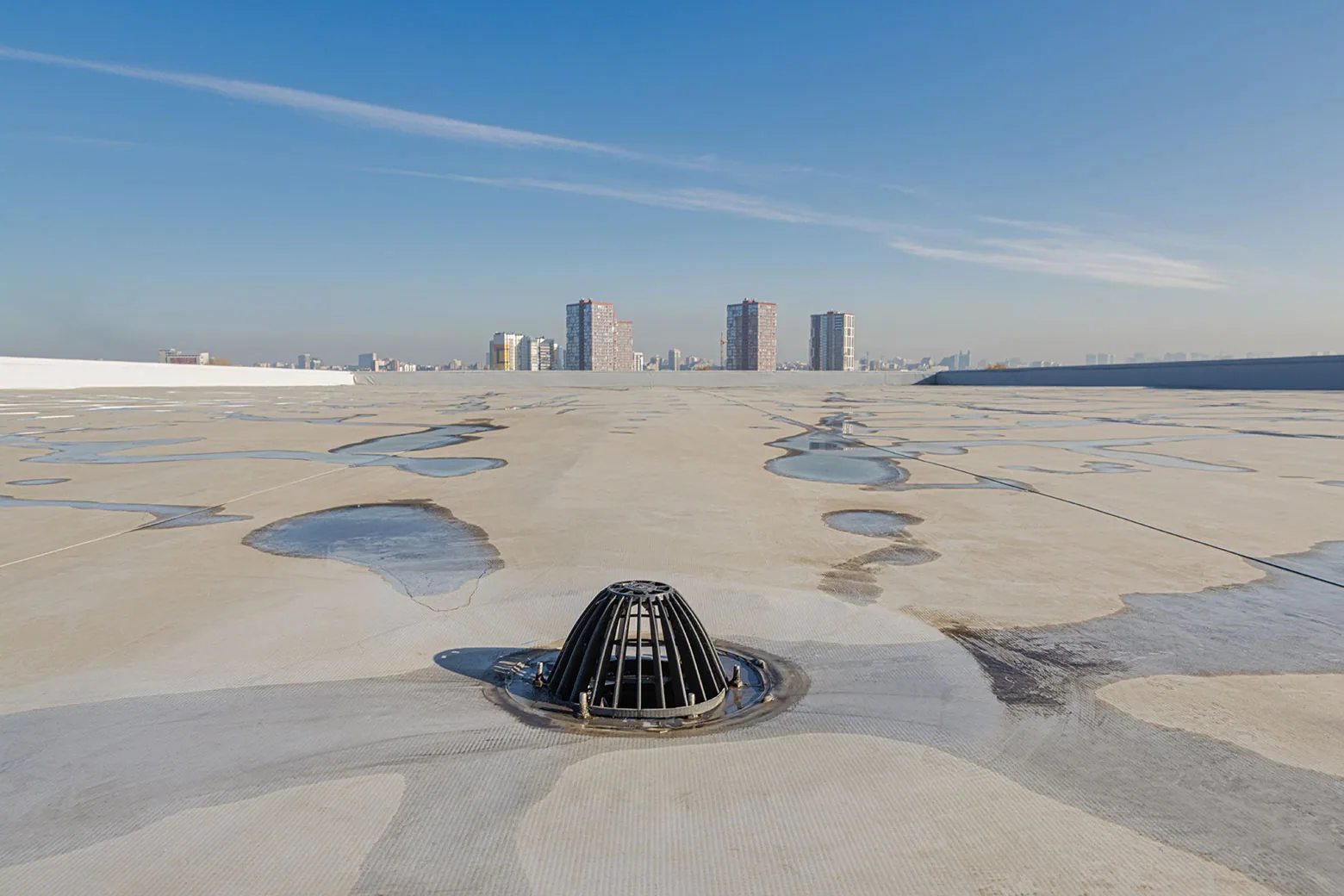
Topeka’s summer storms can test edge metal, laps, and drainage, while winter precipitation creates a separate meltwater and access concern. We check outlet condition and whether water remains after drainage has cleared. A drain and scupper review can distinguish a blocked outlet from a membrane or flashing defect. We record the visit conditions and avoid calling a brief wet patch ponding without observing it persist.
For active water, our emergency response runs around the clock, including nights and holidays. We can protect an affected area and document immediate conditions, then return to complete permanent repairs when the roof is safe and materials can be installed correctly. The emergency report separates mitigation from the final repair boundary, so temporary protection does not get mistaken for a completed roof detail.
Repair: What can be done in a released zone?
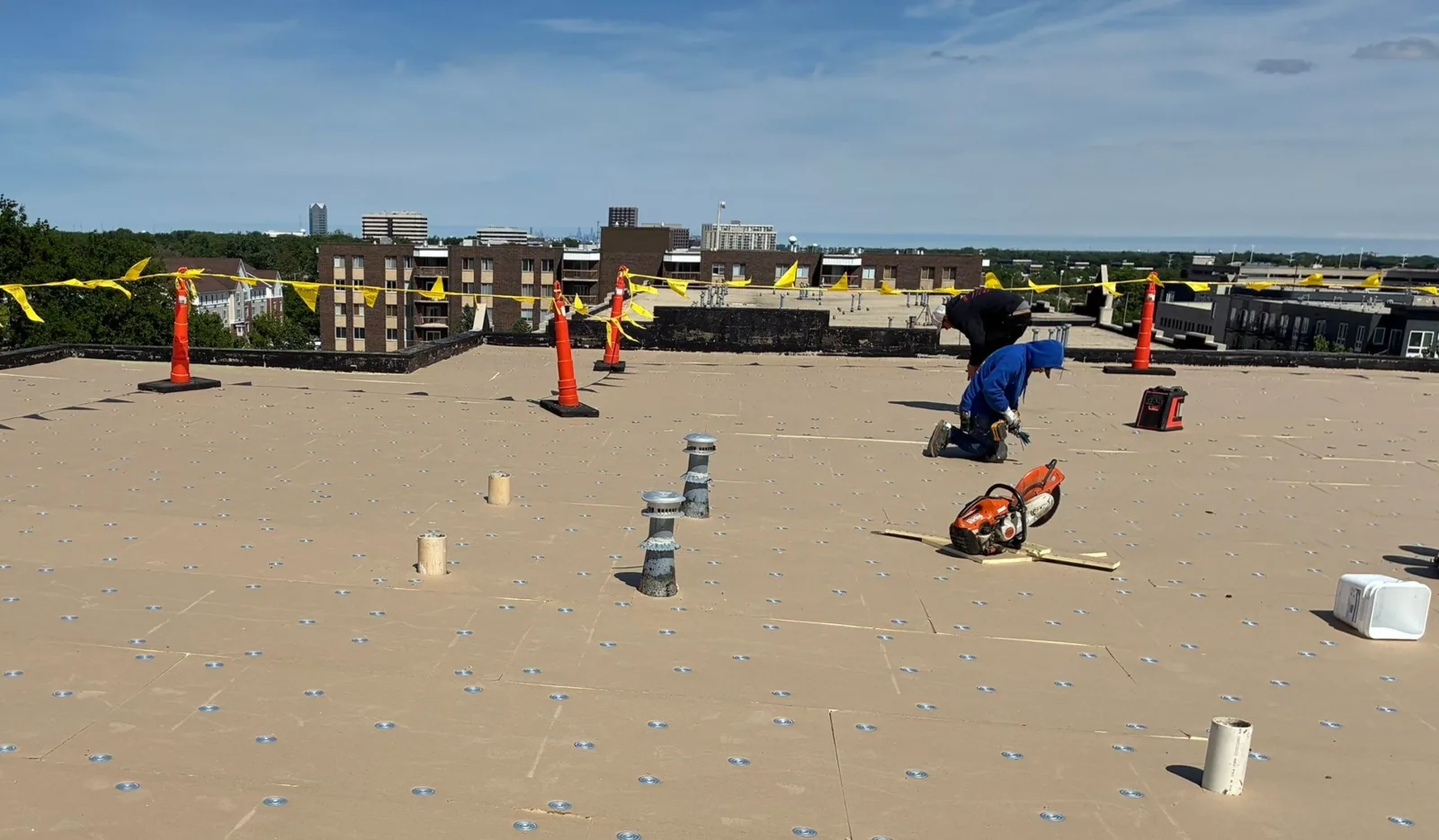
A localized seam, curb, flashing, or drain repair may be possible when nearby membrane, insulation, and deck remain sound. The scope identifies the zone, quantity, access route, and closeout check. A commercial roof repair plan should state what gets removed, which compatible materials are installed, and how the crew leaves the roof at shift end.
We sequence work so only the released area is open. The daily tie-in needs to shed water and remain secure before the next shift or weather change. If an inspection opening shows wet insulation, damaged deck, or a defect extending beyond the marked boundary, work pauses for an owner decision. The facility can then weigh the added quantity against the cost of a separate repair phase.
On a distribution center, access staging and interior safeguards can influence timing as much as repair size. A clear roof map helps separate one dock zone from another and directs protection below. We record material delivery, equipment placement, any temporary closures, and the area available to receive the crew. The proposal should identify whether after-hours access or a shutdown is included rather than assume it.
Replacement: When does a wider plan make sense?
Multiple leaks in separate areas, wet insulation across a roof zone, widespread attachment problems, or recurring edge failures can justify a larger review. A replacement assessment compares tear-off, recover eligibility, insulation, drainage, transitions, and operational phasing. We identify where testing supports quantities and where the proposal carries a concealed-condition allowance.
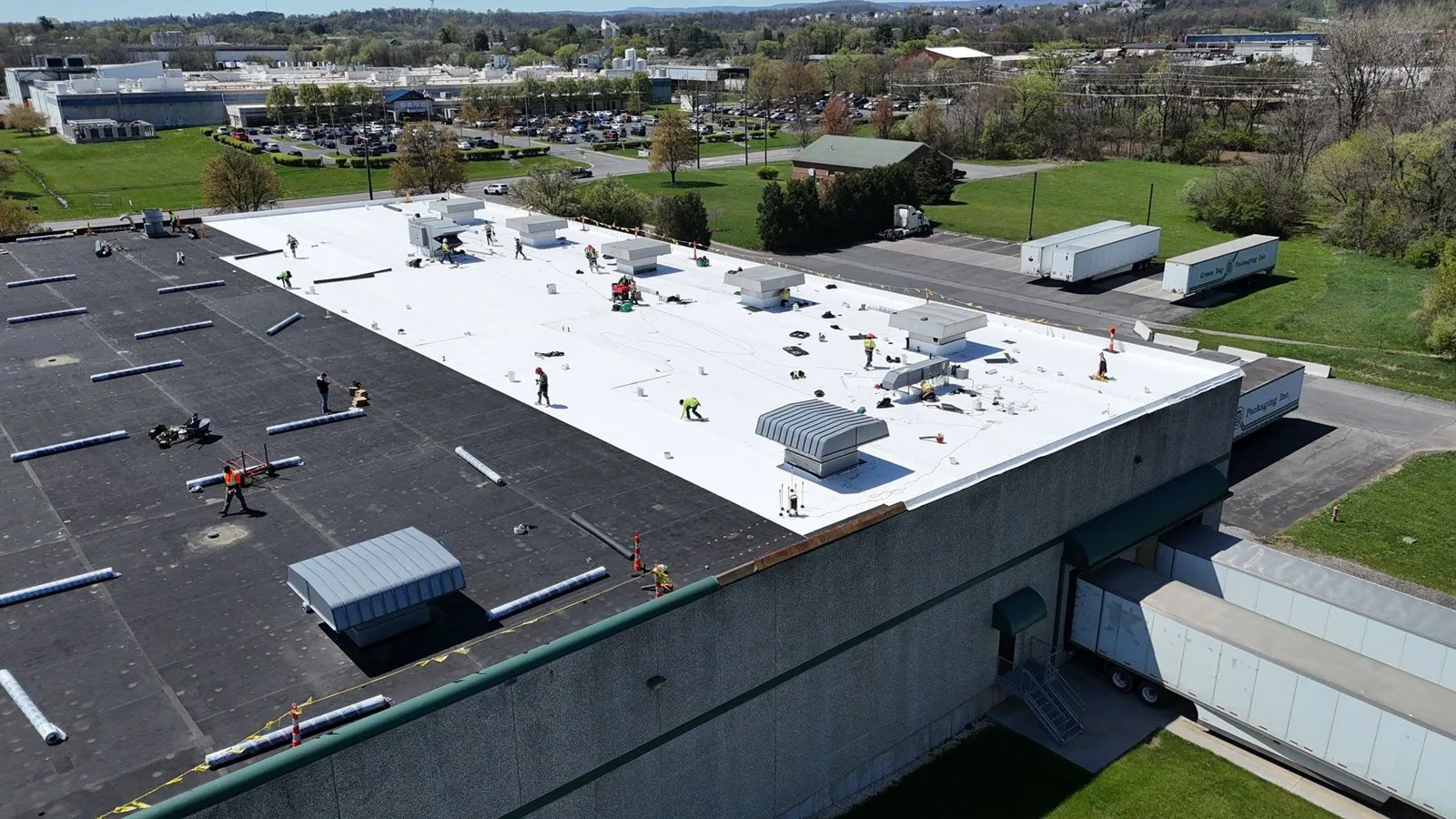
Distribution-center roofs can be compared with a warehouse roof or cold-storage roof scope when the building's use calls for different access or interior controls. Roof selection still follows the installed assembly, structural review, fire and wind criteria, drainage, and project requirements. A TPO system or other membrane should not be selected from a building label alone.
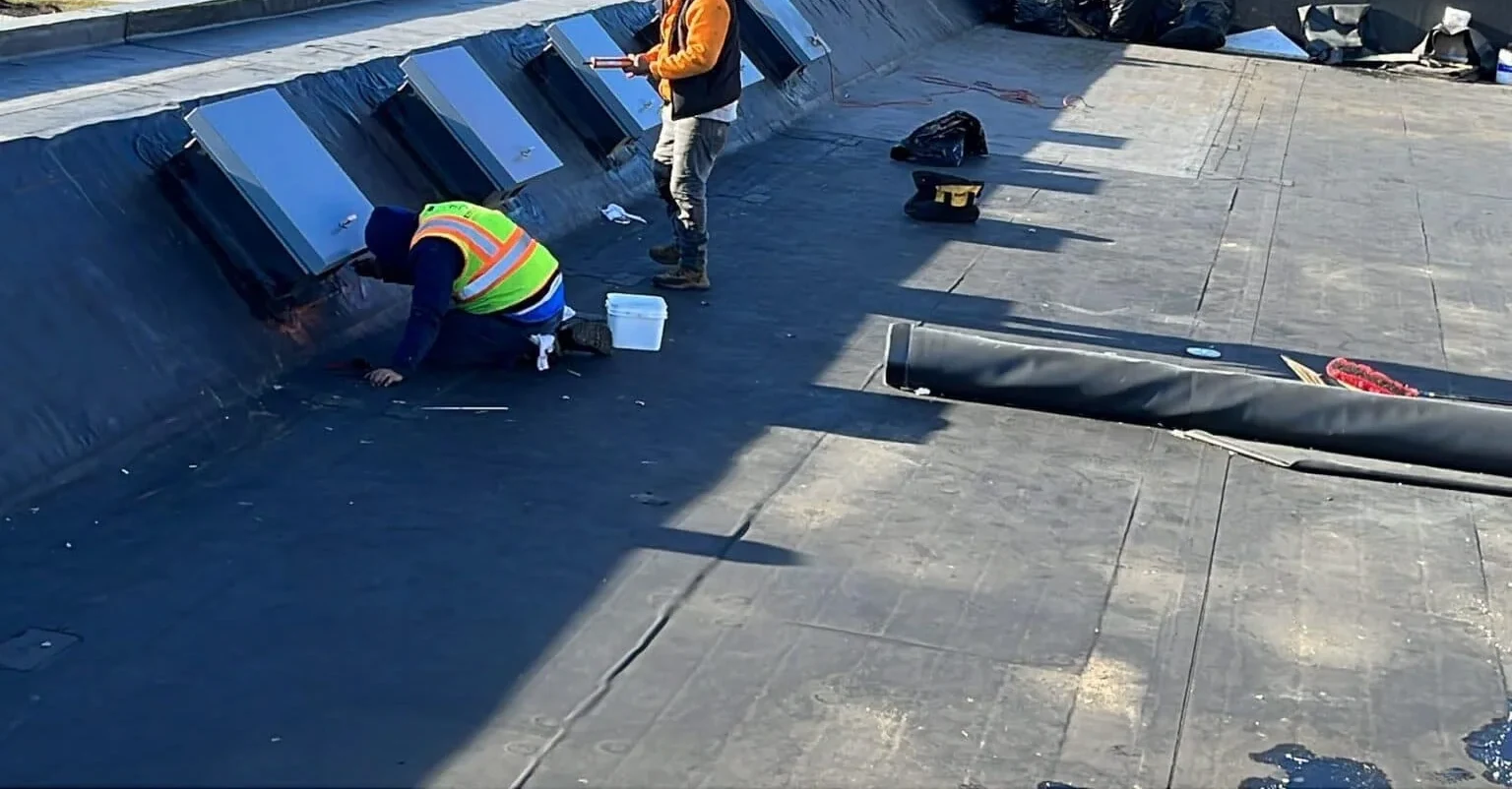
Replacement timing depends on procurement, equipment shutdowns, dock availability, weather windows, and whether occupied areas can be isolated. We plan the work by roof zone and specify protection at every daily stopping point. The owner sees the sequence, decision points, and what operations must provide before the crew arrives. That makes a large reroof measurable and schedulable.
Cost and timing: What drives a distribution roof proposal?
Cost depends on roof height, access, transitions, equipment density, wet-area testing, material removal, and protection below. Dock constraints can add setup or phasing needs. We separate confirmed quantities from estimated concealed work and identify the unit or allowance that applies if removal finds a larger problem. Field dimensions and a marked plan are the basis for comparison.
The schedule includes delivery, staging, escorts, roof release, weather hold points, and daily closeout. Harlan Industrial Park's proximity to I-70 and rail access shows the region's freight context, but each facility's rules control actual logistics. We confirm the address-specific route with management. If deliveries require a limited window, the plan identifies where material can be staged without obstructing operations.
Topeka averages about 36.5 inches of annual precipitation. We account for forecast risk in the sequence and keep a stop point before opening a section that cannot be closed securely. When the roof is wet or icy, safe access may require delay. We report schedule changes by zone, with the remaining tie-in and owner decision stated plainly.
Handoff: What should the facility team keep?
The closeout file should include the roof-zone map, leak chronology, photos, test locations, repair dimensions, materials, and any excluded area. The crew documents protection below, daily tie-ins, and the final check. We identify areas where access was blocked or testing remains incomplete. A facility manager can then match a new report to the actual work rather than a broad site label.
After completion, compare recurrent ceiling symptoms with the last repair zone and nearby transitions. If the roof was replaced in phases, keep each phase's product and detail record. A new leak does not automatically prove a roof-wide failure. The location and timing help determine whether to inspect a seam, drain, curb, or area outside the completed phase.
The property contact signs off on released work areas and confirms any remaining protection or maintenance item. Record who accepted the zone and whether a follow-up inspection is scheduled. A clean handoff helps shipping and facility teams understand what changed without interrupting the next operating cycle.
Commercial Roofing Questions
Can distribution-center roofing happen without stopping shipments?
Phased work can preserve released routes when the roof and operation allow it. We coordinate dock schedules, aisle protection, staging, and daily tie-ins with the facility contact.
What happens when a leak is above inventory or a conveyor?
We plan interior protection and identify a safe zone before opening the roof. Emergency response is available around the clock, followed by a measured permanent-repair scope.
How do you price a large distribution roof?
We measure roof zones, details, access, wet-area tests, and protection needs. Concealed conditions are listed separately with a clear owner decision point.
Does a distribution building need a special roof system?
The use affects phasing and protection, but the system depends on assembly, structure, drainage, fire and wind criteria, and project requirements.
Can you inspect a distribution roof after hours?
Yes. Emergency response is available at any hour, including holidays. Planned surveys are scheduled with roof access, escorts, and operating controls confirmed.
Related Roofing Work
Commercial Roof Inspection
Commercial Roof Infrared Moisture Survey
Commercial Roof Drains and Scuppers
Commercial Roof Repair
Commercial Roof Replacement
Warehouse Roofing
Coordinate roof access with the shipping schedule
Service Area
Topeka, Auburn, Silver Lake, Carbondale, Rossville and Shawnee County, KS
Quick Contact
Email: [email protected]
Phone: 555-555-5555
Request a Roof Assessment
Send the Topeka facility address, roof plan, leak locations, dock hours, escort rules, and recent repair records. We will map zones and identify what can affect scope or timing.