
Commercial Roofing at Kanza Fire Commerce Park, Topeka, KS
Home / Service Areas / Kanza Fire Commerce Park
Food manufacturing at Kanza Fire Commerce Park puts roof access, interior protection, and operating windows into the scope discussion. The park is the Topeka site of Mars Wrigley's campus. Project records describe a 150-acre site with a 550,000-square-foot food-grade manufacturing building and seven structures for production, administration, utilities, and rail-related functions. Those facts define property context, not roof type or condition. We inspect the address-specific assembly, locate the water path, and measure any repair boundary before choosing between local correction, testing, or a larger project.
Production planning: What should be coordinated first?
We confirm the building contact, roof release, work hours, production periods, delivery routes, and any area that must remain in service. A food-grade operation may require specific interior protection, debris controls, or shutdown coordination, but the property representative confirms applicable procedures. We do not assume the same rules across all seven structures. The work plan identifies which roof section can be reached, who approves opening the assembly, and how the area below will be protected.
Production, administration, utility, and rail-related structures can present different roof questions. We review the building plan and identify equipment curbs, penetrations, drainage, and transitions that affect each section. If the roof is accessible only between shifts, the estimate should state what can be completed in that window and whether a second visit is likely. A phased work sequence can keep operating areas protected while crews address separate zones.
A leak during production may require immediate interior protection before permanent work can proceed. We document temporary mitigation, the reported room, roof zone, and next test. Emergency roof service can respond outside a normal shift, including nights and holidays, to limit exposure. A permanent repair still depends on compatible materials, safe access, and suitable surface conditions.
Roof inspection: What does each structure require?
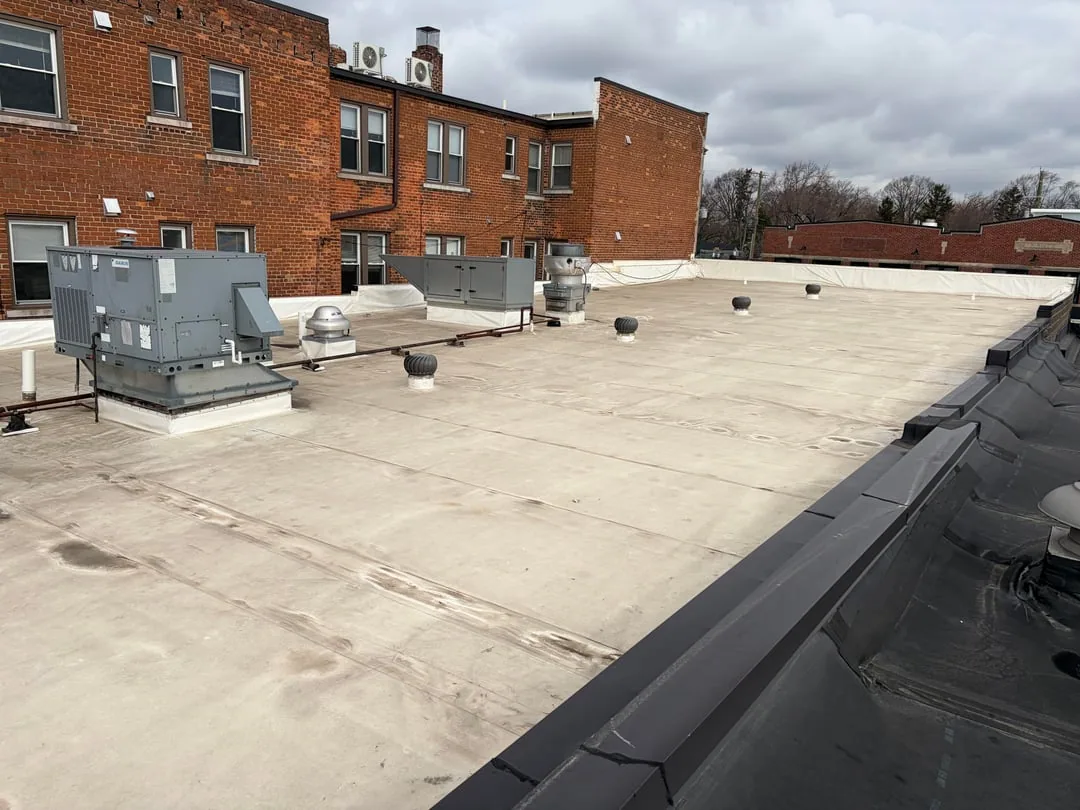
We inspect membrane or metal surfaces, seams and laps, penetrations, curbs, drains, scuppers, edge metal, and previous patches. The project information names seven structures but does not establish their individual roof systems or dimensions. We map each building and roof section separately. A commercial roof inspection records what was visible, where testing occurred, and which areas could not be reached. That prevents findings on one structure from being assigned to another.
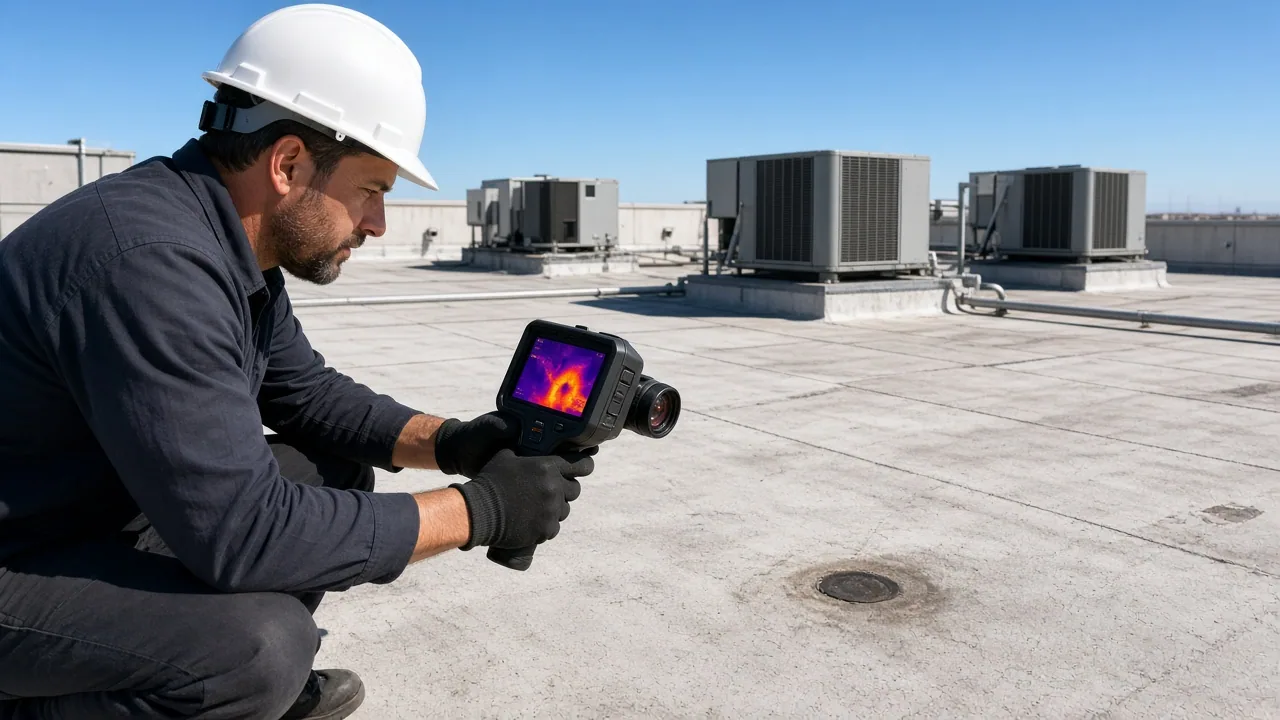
Interior signs are matched to roof details above and around the reported area. Water can move along a deck or insulation layer before it appears in a room. We check drain bowls, low areas, curb corners, seams, and wall transitions, then trace a likely route. If concealed moisture could change the quantity, we identify an infrared survey or test opening. Moisture screening can direct testing, while the report keeps confirmed results separate from untested conditions.
Warm-season storms and winter precipitation both narrow the roof work window in Topeka. Drainage deserves review after water clears and before freeze conditions. We check outlets, overflow paths, and nearby details without assuming that temporary ponding means a membrane failure. A drain obstruction, wet insulation, and an open seam are different conditions and may need different work.
Storm check: How is event evidence recorded?
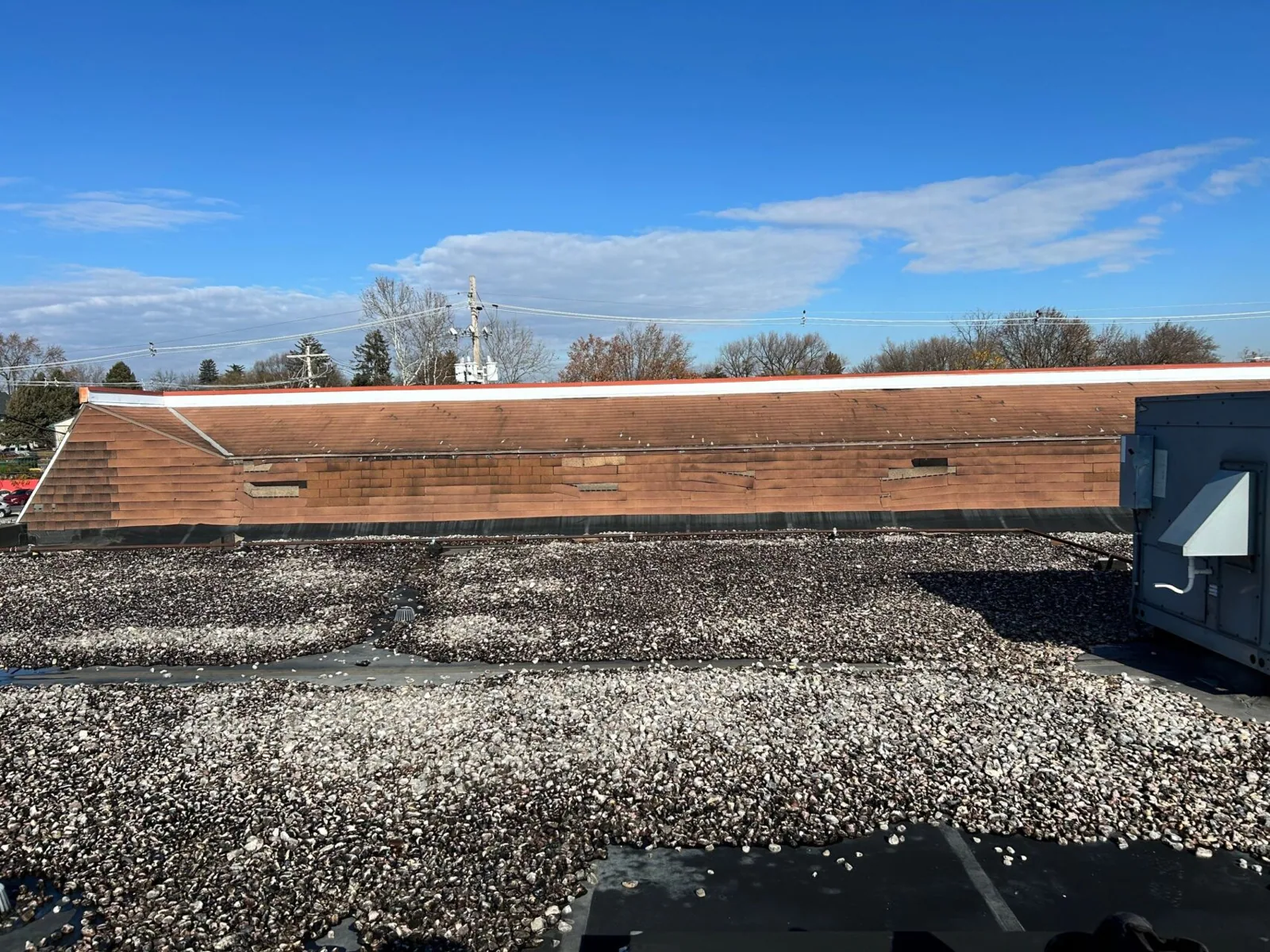
Northeast Kansas has recorded severe hail and wind. For an inspection request at Kanza Fire, we compare the assigned structure with dated photos and prior repairs. We document impact marks, punctures, lifted edges, displaced flashings, and rooftop equipment conditions, comparing each finding with dated photos and prior repairs. A storm damage review separates event context from address-level evidence.
Wind-related conditions can involve edge metal, terminations, and attachment. Hail can affect membrane or roof accessories. We inspect where damage is visible and note surfaces that could not be reached. If operations limit access, we state what remains unconfirmed and what return visit would answer the question. Repair quantities follow the roof sections inspected, not the general severity of weather in the region.
Winter precipitation also affects roof access and drainage. If ice makes a hands-on review unsafe, we record the limit and schedule a safer return. Drainage and overflow routes should remain clear, but we confirm the condition on site. The owner receives photos, locations, test results where performed, and a list of open questions.
Repair: What can be corrected locally?
When a curb corner separates from otherwise sound membrane, we can measure that connection as a local repair candidate. We prepare to a compatible surface, restore the detail, and inspect the finished work. If testing finds wet insulation, the repair boundary may extend to dry material. If a test is dry around an isolated defect, a focused repair may be a reasonable option. We measure quantities and identify concealed layers that have not been opened.
Repeated leaks, moisture across several sections, brittle membrane, or failed attachment may support a broader replacement review. We examine deck, insulation, cover board, slopes, drains, curbs, and edges before considering recover or new construction. The 550,000-square-foot figure in the project record refers to the manufacturing building, not roof area; field measurements set the work quantity. A recover evaluation checks attachment, moisture, and applicable requirements before proposing another layer.
Cost drivers include access, roof height, staging, material handling, interior protection, test openings, wet insulation, edge work, and drain repairs. We list confirmed work separately from conditions that could change once opened. For several structures, each estimate names the building and roof zone. The owner can compare local repair, further testing, and replacement without merging separate scopes.
Closeout: Which records help future maintenance?
Keep the building identifier, roof-zone map, inspection date, system notes, access instructions, photos, repair dimensions, and test results in the closeout file. Separate temporary protection from permanent correction. Mark inaccessible or untested sections and state what is needed to review them. That record helps production and facilities staff compare a later report with the same roof detail.
Central Crossing Commerce Park and Harlan Industrial Park are other Topeka locations with industrial context, but their roof conditions and access requirements do not transfer to Kanza Fire. For a local comparison, the Central Crossing Commerce Park fact record identifies distribution and food-production occupants. Each property still needs its own inspection. A dated condition report preserves findings by building and tested section.
For roof service at Kanza Fire, send the structure address or identifier, current concern, access contact, and available roof records. We will confirm the work window, inspect the affected zone, and document a measured repair or testing scope.
Food manufacturing can involve production continuity, roof exhaust, service penetrations, and interior protection around active equipment. Before a lift or test opening is requested, facility staff identify what can pause, which areas may remain in operation, and who can approve a schedule change. We include those constraints in daily work sections rather than assume the property shares one work window. At closeout, each structure keeps its own repair map and list of conditions left for follow-up.
Commercial Roofing Questions
Does the manufacturing campus have the same roof system on every building?
The project record identifies seven structures but not their roof assemblies. We verify each building from available plans and field evidence, then keep its repair history separate.
Can roof work happen during food production?
The facility contact sets protection and operating requirements. We coordinate the work zone, debris control, delivery route, and work window before opening the roof.
Does the campus building area equal the roof area for estimating?
No. The published project area is building space, not a roof measurement. We measure roof sections in the field and account separately for slopes, edges, and penetrations.
What if a leak appears during a production shift?
We can provide emergency response and document temporary protection, then arrange testing or permanent repair when access and roof conditions support the work.
How do you separate storm damage from older wear?
We record observed punctures, impact, displacement, previous patches, and dated photos. The regional event archive provides context but does not assign damage to a specific structure.
Related Roofing Work
Occupied Commercial Building Reroofing
Emergency Commercial Roof Repair
Commercial Roof Inspection
Commercial Roof Infrared Moisture Survey
Storm Damage Roof Repair
Commercial Roof Recover Overlay
Coordinate a production-safe roof review
Service Area
Topeka, Auburn, Silver Lake, Carbondale, Rossville and Shawnee County, KS
Quick Contact
Email: [email protected]
Phone: 555-555-5555
Request a Roof Assessment
Provide the Kanza Fire structure address, current roof concern, facility contact, and any access or production restrictions. We will map the inspected section and define tested repair options.