
Warehouse Roofing in Topeka, KS
Home / Property Types We Roof / Warehouse Roofing
A dark ceiling mark beside a warehouse drain calls for a water-path check before anyone opens the roof. We compare the interior report with the drain bowl, low area, seams, and insulation, then mark what can be confirmed. Topeka’s Harlan Industrial Park is designated for light-industrial use near I-70, while airport-area tenant uses include warehousing and freight. Those corridors describe the market, not any one building’s roof. The repair boundary comes from field conditions, access, and the tested section.
Assembly: What should the warehouse survey identify?
Warehouse roofs may use TPO, PVC, EPDM, modified bitumen, built-up, metal, or a coating over an existing assembly. We identify the visible system, transitions, rooftop units, drains, and previous repairs before selecting a method. A commercial roof inspection can map seams, penetrations, edge details, and suspect areas by roof zone. Drawings help, but field dimensions determine what is installed today.
Large roof areas can hide changes in slope, attachment, and prior overlays. We separate what is visible from what requires a test opening or moisture confirmation. At a sample location, the report records roof layers, deck or insulation observations, and the repair used to close the opening. One test point does not establish conditions across the full building. If a leak is active, we also identify interior protection and the safest route to the affected area.
Equipment curbs, skylights, expansion joints, and wall terminations interrupt the field membrane. We inspect their corners, flashing height, fasteners, and nearby drainage. A leak at a curb may need a detail repair even when the field membrane looks sound. If access to a section is blocked by stored material, equipment, or an unsafe route, the survey lists that limitation and the return access needed to complete the review.
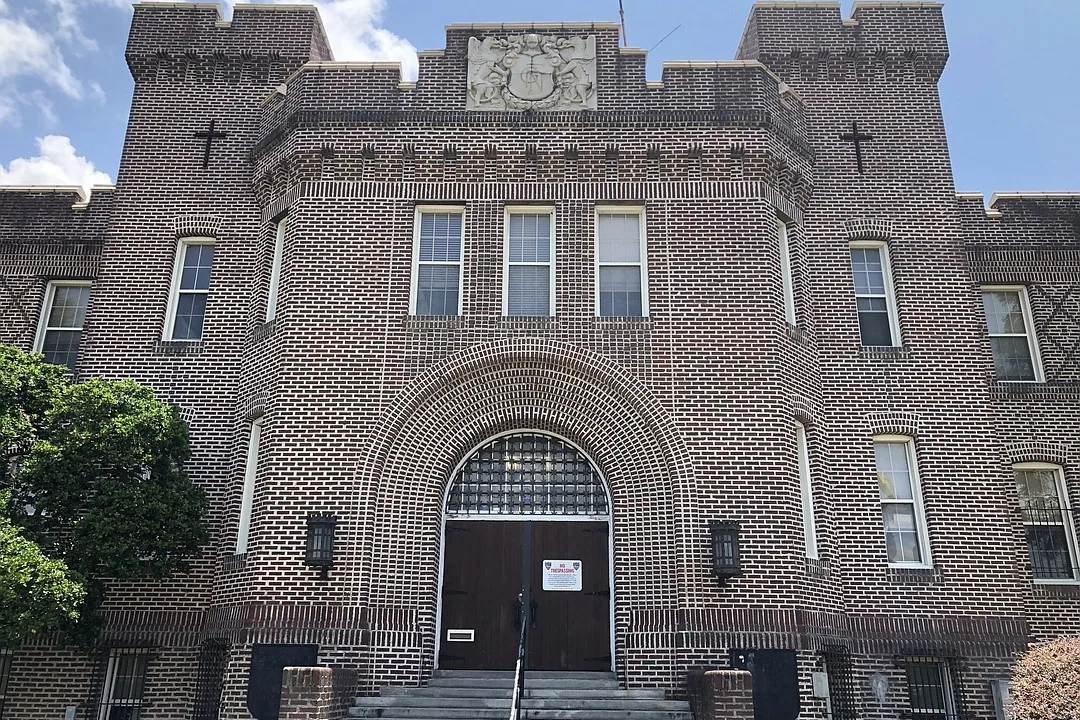
Water path: Where can a warehouse leak travel?
Water may move beneath a membrane or along the deck before it appears over a rack, office, or loading bay. We record the room, ceiling location, date, and conditions reported, then compare them with drains, seams, curbs, and roof slope. An infrared moisture survey can help locate suspect areas, with core or other confirmation where the result changes removal quantities. The report labels readings and tested limits.
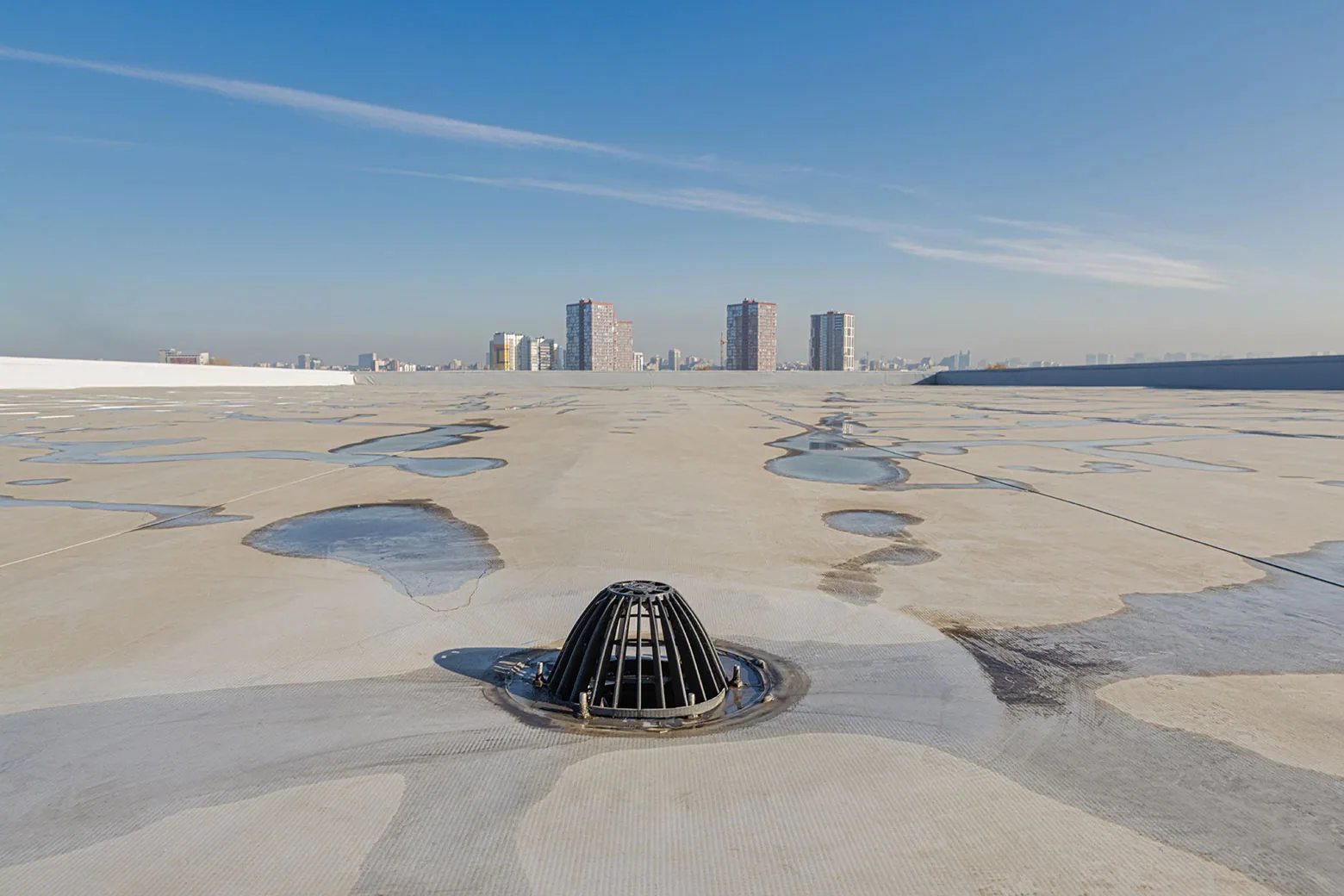
Topeka’s local climate includes summer thunderstorms and winter precipitation. We inspect whether an outlet is clear, whether water remains after the roof has drained, and whether a low area is affecting seams or insulation. A drain and scupper review can separate an outlet issue from a membrane defect. Snowmelt and freeze-thaw also make seasonal access relevant; an icy roof may need a scheduled return rather than an incomplete inspection.
Do not assign a repair area from the stain alone. We trace likely paths uphill and across the assembly, check prior patches, and confirm moisture where accessible. If the ceiling is dry during the visit, we note that condition rather than treating it as proof that the assembly is dry. A defined test plan helps the owner decide whether to patch, open a limited section, or investigate a wider area.
Operations: How can roof work fit around shipping?
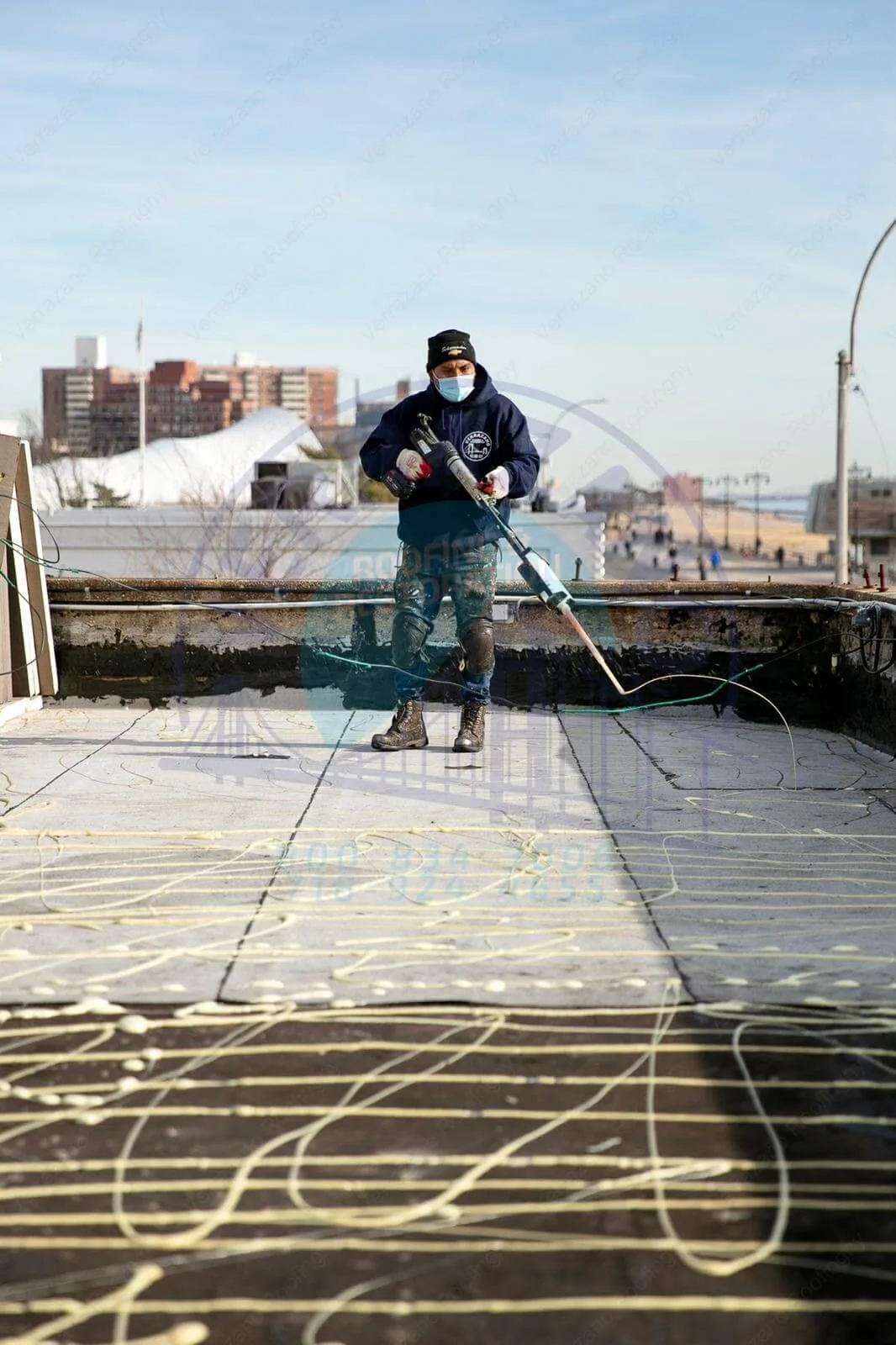
Warehouse schedules depend on receiving, dispatch, inventory, and safe movement below the roof. Before mobilizing, we confirm loading hours, restricted aisles, lift routes, overhead clearance, and whether interior protection is needed. A phased reroof plan identifies which roof zone can be opened, how it will be secured at shift end, and who releases each work area.
Central Crossing Commerce Park has direct rail service and named distribution and manufacturing occupants. Those logistics operations make staging and delivery planning a practical concern across the market. For each warehouse, we confirm the roof conditions and work access with its property contact. We coordinate with the actual property contact about truck access, material drops, escorts, and fire or safety controls. If an interior aisle must remain open, we sequence work so protection and cleanup are complete before the next operating window.
Emergency leaks do not wait for a preferred shift. We can respond around the clock, including nights and holidays, to protect the interior and assess immediate roof conditions. Permanent repair still requires a compatible detail, suitable weather, and a safe work zone. The service note distinguishes emergency mitigation from the measured scope needed for lasting repair.
Before mobilization, map dock numbers, truck queues, forklift routes, roof access, and the area where debris or new material can be staged. A delivery path that works at one dock may interfere with another shift or tenant. The facility contact confirms which doors and fire lanes must remain available, while the field plan names the roof zone and lift location. If the loading plan changes, pause at the agreed weather-tight boundary and reset staging with operations before opening another section.
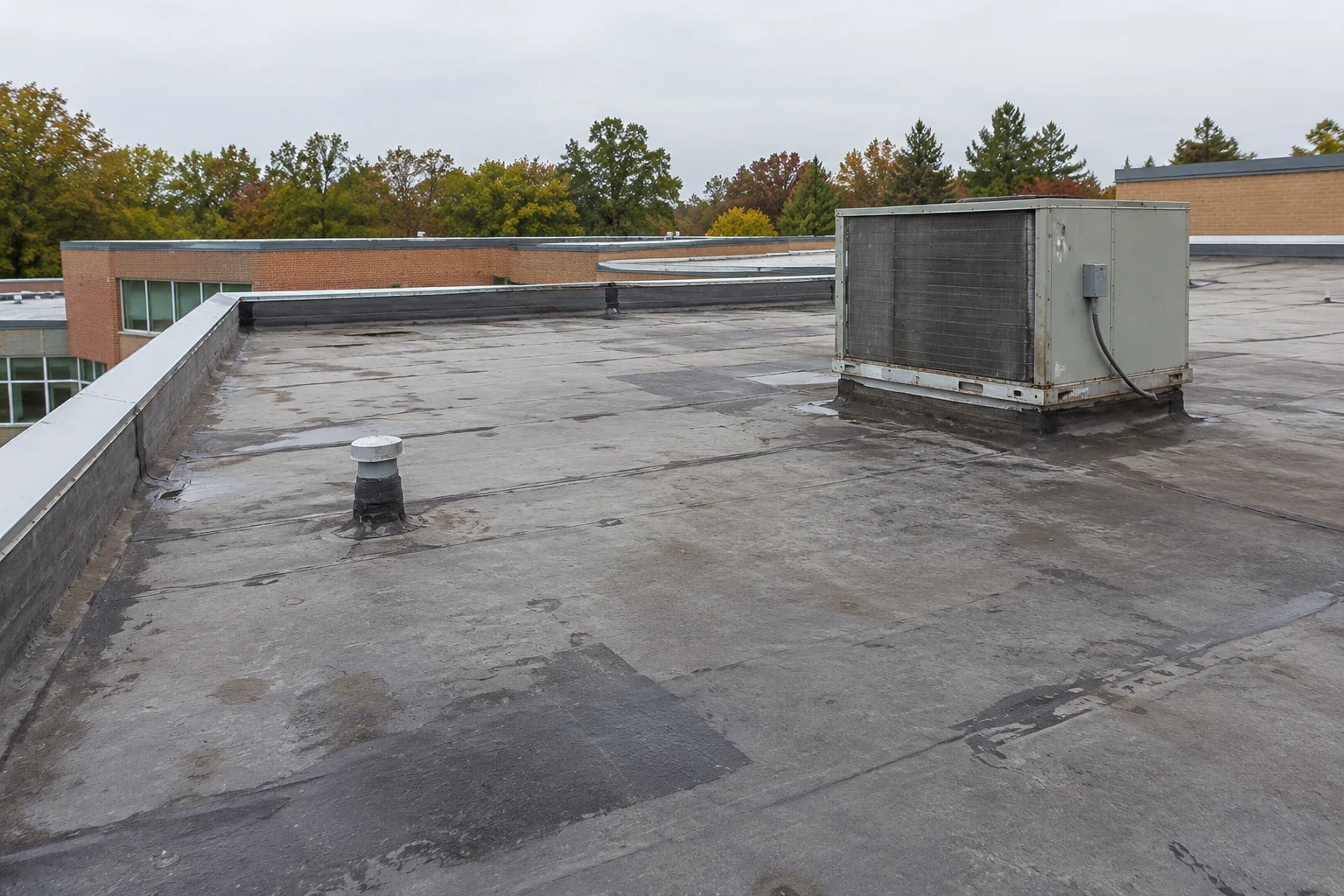
Options: When is repair enough for a warehouse roof?
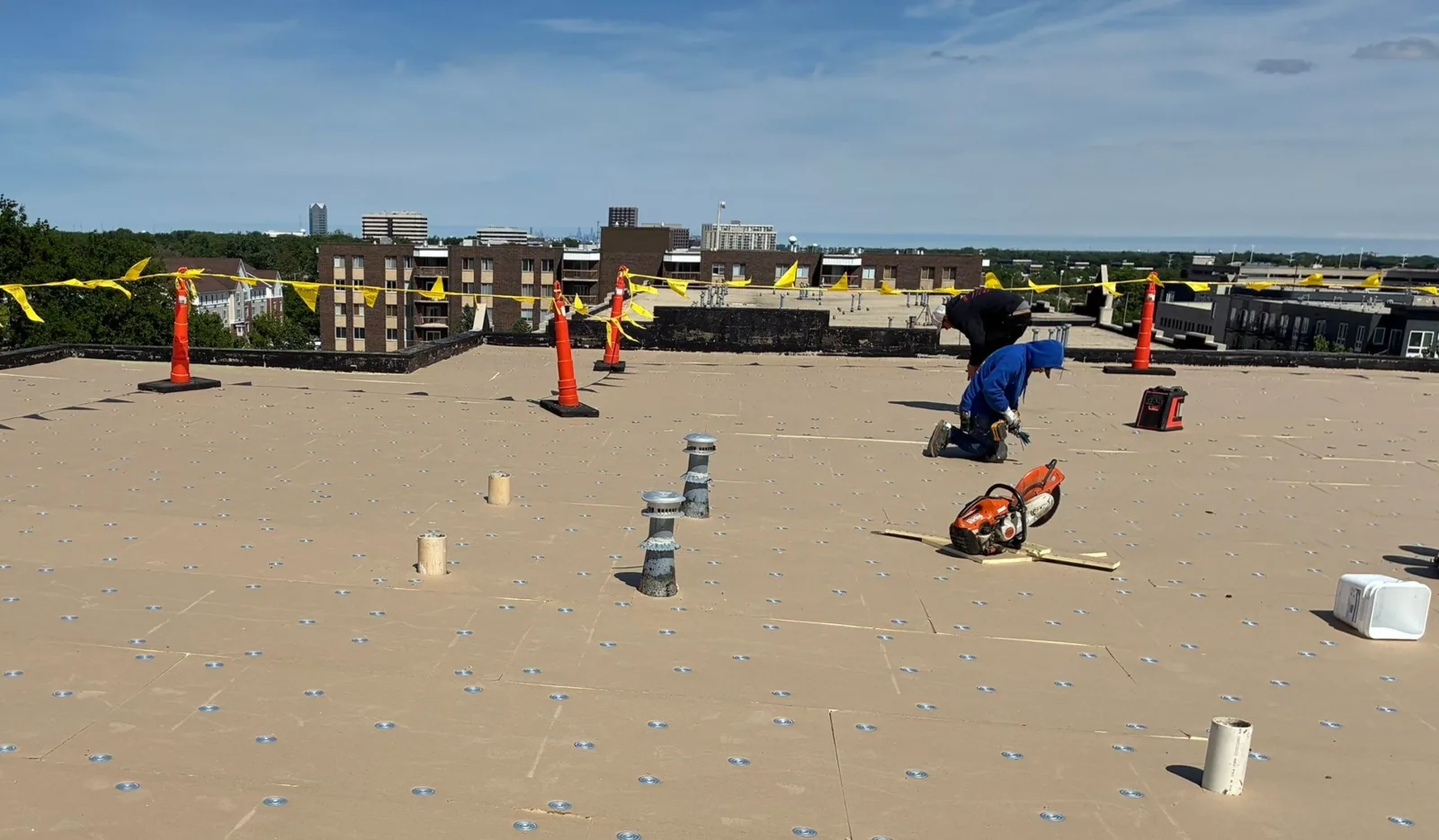
A localized seam, flashing, or drain repair may fit when adjacent membrane, insulation, and deck remain sound. We identify repair dimensions and any allowance for concealed material. A commercial roof repair proposal lists preparation, materials, closeout photos, and the condition that would trigger a pause for owner direction. Repeated leaks in separate roof zones may call for a broader survey.
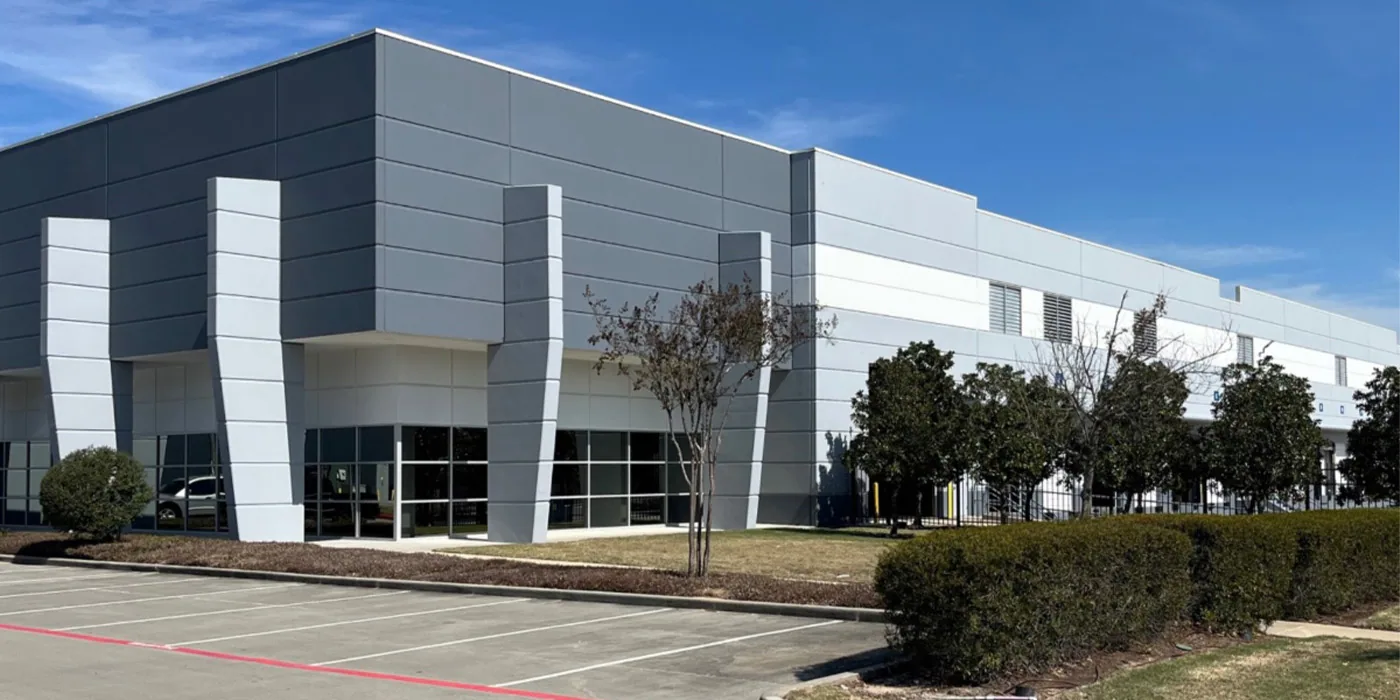
Wet insulation, widespread attachment failure, corrosion, or recurring water entry can support recover or replacement evaluation. A distribution-center roof or manufacturing-plant roof may have different work windows and interior controls. Systems such as TPO should be compared against the existing assembly, structural review, fire and wind criteria, and maintenance needs, not selected by surface appearance alone.
Cost and timing depend on access, roof height, number of details, wet-area confirmation, interior protection, and whether production can release a zone. We separate known quantities from concealed conditions. If opening the roof reveals damaged deck or moisture beyond the tested boundary, work pauses for a documented owner decision before quantities expand.
Record: What should the warehouse file retain?
Keep the roof plan, leak dates, inspection photos, test locations, repair dimensions, and any access restriction together. Mark completed and excluded areas separately. The file should show what materials were installed and whether the roof was checked after the repair. It should not suggest that inaccessible or untested zones were verified.
The Topeka Regional Airport business-center roster includes freight, trucking, distribution, and warehousing uses. A local example helps explain why access and delivery sequencing matter, but every facility sets its own requirements. The property contact confirms escort, roof release, staging, and work windows. We record those instructions with the work order so a future service call does not assume the same route or schedule.
After closeout, compare any new ceiling report with the mapped repair zone and nearby details. If the symptom returns, check the water path before extending a prior patch. A dated record makes the next inspection more useful and helps maintenance staff separate a new condition from work already completed.
Commercial Roofing Questions
Can a warehouse roof leak be repaired while shipping continues?
Often, with a zone plan and safe separation. We confirm loading hours, aisle protection, lift routes, and the work window before opening the roof.
How do you find a leak over stored inventory?
We map the interior location, inspect the roof features above it, and test suspect areas where results change the repair boundary. Protection is planned before opening.
When should a warehouse roof be replaced?
Widespread wet insulation, recurring leaks, or failed attachment can support replacement review. We document tested conditions and separate concealed allowances.
Can you respond after hours to a warehouse leak?
Yes. Emergency response is available around the clock, including holidays. We first protect the interior, then define permanent work from verified roof conditions.
What affects warehouse roofing cost and timing?
Roof height, access, drainage details, wet-area testing, material handling, interior protection, and operations phasing all affect scope and schedule.
Related Roofing Work
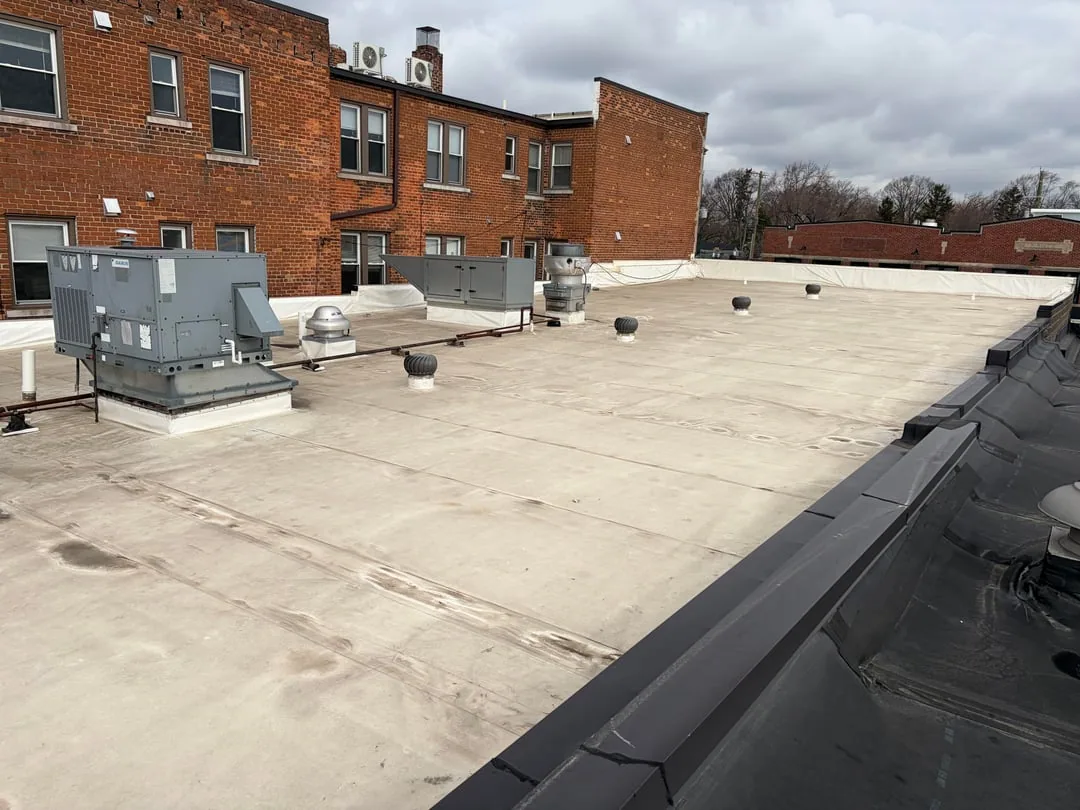
Commercial Roof Inspection
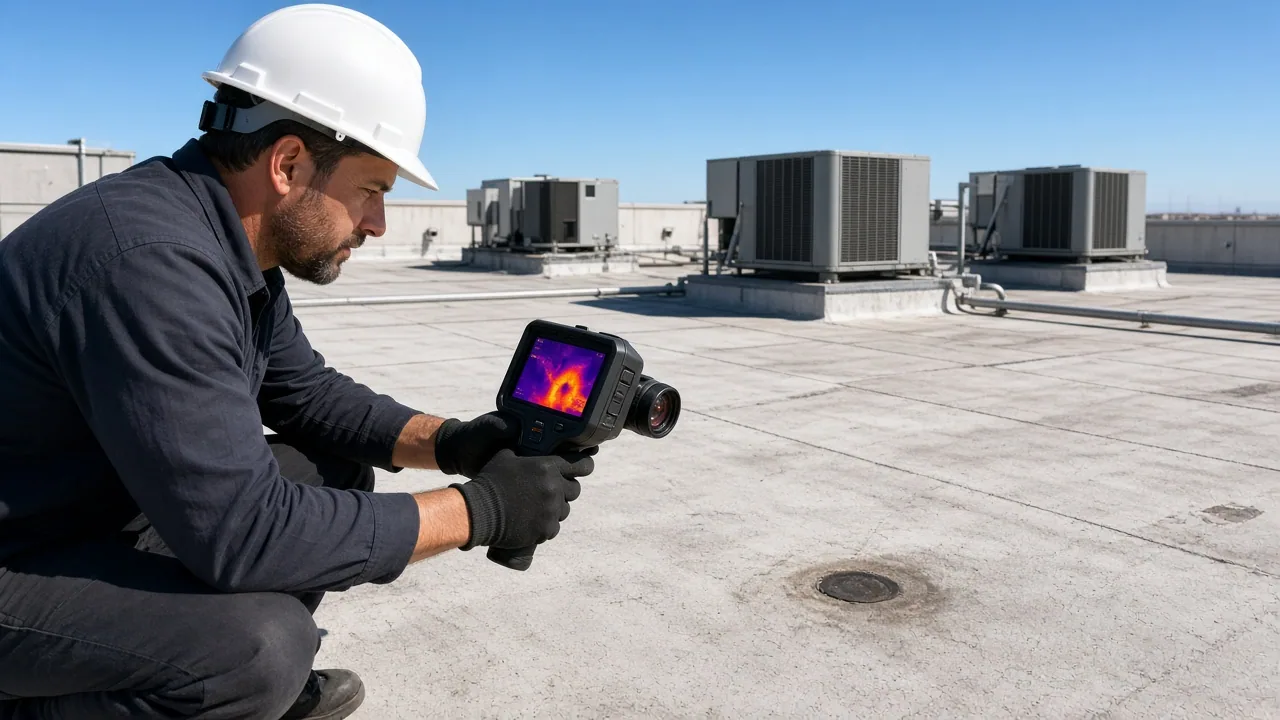
Commercial Roof Infrared Moisture Survey
Commercial Roof Drains and Scuppers
Occupied Commercial Building Reroofing
Commercial Roof Repair
Distribution Center Roofing
Set a warehouse roof inspection window
Service Area
Topeka, Auburn, Silver Lake, Carbondale, Rossville and Shawnee County, KS
Quick Contact
Email: [email protected]
Phone: 555-555-5555
Request a Roof Assessment
Send the Topeka address, leak location, roof plan, recent repair records, and loading or access restrictions. We will map the tested section and identify what could change the work quantity.