
Self-Storage Roofing in Topeka, KS
Home / Property Types We Roof / Self-Storage Roofing
A roof leak over a storage row can threaten units before water reaches the drive aisle. We trace the reported location, inspect the roof section above it, and mark the limit of testing. That measurement decides whether the first work area is a unit bay, office, or shared corridor. Topeka’s documented hail and wind history makes edge metal and membrane seams worth checking after a reported event, but the property inspection establishes the repair quantity.
Access: How does a crew enter without opening every gate?
Storage operators often control vehicle gates, office doors, and access to occupied units separately. We identify the gate code holder, service entrance, unit row, and any tenant notice required before a lift or material cart enters. A phased occupied-property plan shows the work zone and daily tie-in so customers can continue to reach unaffected rows.
Drive aisles must remain available for tenant vehicles and emergency access. We set a staging area with management, then mark any aisle or door that needs a short closure. If a lift needs clearance beside a fence or canopy, the sequence names the route and the release point. Those limits are placed on the proposal before mobilization instead of being solved between arriving tenants.
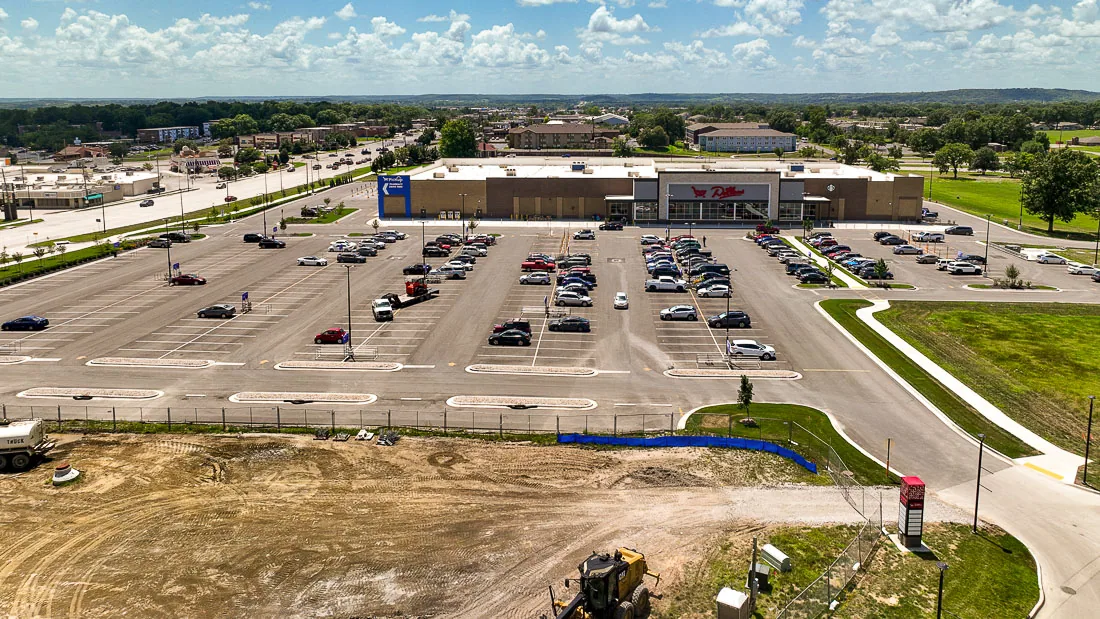
Topeka’s Central Crossing Commerce Park has road, rail, and airport connections serving distribution and manufacturing occupants. A storage facility has different traffic, but its roof work still needs a site-specific delivery route and gate plan. Heartland Synergy Park is also planned for flexible commercial and light-industrial uses in Topeka. Those park descriptions help frame the local property mix; a storage operator still sets the gate rules and route for its own roof work.
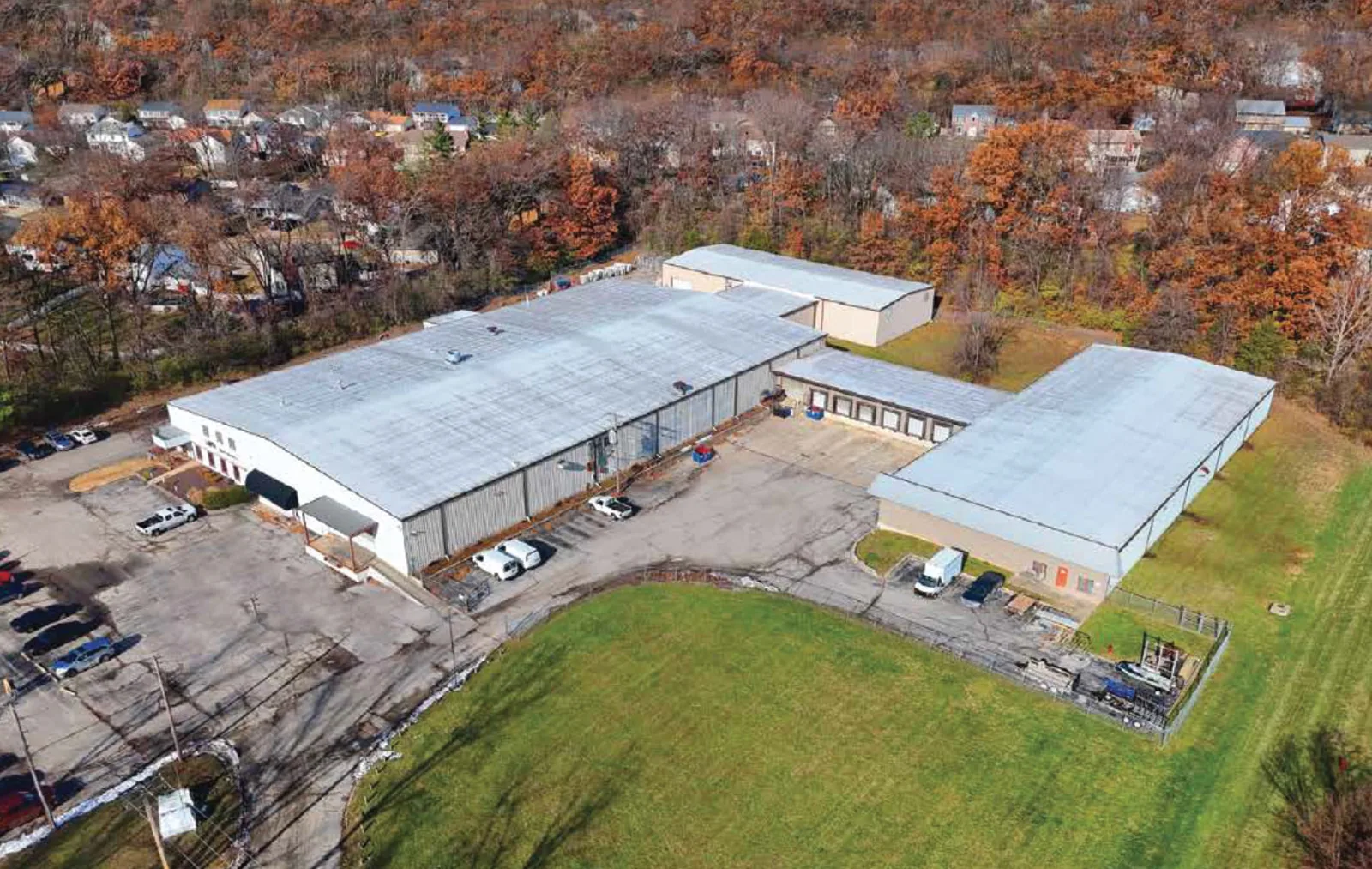
Inspection: Which roof details serve the unit rows?
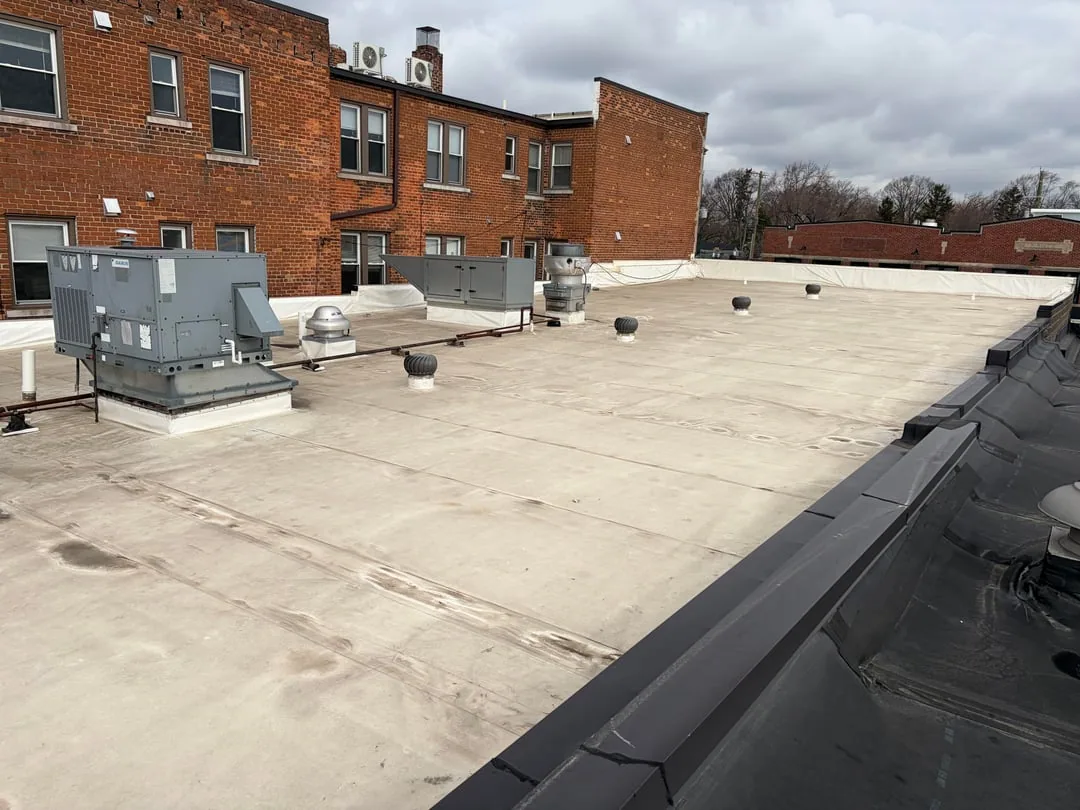
A water mark over one unit may originate at a distant seam, penetration, or roof drain. We compare the unit number and interior timing with roof slope, curbs, laps, and earlier repairs. The commercial roof inspection records the membrane type, visible condition, and portions blocked by equipment or unsafe access.
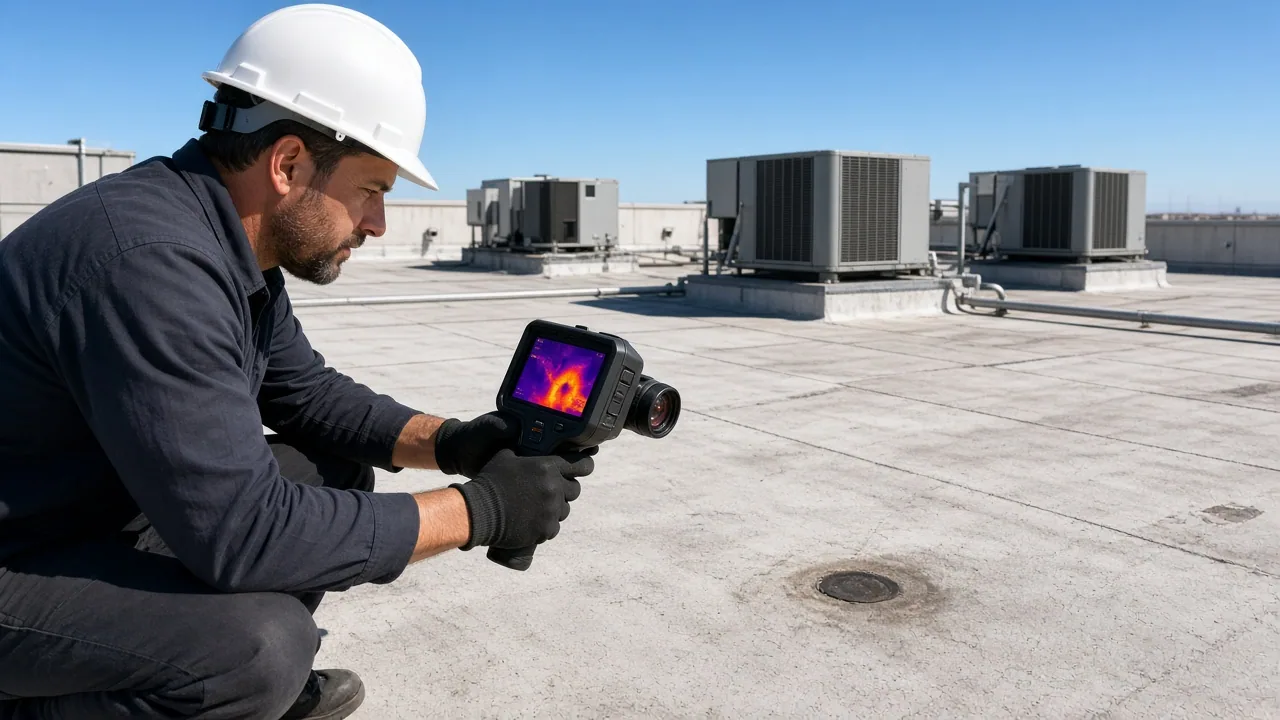
Some facilities have several joined roof areas, with an office, climate-controlled rooms, and drive-up units beneath different elevations. We map those transitions and test where results can change removal quantities. A moisture survey can identify suspect areas for confirmation. Its readings are shown by location and do not replace a test opening when the material boundary remains uncertain.
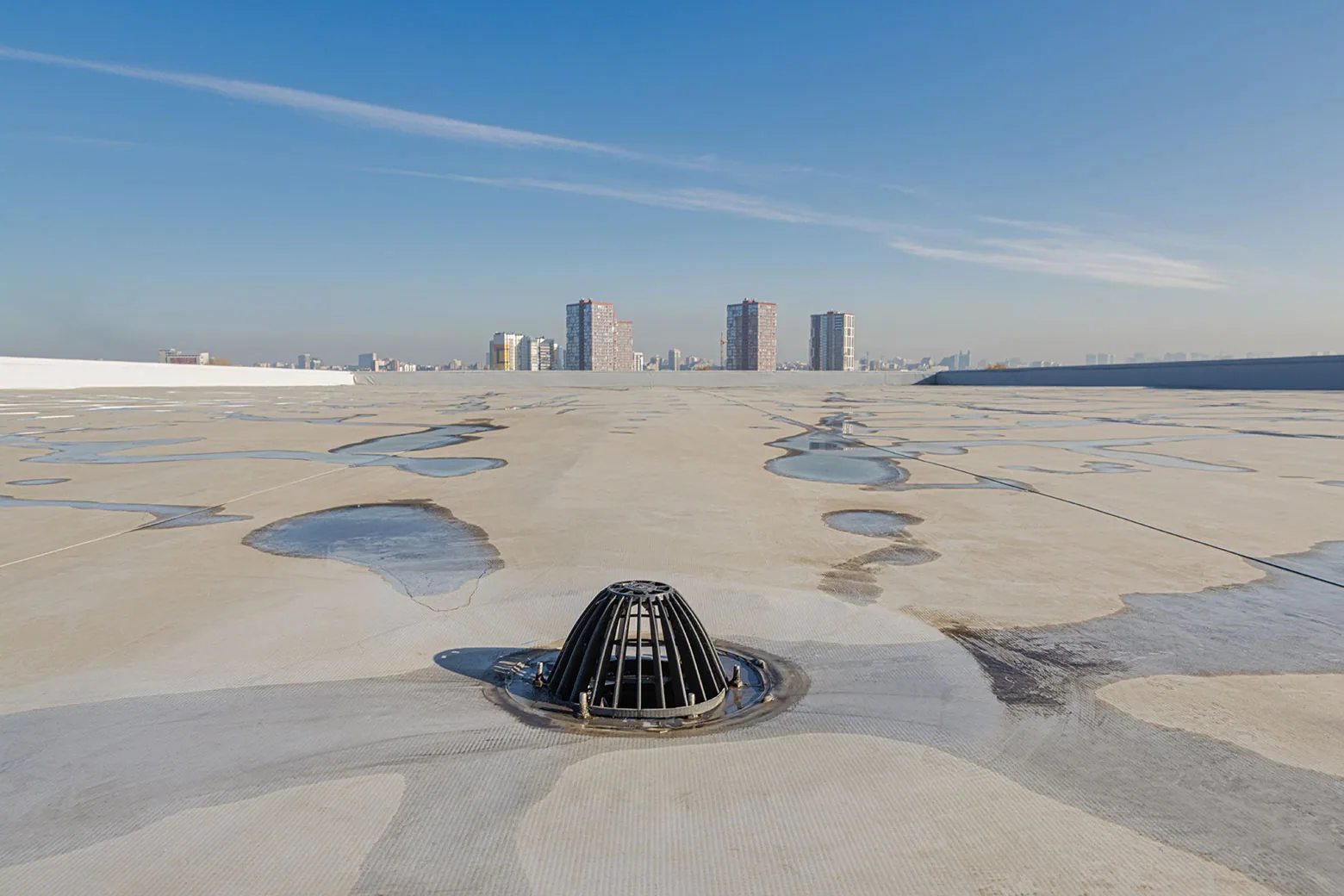
At each drain bowl, we check whether the outlet clears and whether a low spot remains wet after it does. A drain and scupper review records the outlet, slope, and nearby membrane separately. If water persists after the outlet is open, the repair question may involve the field or insulation rather than a blockage alone.
Scope: How is a unit row protected?
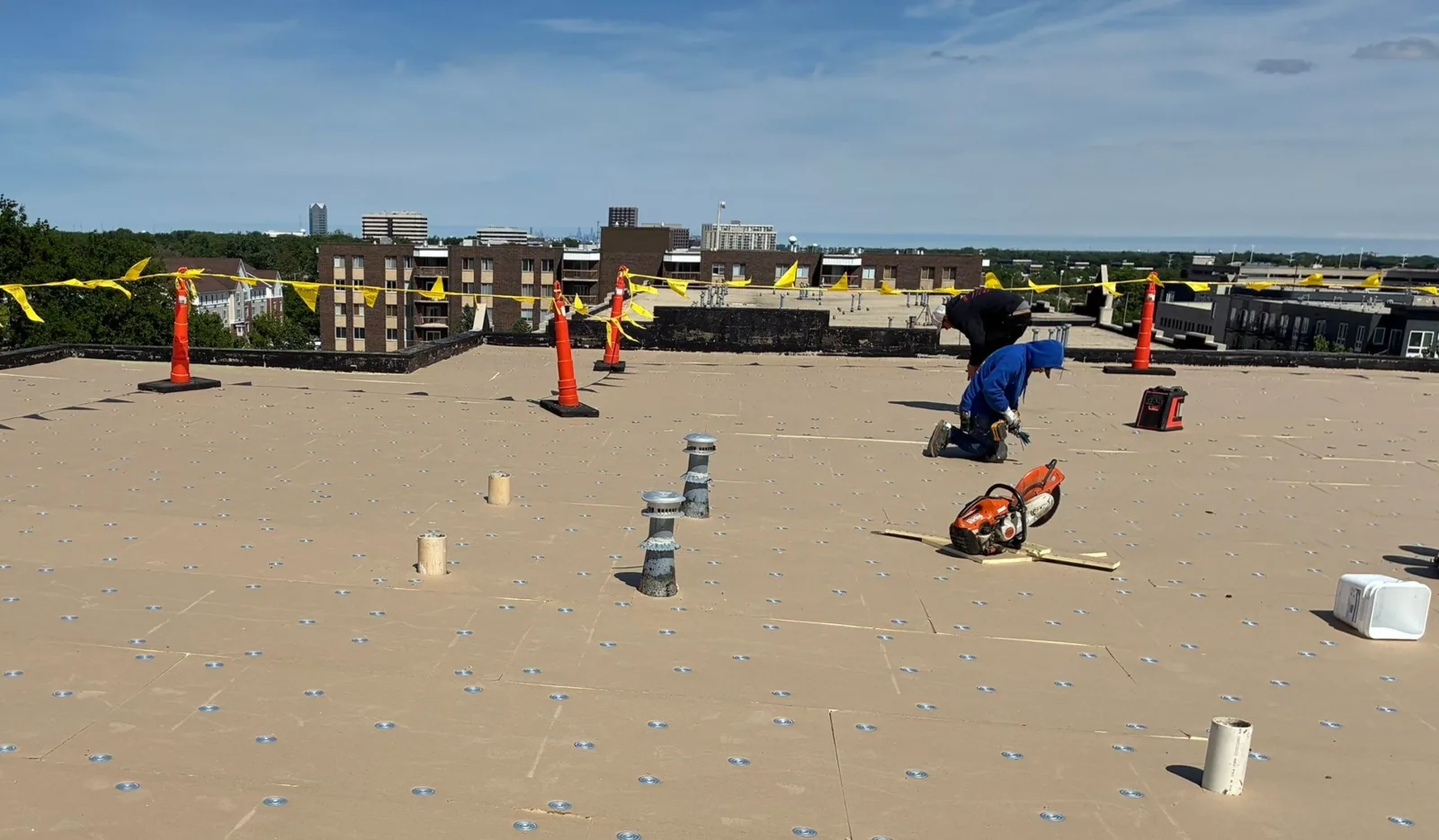
A roof opening should have a clear work boundary, material plan, and same-shift tie-in. We name the affected units, aisle protection, preparation, and the detail being repaired. The commercial roof repair scope states what the price includes and who can approve added removal if wet insulation or a damaged deck extends past the test area.
If concealed damage appears, we stop at the agreed limit, protect the opening, and report the new measurement. The operator can authorize the additional quantity, choose a separate work window, or request another test. Unit access and any tenant notification remain with the assigned facility contact. The closeout map distinguishes the repaired row from areas that were inspected but left unchanged.
An urgent leak can be reported at any hour, including weekends and holidays. Our on-call crew coordinates gate entry with the operator and takes steps to protect affected contents while the roof is assessed. Temporary mitigation is recorded apart from the permanent work order. The report also identifies any unit or drive aisle that cannot return to normal access until a follow-up is complete.
Weather: What belongs in the yearly inspection?
Topeka’s climate normal places annual precipitation near 36.5 inches; summer storms and winter precipitation both shape drain checks at storage properties. Before wet weather, we clear and inspect drains, scuppers, laps, and edge terminations. After snowmelt, a return visit can show whether an outlet cleared or a low area still holds water. The finding helps determine whether to address drainage or open a membrane section.
The National Weather Service archive documents severe hail and wind events in northeast Kansas. When a storage operator reports storm activity at a site, we photograph roof edges, exposed fasteners, seams, and penetrations at that property. The regional archive helps place the inspection date. Current impact marks or displacement, rather than the event record alone, support any repair scope.
Winter ice can limit access to a roof and cover a drain bowl. We record the blocked route and set a safe return date instead of marking that area clear. If water is entering a unit during the delay, interior protection can proceed while the permanent detail waits for safe roof access and suitable installation conditions.
Compare: When should an operator price a larger project?
Repeat leaks across unit rows, wet insulation in several test areas, or deteriorated edge details can point beyond a single patch. A replacement assessment compares focused repair, recover, and tear-off against the deck, drainage, insulation, and tenant access plan. Cost changes with roof height, number of openings, staging, and how many aisles can be closed during each phase.
A cold-storage roof plan includes temperature-sensitive operations that a self-storage property may not have. A warehouse roof assessment may share large roof areas and vehicle access, but individual unit gates and customer traffic remain specific to self-storage. We use the property’s roof map and operating controls to set the work sequence.
The appropriate assembly depends on the existing membrane, insulation, slope, and project requirements. We compare compatible options and list the tested section, untested roof areas, and expected maintenance checks. For a multi-property operator, consistent roof-zone labels also make it easier to compare repair history without assuming every building uses the same system.
Record: What helps with a repeat leak call?
Save the unit number, date, roof-zone map, photos, moisture readings, materials, and dimensions for each repair. Note the gate contact, tenant notices, aisle restrictions, and time protection was removed. Mark any drain or membrane area not inspected because access or weather kept the crew away.
If another unit reports water, compare its location and timing with the prior repair, nearby roof transitions, and drainage. A new report does not establish that the last repair failed. The record gives the operator a clear starting point for a follow-up test and keeps the next scope tied to observed conditions.
Send the Topeka facility address, unit or row locations, gate contact, roof plan, and available repair history. We will map the tested boundary and identify the access window needed for the next step.
Commercial Roofing Questions
Can tenants keep using other storage rows during roof work?
Yes, if the operator releases a zone and the crew can protect the work area without blocking emergency or vehicle access. The phase plan identifies any temporary aisle closure.
What information should a tenant give the manager after seeing a leak?
Unit number, time, water location, and whether the report followed rain or thaw help us trace the path. We compare those details with the roof map before setting a test area.
Will you open every unit to inspect the roof?
No. We inspect the relevant roof zone and identify any interior access needed for confirmation. The operator coordinates entry only for affected units or test locations.
Can a roof crew reach a leak after normal office hours?
The on-call line remains available evenings, weekends, and holidays. We coordinate the gate and service entrance with management, then document temporary protection and lasting repair separately.
When does a self-storage roof need replacement review?
Leaks repeated in multiple rows, broad wet insulation, or recurring edge failure can justify a capital comparison. Moisture tests define which sections belong in the options.
Related Roofing Work
Occupied Commercial Building Reroofing
Central Crossing Commerce Park
Commercial Roof Inspection
Commercial Roof Infrared Moisture Survey
Commercial Roof Drains and Scuppers
Commercial Roof Repair
Plan access for a self-storage roof inspection
Service Area
Topeka, Auburn, Silver Lake, Carbondale, Rossville and Shawnee County, KS
Quick Contact
Email: [email protected]
Phone: 555-555-5555
Request a Roof Assessment
Send the Topeka address, affected unit rows, gate contact, roof map, and recent leak reports. We will identify the test section and tenant access limits.