
Solar-Ready Commercial Roofing in Topeka, KS
Home / Commercial Roofing Services / Solar-Ready Commercial Roofing
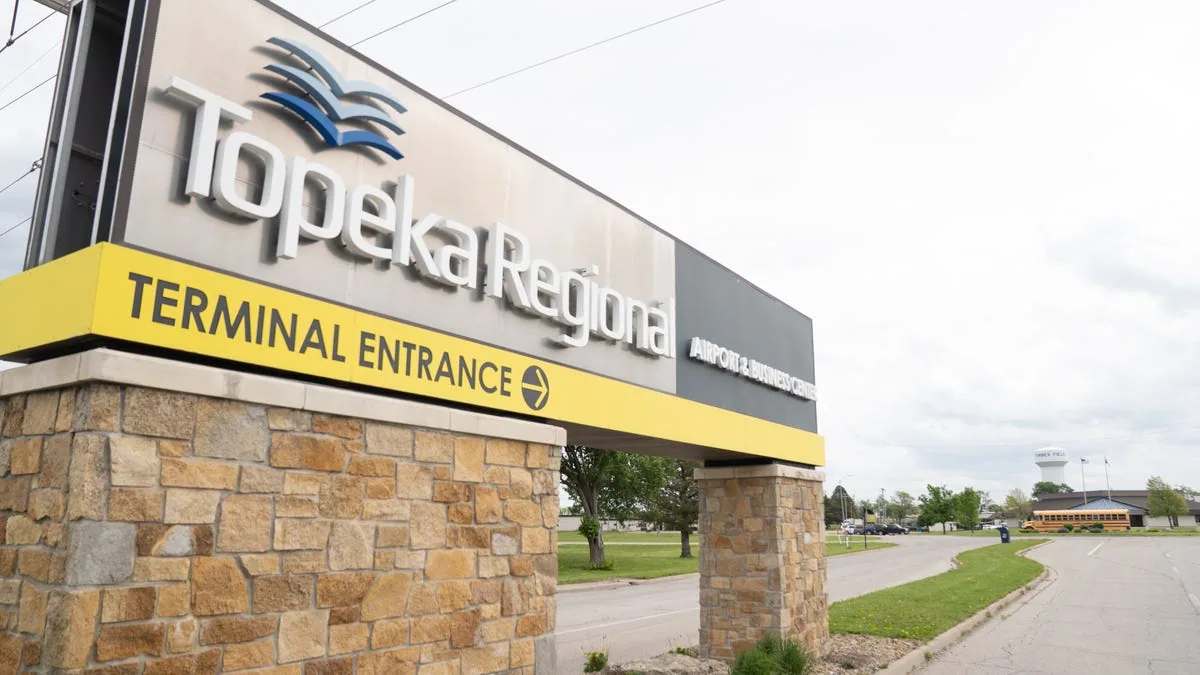
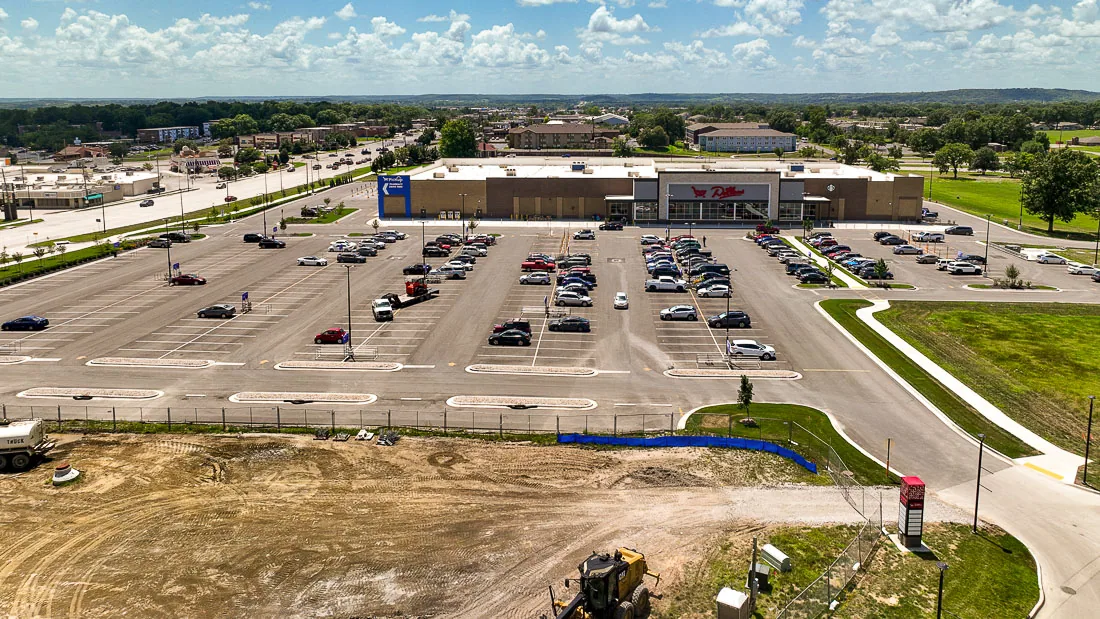
A solar layout can add penetrations and service paths to a roof that still needs repair. Before an array is installed, we inspect the membrane, insulation, attachment, drainage, and remaining roof condition. Topeka’s documented wind and hail events make attachment and future access part of the review; summer storms also affect the installation window. Topeka Regional Airport Business Center includes solar-warehouse operations, while Central Crossing Commerce Park has distribution and manufacturing tenants. Each property needs its own roof map and load coordination before racking is planned.
Condition: Is the roof ready for another system?
We check membrane condition, seams, penetrations, wet insulation, deck attachment, drains, and prior repairs. A roof nearing a major repair may need work before modules make access harder or require removal later. We identify the tested areas, visible defects, and remaining questions, then compare a solar installation now with roofing work first. A roof inspection can establish the assembly and map service paths around existing equipment. The record should include roof age if known, but field condition and repair history carry more weight than a date alone.
Moisture can remain hidden beneath an intact surface. If an array would cover an area that may need future testing, we mark it before design and discuss whether a scan or test opening can resolve the condition. A moisture survey may help locate suspect zones, but it does not replace confirmation where results affect the repair boundary. The solar developer and owner can use those findings when locating rows and access aisles. Plan inspection routes and roof access points before racking is fixed, especially where equipment or curbs interrupt a straight path.
Loads: What must be coordinated with the designer?
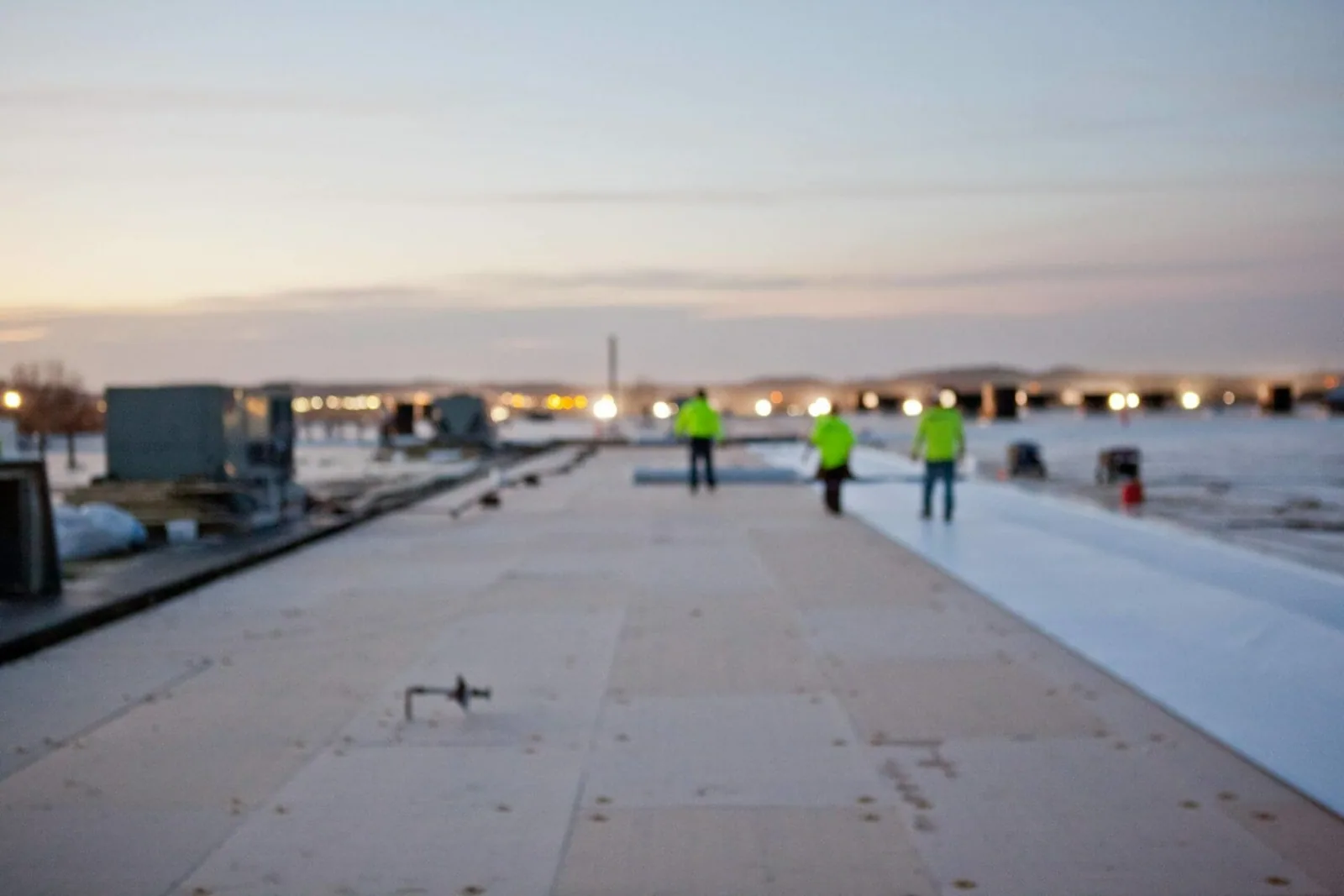
Solar racking transfers dead, wind, and service loads through the roof assembly to the structure. A roofer can identify the existing layers and attachment details, but structural capacity requires review by the design professional responsible for that calculation. We provide available roof records, field observations, and proposed flashing locations so the design can address the actual assembly. A roof replacement may be considered first when the assembly’s remaining life or condition makes later removal likely. Share the racking manufacturer’s layout, attachment type, and point loads before roofing work is priced. We can then identify conflicts at drains, curbs, and perimeter details.
Ballasted and mechanically attached systems create different roof and load questions. The array designer identifies its attachment scheme, while the property team confirms equipment access, fire lanes, and maintenance routes. We review where penetrations cross the membrane and how each will be flashed. Industrial and manufacturing sites in Topeka may have active shifts and equipment limits, so the facility contact must confirm staging and access for the actual building.
Solar equipment changes the roof plan even before a panel is attached. We coordinate proposed attachment zones, service pathways, electrical penetrations, drains, and the areas reserved for future roof work. The structural engineer or system designer establishes allowable loads and attachment requirements; the roofing review identifies membrane condition, flashing conflicts, and access needed to install and maintain the assembly. Keep those decisions on one marked plan so a later conduit or curb does not land across a drain or a repair boundary. The owner can compare roof renewal timing with solar installation without treating a visually sound surface as proof that the deck or attachment is ready.
Water: How will penetrations stay serviceable?
Each conduit, support, or attachment point can interrupt the roof surface. We identify the proposed location, membrane type, flashing detail, and access needed for installation. A penetration flashing review can evaluate the roof transition before racking is installed. We also preserve drain bowls, scuppers, and overflow paths; modules and wiring cannot block inspection or water movement.
Topeka climate normals include measurable snowfall, and local records document daily snowfall extremes. Array rows should leave each outlet and service aisle reachable when crews need to inspect drainage after winter weather. We document roof-zone labels and proposed pathways so later service crews can reach the membrane without disturbing neighboring rows. Any added flashing or membrane repair appears in the roofing scope separately from electrical and solar work.
Sequence: When should reroofing happen?
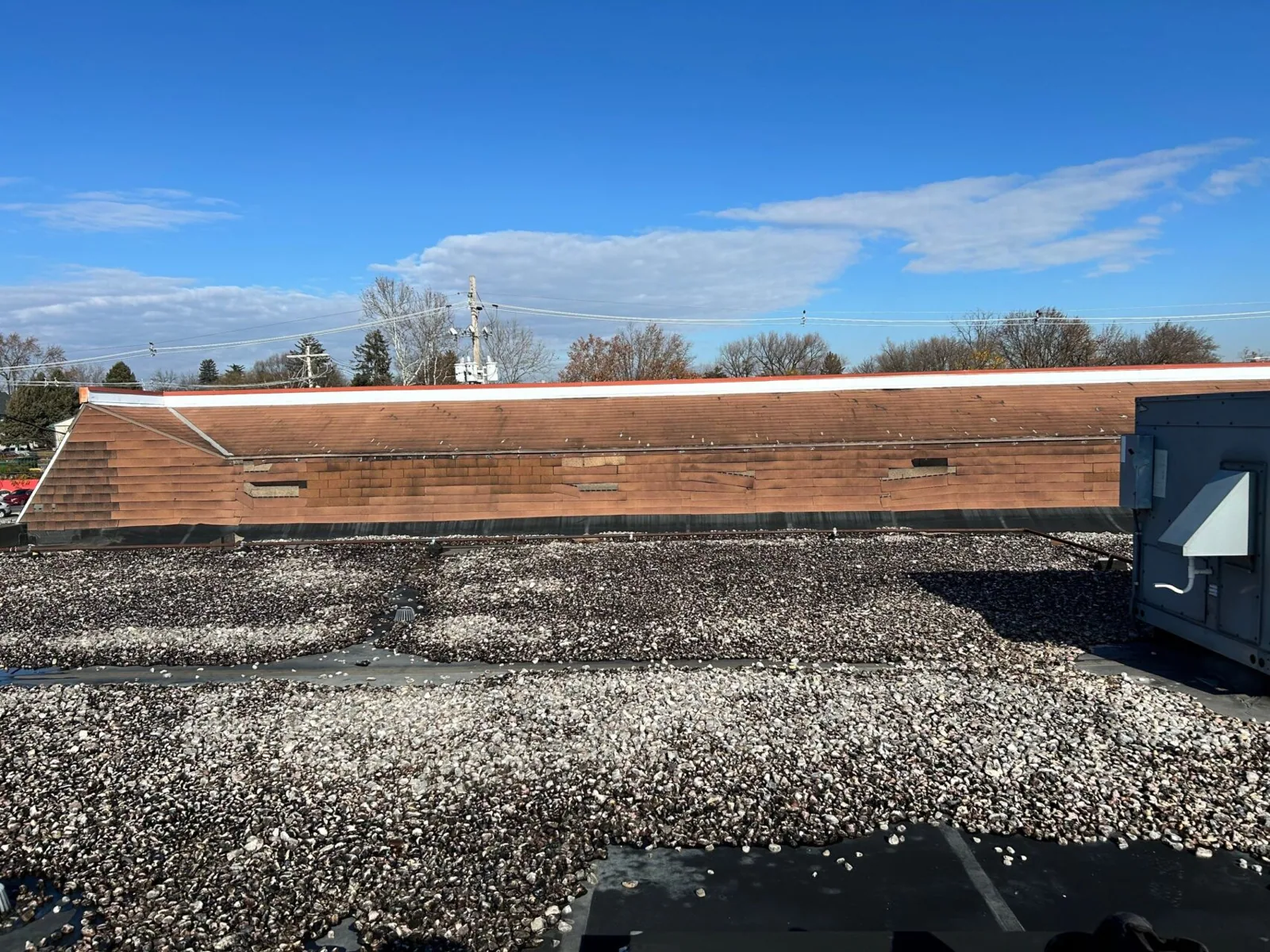
Putting solar equipment on before planned roof replacement can add removal, storage, and reinstallation steps later. We compare the roof’s observed condition and repair record with the solar schedule, then identify which sections could be addressed before the array. A recover evaluation can compare an eligible recover with tear-off after moisture and attachment are checked. The owner sees separate roofing and solar sequence assumptions. A structural review and the array installer’s mobilization date should be available before the roofing schedule is set.
For a reroof followed by array installation, coordinate membrane completion, inspections, staging, and attachment approval. The roof should be weather-tight before another trade begins work. A phased reroof plan can keep the facility operating while zones are repaired. We set access and protection responsibilities for each contractor and document who accepts the roof after a penetration is installed or serviced. The handoff names any sealant or membrane inspection required before panel rows cover that section. If a trade cannot meet that checkpoint, the owner can reset the sequence before close-in.
Records: What belongs in the solar roof file?
Retain the roof plan, assembly description, repair photos, test locations, penetration schedule, racking layout, structural review, and contractor contacts together. The closeout identifies what roof details were altered and which areas were not part of the installation. A roof condition report can keep this information available when the array or roof needs later service. Save the final attachment drawings and any field changes, since installed locations can differ from the initial concept.
After installation, a roof inspection should consider both the membrane and penetrations, plus areas concealed by panels. Facilities staff should record module removal or new wiring before roof work begins. At a large industrial property, the operations contact also coordinates lift routes and equipment shutdowns. The owner receives a roof service path and repair boundary that remain usable after the solar designer or installer changes. The record should show which trade installed each opening and who handles future repairs at that interface.
Commercial Roofing Questions
Should I reroof before installing solar panels?
We inspect the existing roof and compare its condition, test results, repair history, and planned service life with the proposed array schedule. If major work is likely, completing it first may avoid later panel removal, but the decision follows the specific assembly.
Can a roofer approve the roof for solar loads?
We can identify roof layers and attachment conditions. Structural capacity and array design require review by the responsible engineer, using field information and the proposed system loads. The roofing scope does not replace that design review.
Will solar panels make future roof repairs difficult?
Panels can restrict access and cover roof areas. The layout should preserve service aisles, drains, and inspection paths, and the owner should keep the attachment and removal details with the roof record.
Who is responsible for flashing solar attachments?
The project documents should assign each penetration to a qualified trade and identify who inspects the completed membrane detail. We coordinate the roofing scope and record any transition we install or repair.
What should I send before a solar-readiness review?
Provide roof drawings, array concept, prior repairs, moisture scans, structural records, utility or project schedule, and access contact. We will map roofing conditions and list the information the array designer still needs.
Related Roofing Work
Topeka Regional Airport Business Center
Central Crossing Commerce Park
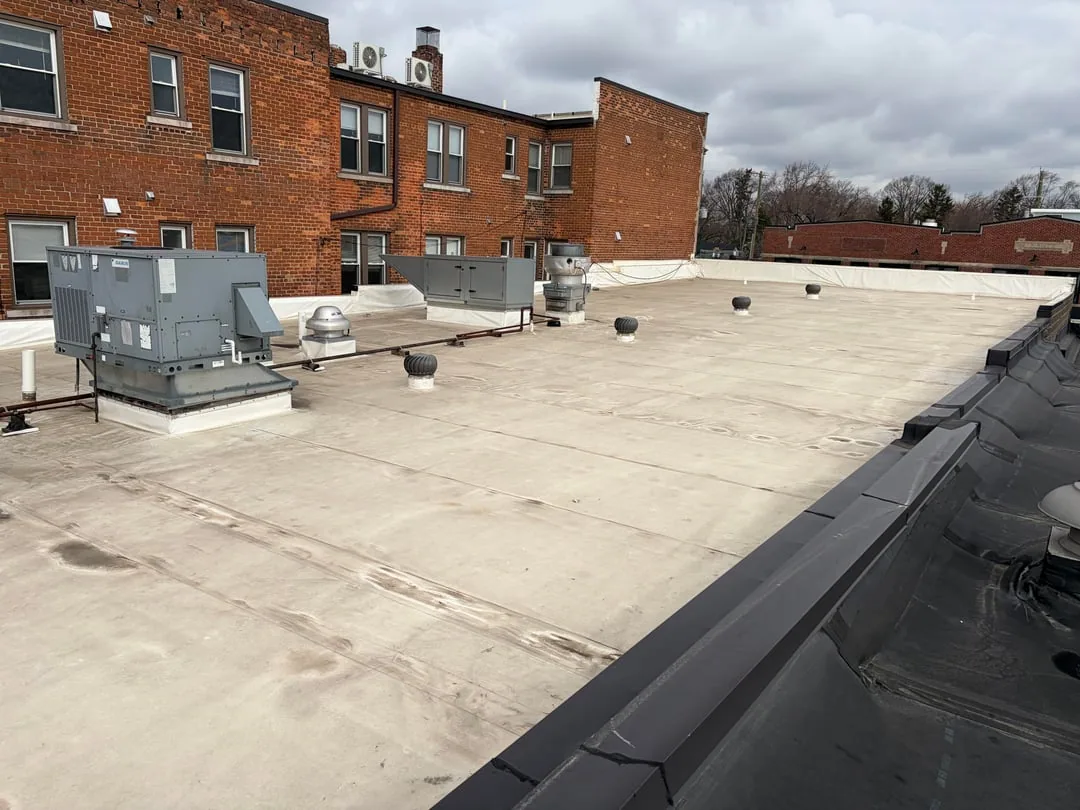
Commercial Roof Inspection
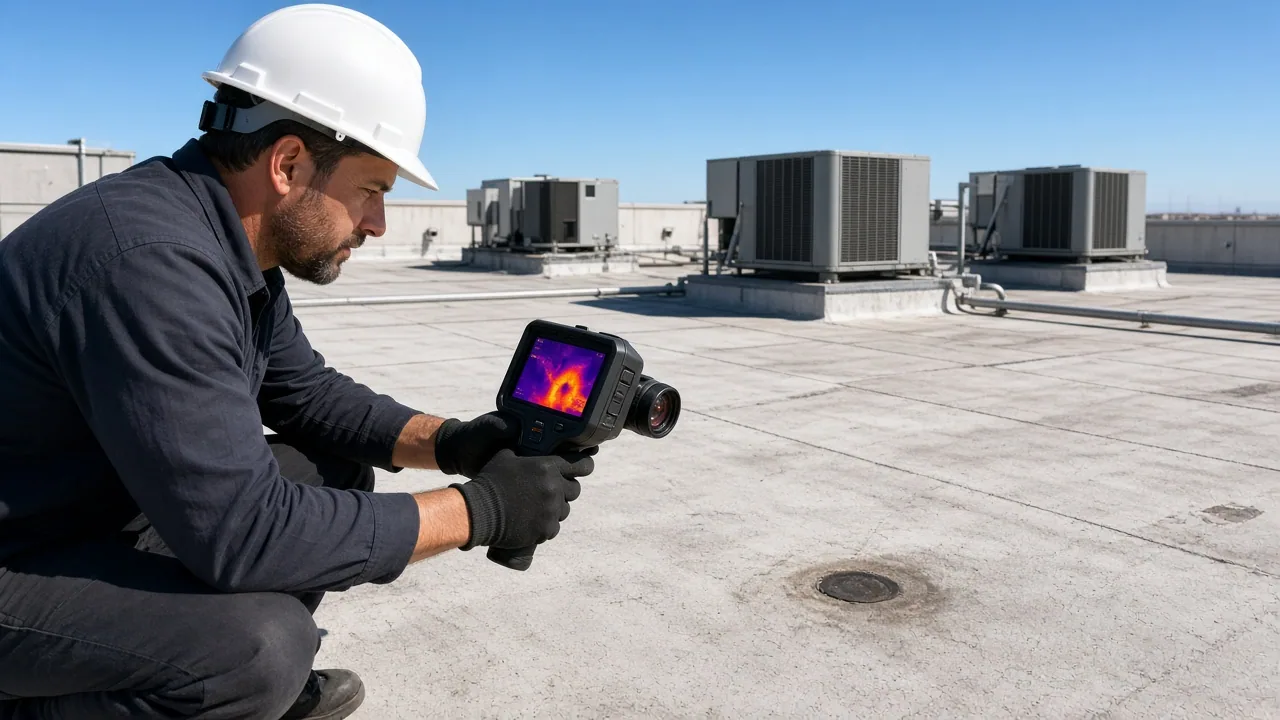
Commercial Roof Infrared Moisture Survey
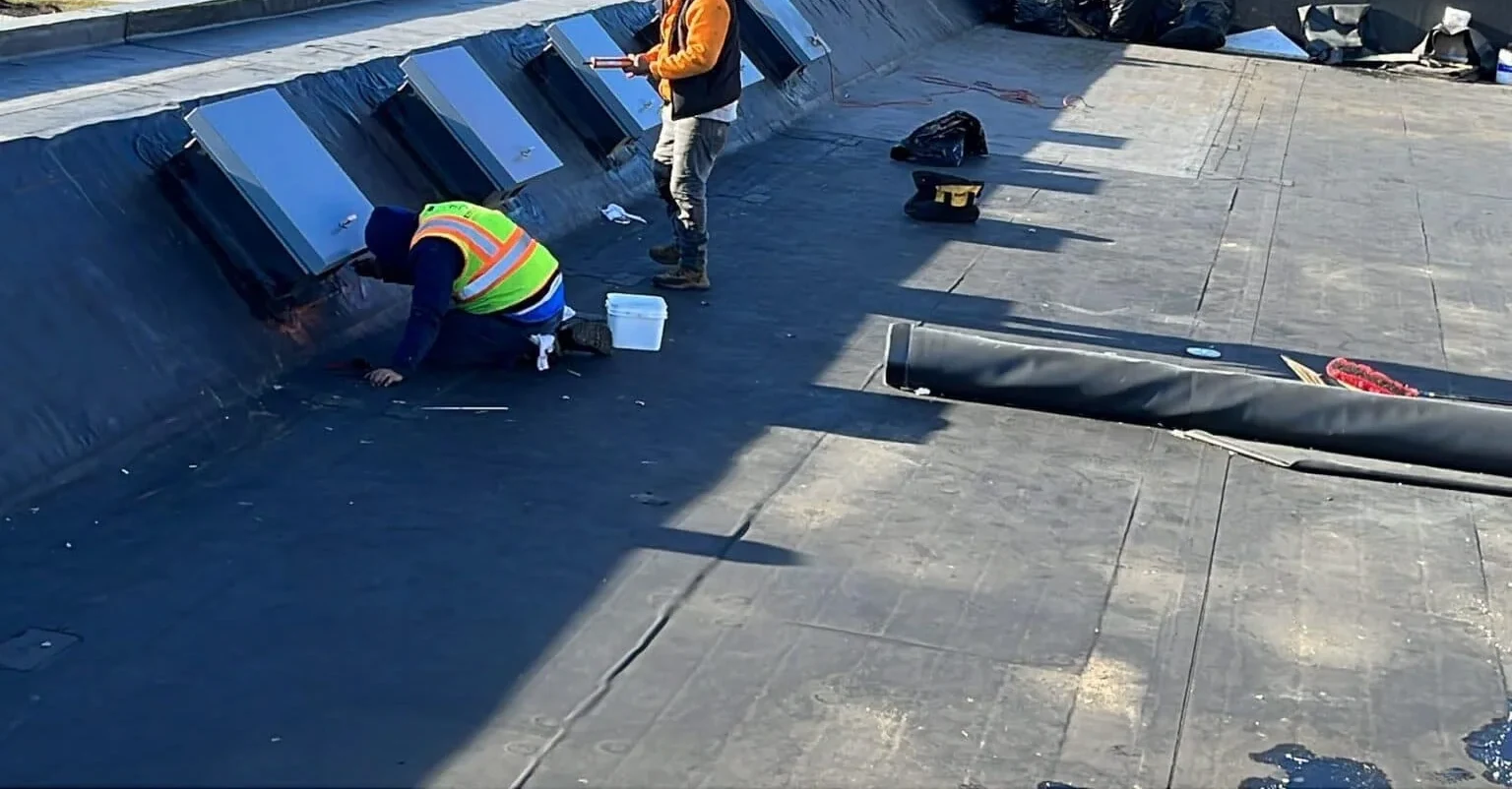
Commercial Roof Replacement
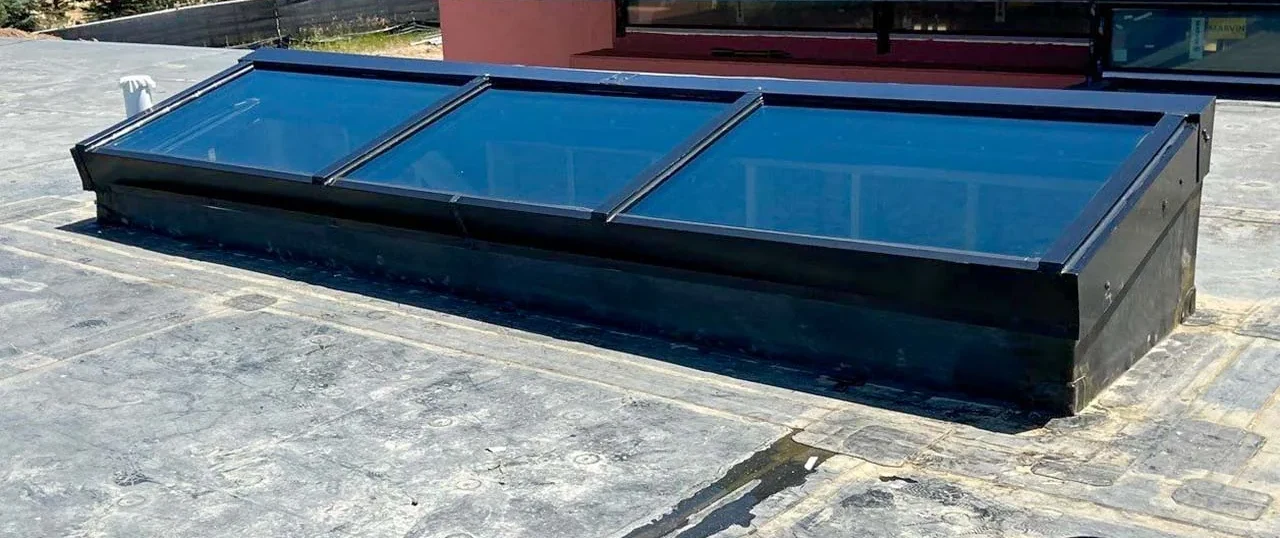
Commercial Skylight and Penetration Flashing
Review the roof before the array is fixed
Service Area
Topeka, Auburn, Silver Lake, Carbondale, Rossville and Shawnee County, KS
Quick Contact
Email: [email protected]
Phone: 555-555-5555
Request a Roof Assessment
Send the Topeka address, roof plan, solar concept, structural information, repair history, and access contact. We will identify roof conditions, penetration concerns, and work that should be sequenced before installation begins.