
Commercial Roofing in Auburn, KS
Home / Service Areas / Auburn
A seam that opens after a hard rain changes the repair boundary before it changes the whole roof plan. Auburn, KS is an incorporated city with municipal services and public facilities, so roofing work may involve offices, service buildings, commercial properties with different access needs. We start with the reported leak, trace the water path, and check the roof section that can confirm the cause. Auburn’s city services include police, fire, and utilities. We confirm which municipal contact controls access before setting the work boundary. The estimate follows observed conditions, not a guess based on a building’s use.
Field check: What changes the boundary?
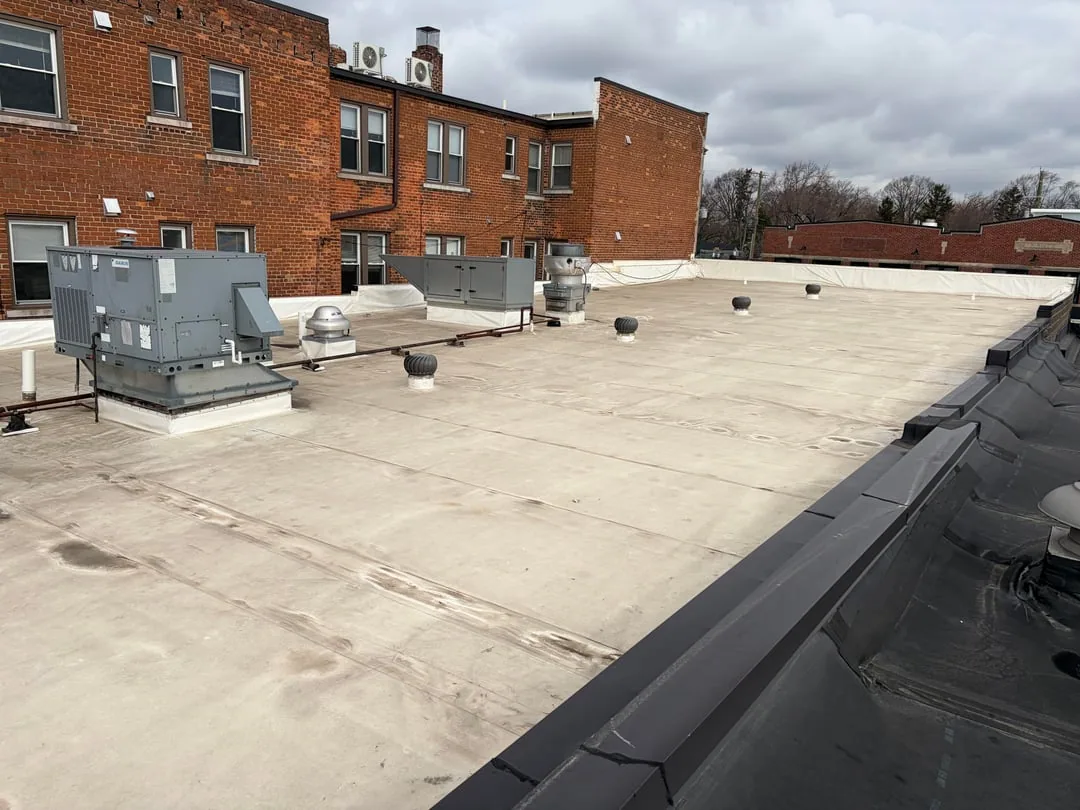
Water on a ceiling can enter at a seam, curb, pipe boot, edge, or drain and travel before it appears indoors. We mark the room or equipment affected, then compare that report with the roof above. The commercial roof inspection checks visible membrane, fasteners, flashing, terminations, and drainage. We photograph the test area and distinguish an observed opening from staining that has not been traced. If access or weather limits the inspection, the report identifies the unobserved area rather than expanding the repair by assumption.
On a low-slope assembly, a dry surface does not confirm that insulation below is dry. We inspect laps and penetrations for separation, then test the marked area when the conditions justify it. Moisture findings determine whether the scope can stay at the membrane or must include a cutout and insulation replacement. We note how the roof ties into walls and rooftop equipment, since a repair that stops short of the failing transition can leave water entering at the same point.
Repair or replacement: Which scope fits?
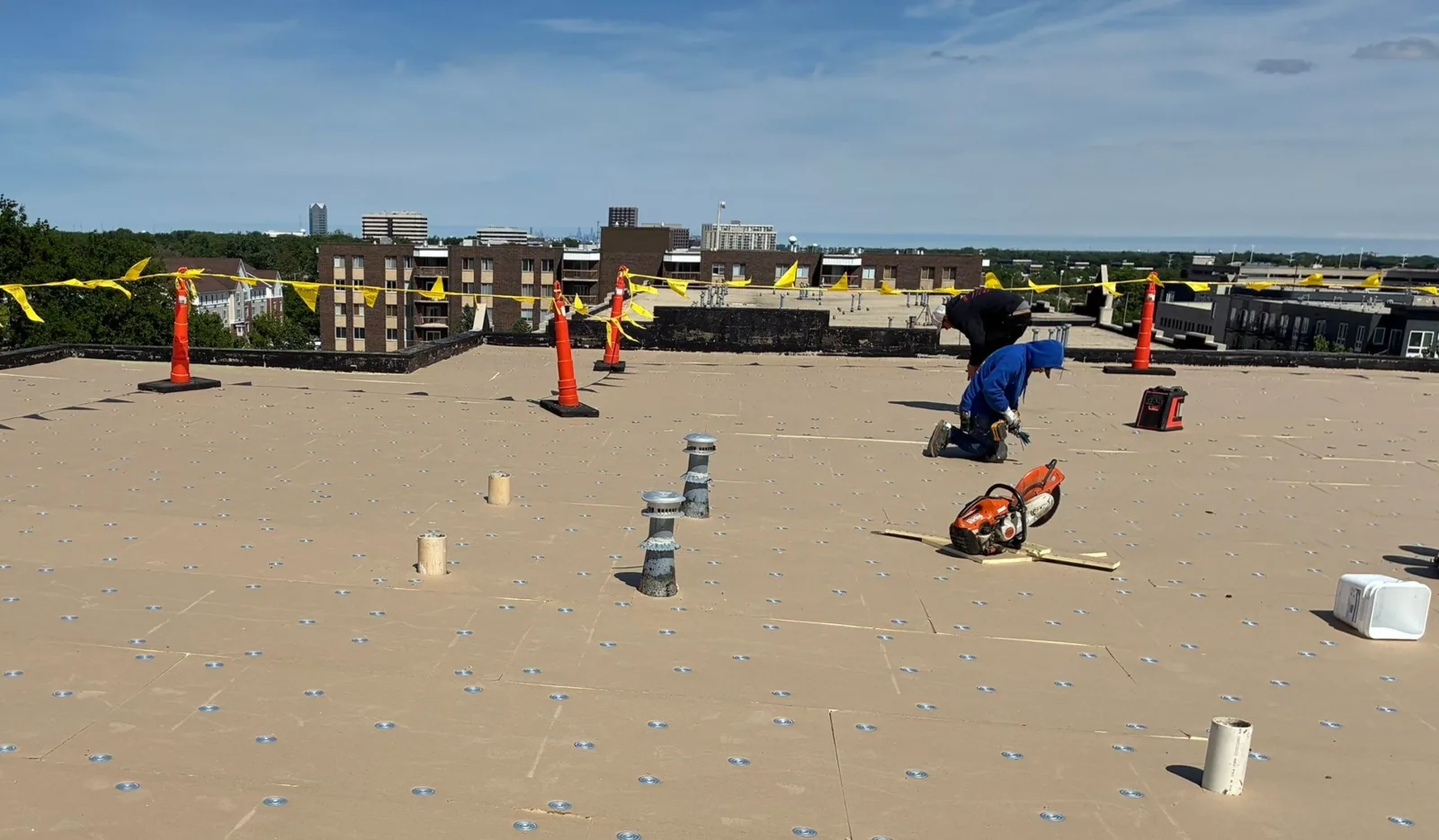
A local patch is reasonable when the surrounding membrane, insulation, and attachment remain serviceable. We prepare the surface, use materials compatible with the existing system, and extend the repair far enough to reach sound material. When deterioration appears across multiple fields or testing finds wet insulation in separate areas, a replacement comparison may be more useful than stacking isolated patches. The focused repair scope records the confirmed defect; a separate replacement estimate can show what changes when broader removal is warranted.
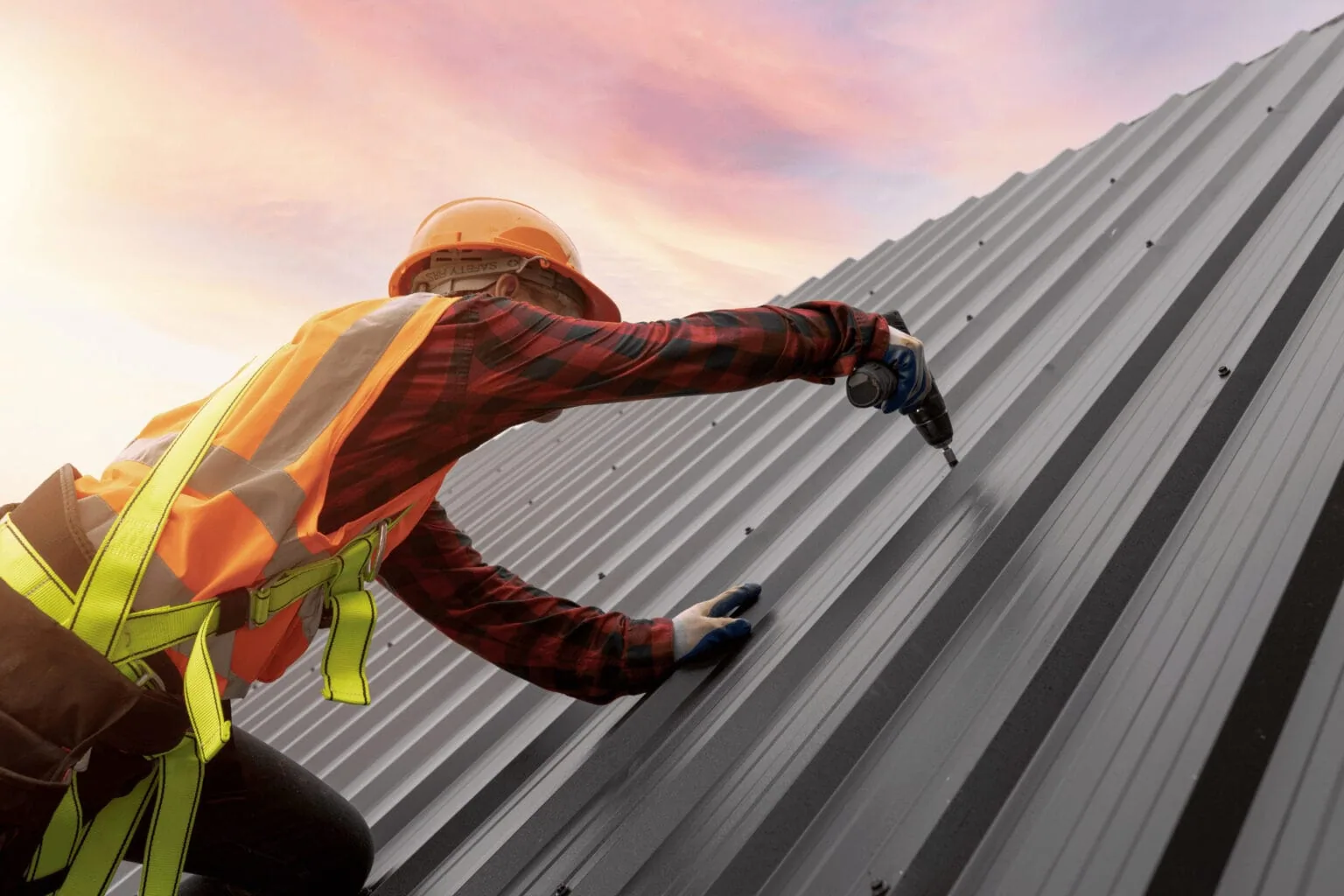
Roof type stays a field finding. A metal roof calls for attention to panel seams, fasteners, clips, and flashing movement; a membrane roof needs a different check of laps and penetrations. For a confirmed standing-seam metal roof, we check panel seams, fasteners, clips, and flashing movement. We do not infer a roof system from the building’s use or district. The proposal identifies what was observed, what remains concealed, and which conditions would change quantity or duration.
Access plan: How does the work window hold?
A school, municipal office, warehouse, and storefront can have different door access, deliveries, and interior protection needs. We identify the building contact, roof access point, staging area, and work window before mobilization. Occupied work may be divided into sections so an opening can be dried in before the next area begins. If a tenant route or service entrance must remain clear, that restriction belongs in the sequence. The owner receives the agreed work limits and a contact path for conditions found after material is opened.
Weather can change the order of work. At Topeka, the 1991 to 2020 normal is 36.5 inches of precipitation per year, with summer thunderstorms and winter precipitation. This nearby-city measure informs timing; inspection establishes Auburn’s drain path and repair boundary. The National Weather Service’s northeast Kansas event archive also records severe hail and wind events; after a reported storm, we check edges, seams, and penetrations instead of treating a weather report as proof of damage. A Carbondale commercial roof plan may require a different access sequence, but the inspection record stays tied to the property being evaluated.

Estimate drivers: What sets quantity and timing?
Cost follows measurable conditions: roof area, membrane type, access height, tear-off layers, insulation moisture, flashing length, drain condition, and protection below the work. A small surface repair may need little removal; wet insulation can widen the cutout and require a controlled dry-in. Replacement timing also depends on material lead time, weather exposure, delivery access, and whether the building must remain open during the work. The estimate separates confirmed quantity from allowances and names each condition that could change the scope.
For a planned maintenance visit, we record loose terminations, open laps, sealant failure, debris at drains, and evidence of prior repairs. A scheduled maintenance visit can address small defects before water reaches insulation, but it should not conceal a failure that requires removal. The condition report can combine photographs, a marked roof plan, tested locations, and recommendations by urgency. That gives the owner a practical order for repair, follow-up testing, or capital planning.
Closeout: What does the owner receive?
The closeout identifies the roof section inspected, materials installed, photographs taken, and repair boundary completed. If a concealed condition changed the approved quantity, the record shows the evidence and the owner’s authorization. Any area not reached is labeled separately. For a leak repair, we also note the interior location reported at the start and whether the water path was confirmed. That distinction matters at the next visit: a recurring stain may be a new entry point, a remaining wet area, or a separate detail that was outside the earlier scope.
Auburn’s municipal services and commercial properties call for clear contact and access coordination, but the scope remains specific to each building. We can compare an inspection with earlier reports, identify the next section to test, and list repairs that can wait until the next work window. A neighboring municipality does not share the same roof record. For Silver Lake properties, the Silver Lake service area applies to their own roof and access conditions, with photographs and measurements kept under that property’s file.
When a roof has several repair generations, we mark each material transition and note where the current work begins. That keeps a new patch from covering an older detail whose condition remains uncertain. We also note whether the repair changed drainage or left a temporary protection in place. A facilities or property manager can then assign the next review to a defined location and compare photographs from the same roof field. The file should leave the next decision clear: monitor, test, repair, or prepare a broader scope.
Commercial Roofing Questions
What should the first Auburn leak inspection include?
We need the room or area affected, the date the leak appeared, and any change after rain. On the roof, we inspect the likely water path, seams, penetrations, edges, and drains. The report marks the section reached and separates visible defects from areas that need testing.
Can a school or city building stay open during repair?
We plan around the property contact’s access rules and the interior use below the roof. Work can be divided into manageable sections, with protection and temporary dry-in planned before removal. The approved work window and any restricted routes are confirmed for that building.
When does a patch become a larger repair?
The repair grows when the membrane cannot connect to sound material, moisture testing finds wet insulation, or a transition is failing beyond the visible opening. We show the added boundary and evidence before expanding non-emergency work.
What helps set a useful maintenance visit?
Provide roof plans, prior leak locations, access instructions, and any earlier repair records. We inspect the agreed sections, photograph defects, and rank work by condition. The result can separate urgent water entry from items suitable for a later budget cycle.
Related Roofing Work
Commercial Roof Inspection
Commercial Roof Repair
Standing Seam Metal Roofing
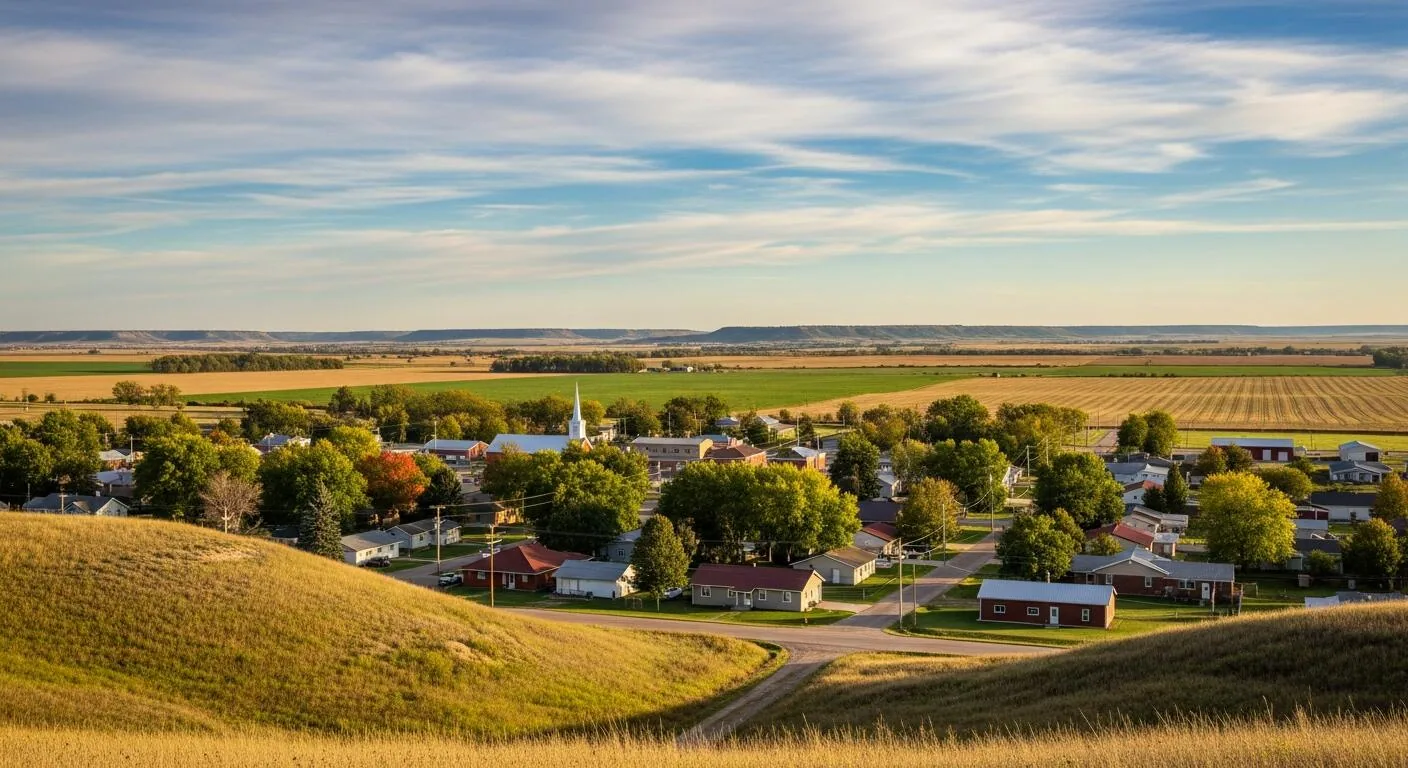
Carbondale
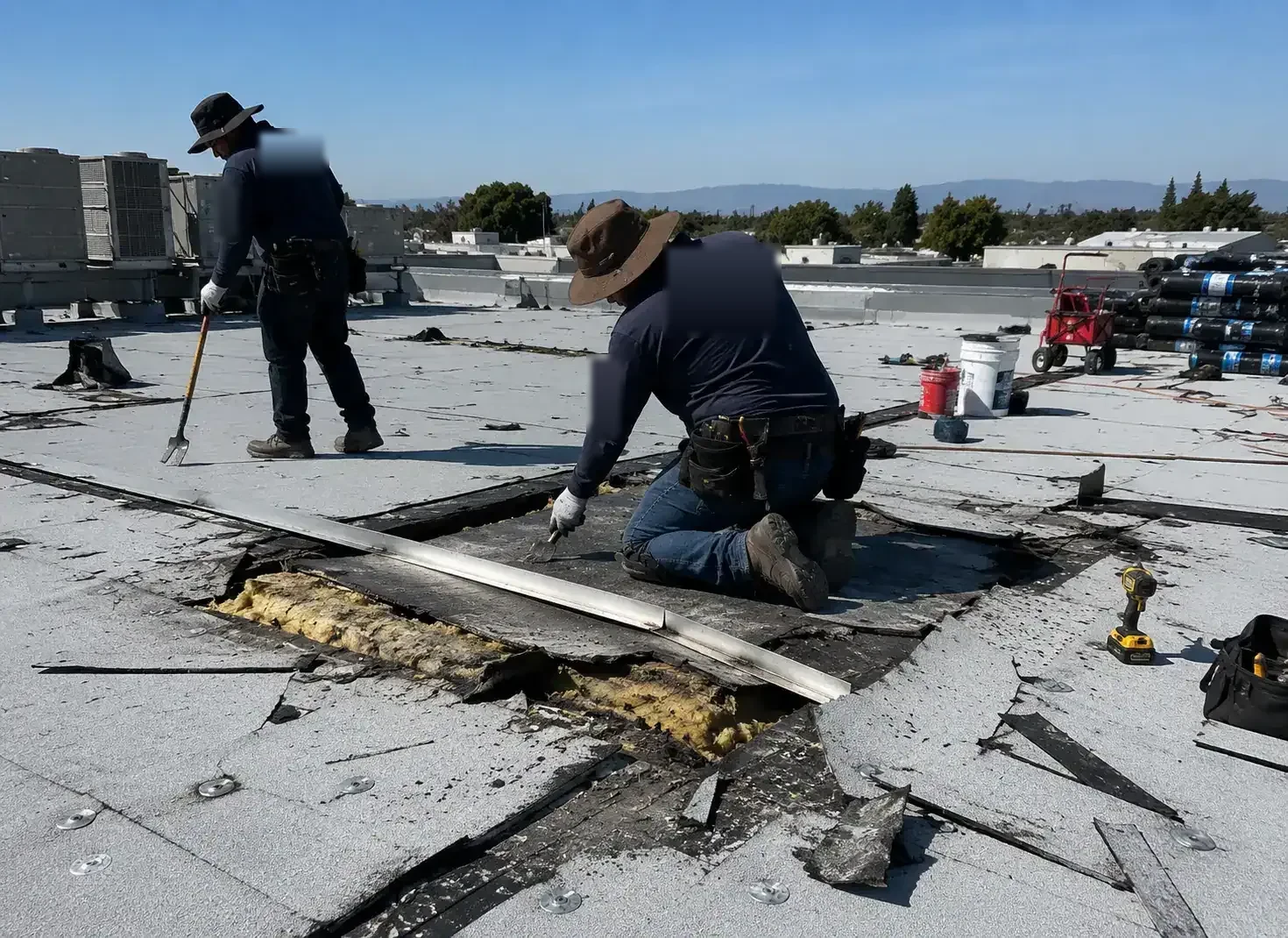
Commercial Roof Maintenance
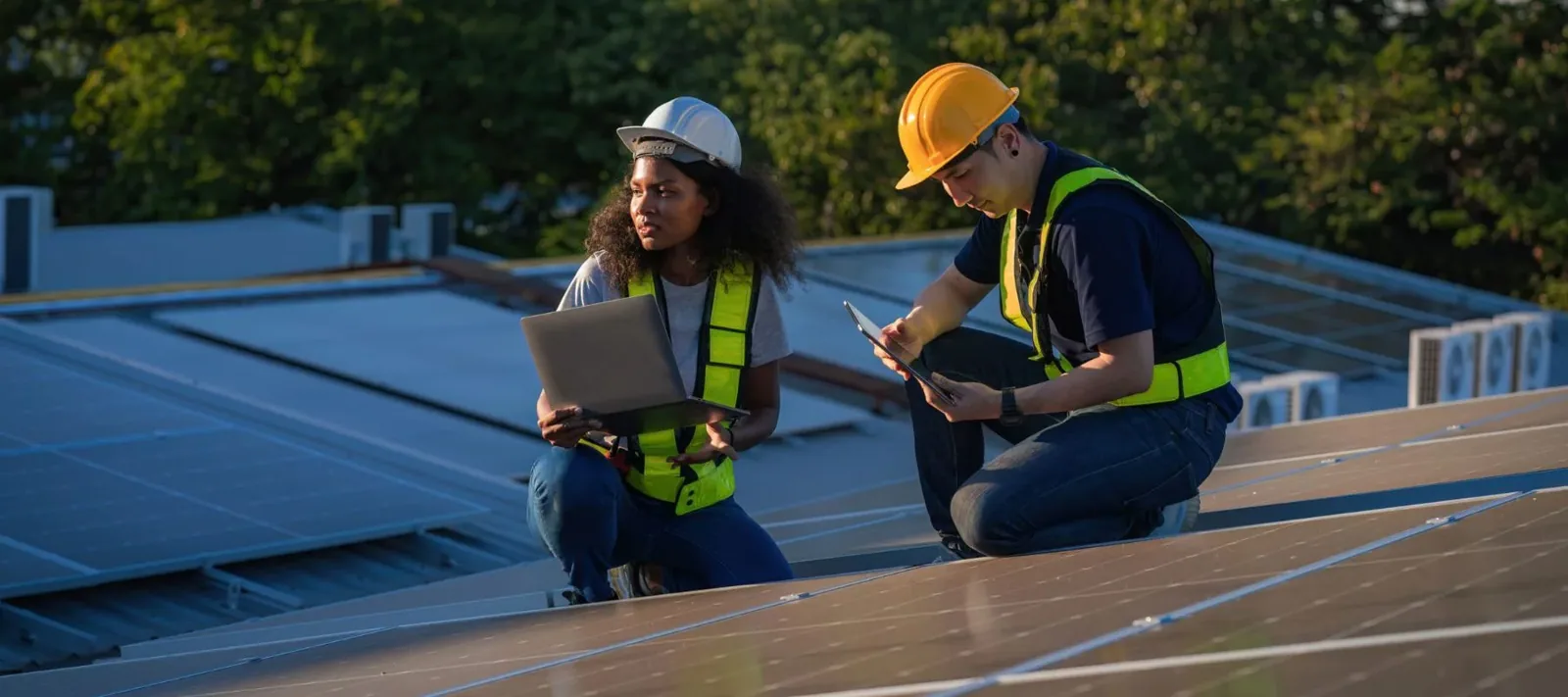
Commercial Roof Condition Reports
Request an Auburn roof evaluation
Service Area
Topeka, Auburn, Silver Lake, Carbondale, Rossville and Shawnee County, KS
Quick Contact
Email: [email protected]
Phone: 555-555-5555
Request a Roof Assessment
Share the property location, active concern, roof access contact, and any prior reports. We will confirm the inspection boundary and work window.