
Apartment Roofing in Topeka, KS
Home / Property Types We Roof / Apartment Roofing
A leak above one apartment can surface in another unit or a shared hallway. We trace the reported water path, inspect the roof area above it, and mark what has actually been tested. That boundary affects resident notices, interior protection, and the repair quantity. In Topeka, roughly 36.5 inches of annual precipitation puts recurring drainage and seam checks on the maintenance list. A building-specific inspection decides whether the next step is a localized repair, added testing, or a larger capital review.
Access: Which areas must stay open?
An apartment roof plan starts with entrances, stairs, parking, patios, and resident routes. We ask the property contact to identify occupied units below the work zone, access hours, notice requirements, and a staging place. The occupied-building roofing plan sets daily start and stop points, cleanup, and the route residents can continue to use.
Roof access may run through a locked stairwell or a maintenance room. We confirm keys, fall protection points, equipment clearances, and where removed material can travel without crossing an occupied area. If a balcony or walkway sits below a lift path, the work sequence includes a controlled closure and a reopening check. Those details belong in the schedule before a crew arrives, not in a same-day notice.
Topeka’s 29th Street and Wanamaker Corridor is a named commercial corridor that includes a five-suite retail center. Its tenants have customer access and loading needs; an apartment community sets separate resident, delivery, and fire-access controls.
Inspection: How do we find the roof source?
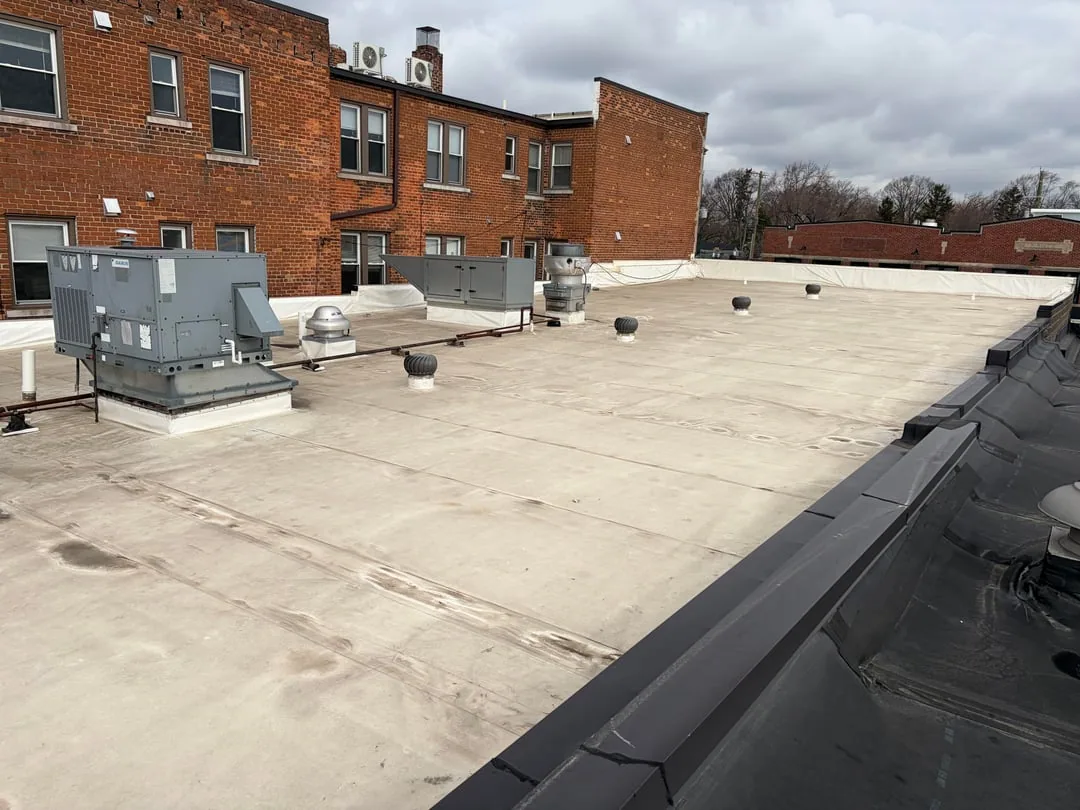
A ceiling mark is a starting location, not a roof diagnosis. We compare its room, floor, and timing with roof drains, wall transitions, penetrations, and earlier repairs. A commercial roof inspection records the assembly, visible defects, and areas needing moisture testing. Infrared or a test opening can separate wet insulation from a surface stain when results change scope.
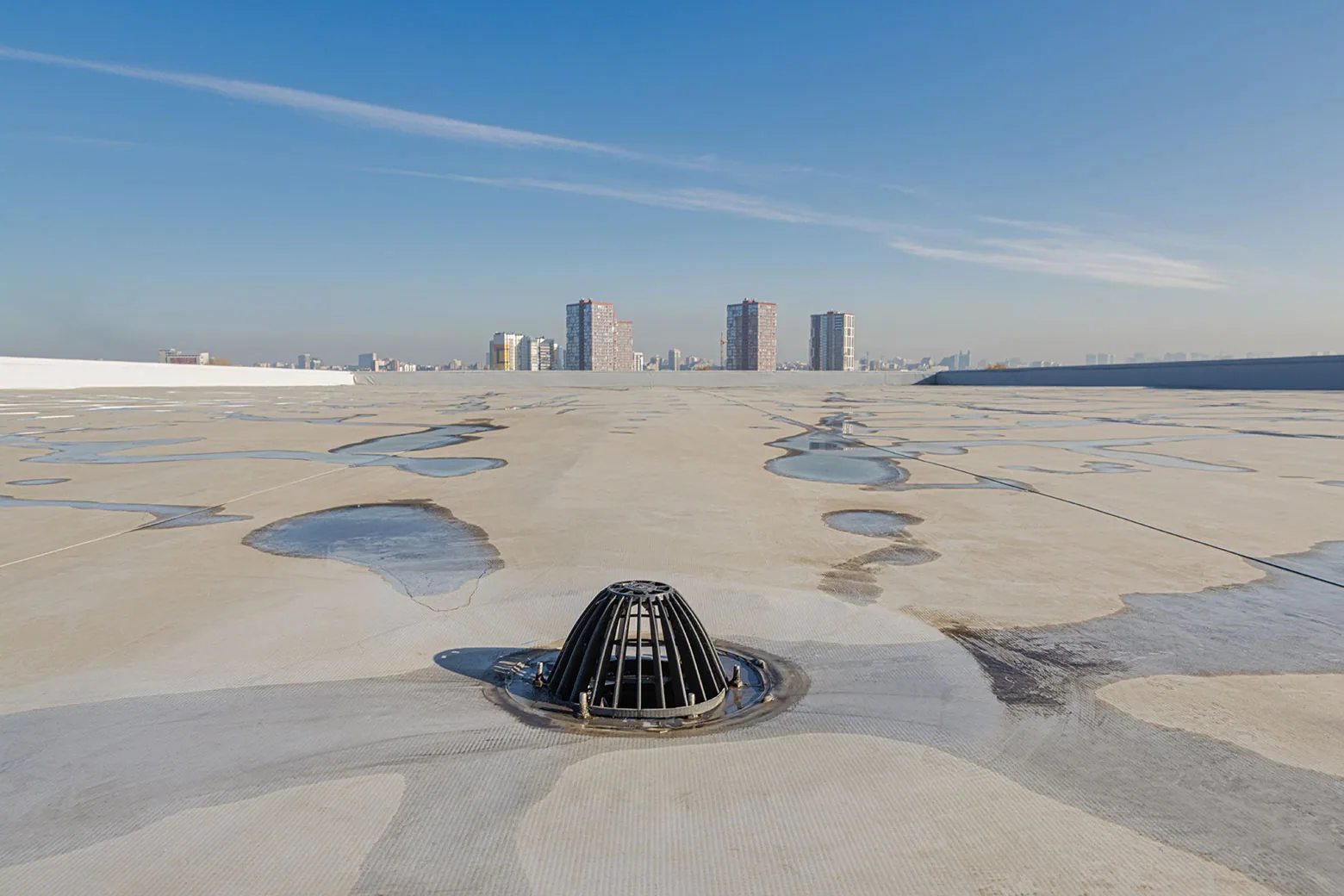
Apartment buildings may have several roof elevations or additions. We identify which section serves the reported units, then check laps, curb corners, parapets, drain bowls, and scuppers. A drain and scupper inspection separates slow outlet flow from a membrane defect. The report shows the tested boundary and any area blocked by equipment or unsafe access.
The National Weather Service's 1966 account records damage or destruction to every building on Washburn's Topeka campus. After a reported hail or wind event at an apartment property, we inspect edges, seams, coping, and penetrations, then photograph any displacement or impact marks.
Cost: What changes the repair allowance?
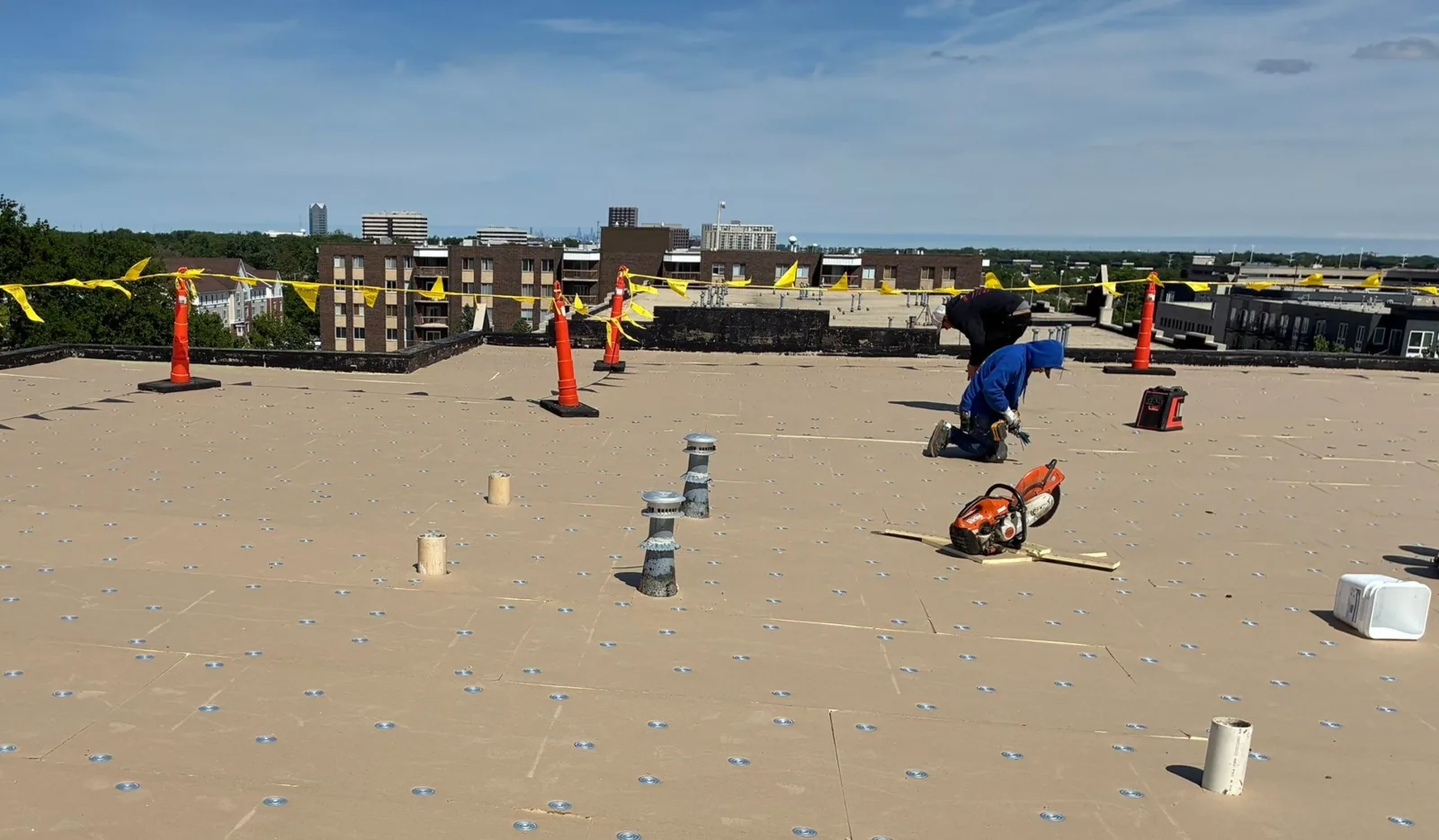
Repair cost moves with the confirmed wet area, roof height, membrane type, access, and how much interior protection the work requires. A small patch can expand when an opening finds wet insulation or a soft deck. We state the tested section, measured repair boundary, preparation, materials, and the condition that would require added authorization. The commercial roof repair scope keeps the base work separate from concealed conditions.
Residents may need a temporary route change while a lift, debris chute, or material cart moves through the property. That route can affect labor time and the number of roof sections opened in one shift. We discuss notice timing and unit access with management before pricing the sequence. If only a limited area can be released each day, the proposal states that assumption so the schedule can be compared with the repair quantity.
Maintenance records change the decision. Leak dates, locations, patches, and repeat calls show whether failures follow one detail or cross roof zones. We compare that history with moisture results before weighing another repair, more testing, or a broader review.
Weather: What belongs on the seasonal checklist?
Topeka averages about 36.5 inches of precipitation each year, with thunderstorms and winter precipitation in the local record. Before the wet season, we check roof drains, scuppers, low areas, laps, and wall flashings. After snowmelt, a follow-up can show whether water cleared when the outlet was open or remains because of a low spot. The observation changes whether a drain adjustment, membrane repair, or further testing is warranted.
Severe hail and wind events are documented in the National Weather Service archive for the region. When an apartment manager reports storm damage, we inspect the property itself and separate impact evidence from ordinary wear. Loose edge metal, displaced coping, punctures, and open seams receive photographs and measured locations. A regional storm report can help date the inspection request, but it does not replace a roof-level check.
Winter access can narrow the safe work window. Snow or ice may cover a drain bowl or make a roof route unsafe, so we record which areas could not be reached and schedule a return when conditions allow. If water is entering a unit, interior protection and temporary mitigation can proceed while the permanent roof repair waits for safe access and compatible installation conditions.
Options: When should ownership compare replacement?
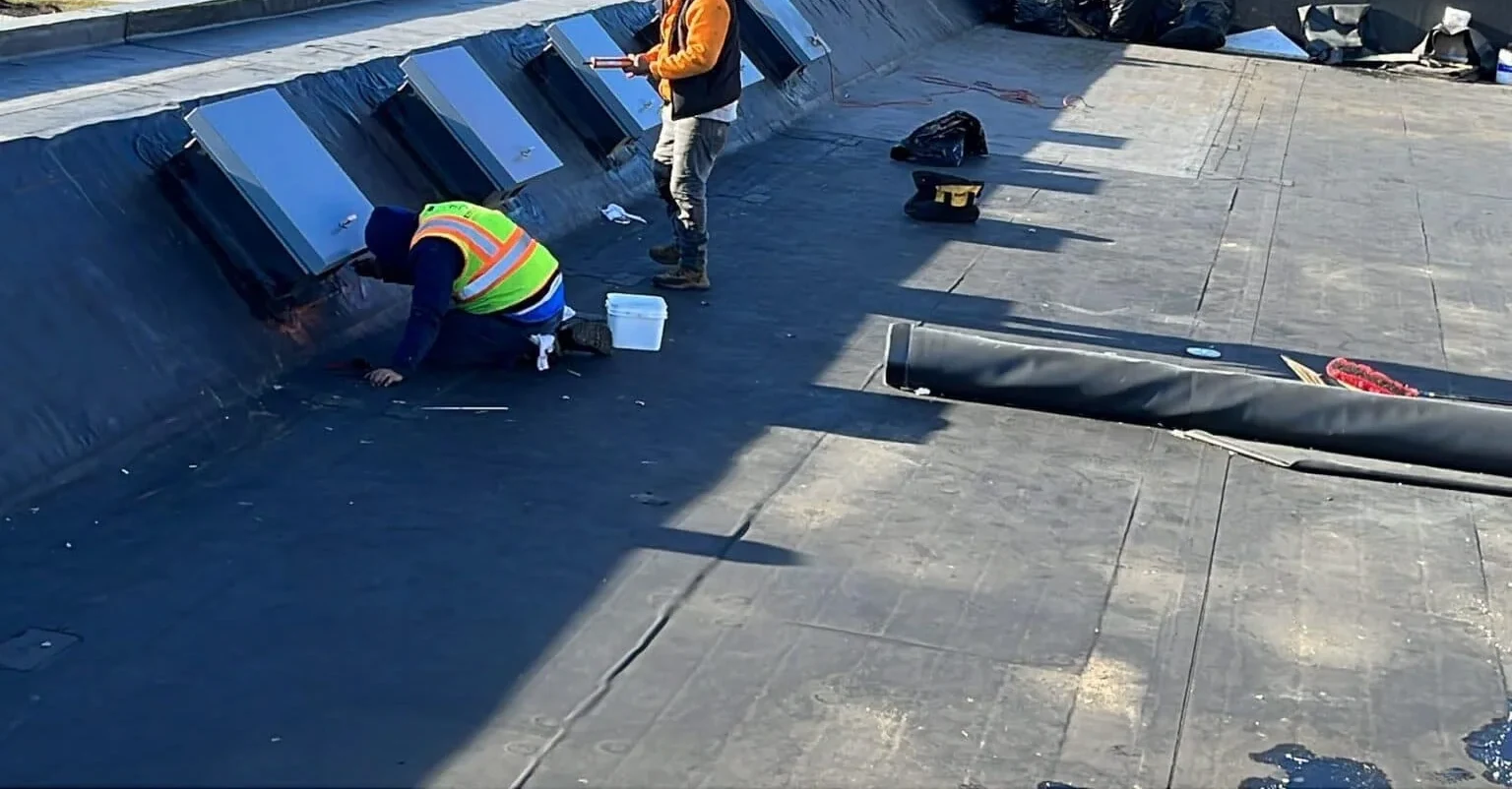
Repeated leaks across multiple sections, wet insulation beyond isolated details, or widespread seam failures can justify a replacement assessment. We compare repair, recover, and tear-off against the verified assembly, deck condition, drainage, and equipment clearances. The replacement review identifies what testing supports the quantity and which resident routes must stay available during each phase.
System selection follows the existing substrate, slope, drainage, and project requirements. TPO, PVC, EPDM, modified bitumen, coatings, and metal each have different details and repair methods. We document the installed roof before recommending a compatible approach. The TPO system option is considered only where the assembly and project criteria support it, not as a default for every apartment roof.
Planning for apartments shares some occupied-building concerns with hotel roofing and school roof work, but resident routines, unit access, and lease notices control this property’s sequence. We mark the phases, tie-ins, temporary protection, and any assumption that affects price or duration. Ownership can compare those limits with reserve planning before releasing a full replacement scope.
Closeout: What should the property file keep?
Keep the roof plan, moisture readings, test locations, photographs, material descriptions, measured quantities, and work dates together. Record which unit or common area reported water, whether access was granted, and when protection was removed. A closeout map should distinguish repaired areas from roof sections that were inspected but left unchanged.
After work, we check the completed lap or flashing transition and confirm the temporary tie-in has been addressed. Management receives open items, weather limits, and any recommended follow-up date. If another report comes in, the record helps compare the room, roof section, and timing with earlier findings without assuming the same source.
Send the Topeka property address, reported unit locations, access contact, roof plan, and prior repair records. We will identify the test boundary, resident coordination needs, and a work window for the next owner decision.
Commercial Roofing Questions
A leak showed up in a unit far from the roof drain. Where do you start?
We log the unit, floor, timing, and conditions, then inspect the roof path above and around that area. Testing confirms whether water followed a seam, curb, drain, or another transition before we price the repair boundary.
How much notice do residents need before roof work?
The property manager sets the notice rules and identifies affected entrances, patios, and units. We provide the phase dates, access limits, noise periods, and any temporary route changes for that notice.
Can a repair include insulation below the membrane?
Yes, when a test opening or moisture survey confirms wet insulation or damaged deck. We measure the added area and report it for approval before extending work beyond the agreed boundary.
What should ownership provide for a replacement comparison?
Roof plans, prior repair records, leak locations, access rules, and any reserve timing help set the comparison. We verify roof conditions, then separate repair, recover, and tear-off quantities with their phasing assumptions.
Can you respond after hours when water reaches an occupied unit?
Emergency response is available nights, weekends, and holidays. We coordinate entry with the property contact, protect the affected interior, and document what must wait for a permanent roof repair.
Related Roofing Work
Occupied Commercial Building Reroofing
29th Street and Wanamaker Corridor
Commercial Roof Inspection
Commercial Roof Drains and Scuppers
Commercial Roof Repair
Commercial Roof Replacement
Set the apartment roof work window
Service Area
Topeka, Auburn, Silver Lake, Carbondale, Rossville and Shawnee County, KS
Quick Contact
Email: [email protected]
Phone: 555-555-5555
Request a Roof Assessment
Send the Topeka property address, current leak locations, access contact, roof plan, and repair history. We will map the tested section and resident coordination needs.