
Senior Living Roofing in Topeka, KS
Home / Property Types We Roof / Senior Living Roofing
A ceiling leak over a resident room can affect care long before the roof source is clear. We match the room report to the roof section above it, inspect the nearest curb and drain, and mark the area that needs testing. The boundary sets which rooms require protection and when staff can release the work zone. Topeka has documented hail and wind events, so the maintenance file should distinguish ordinary wear from a condition confirmed after a specific storm report.
Care: Which rooms and routes need protection?
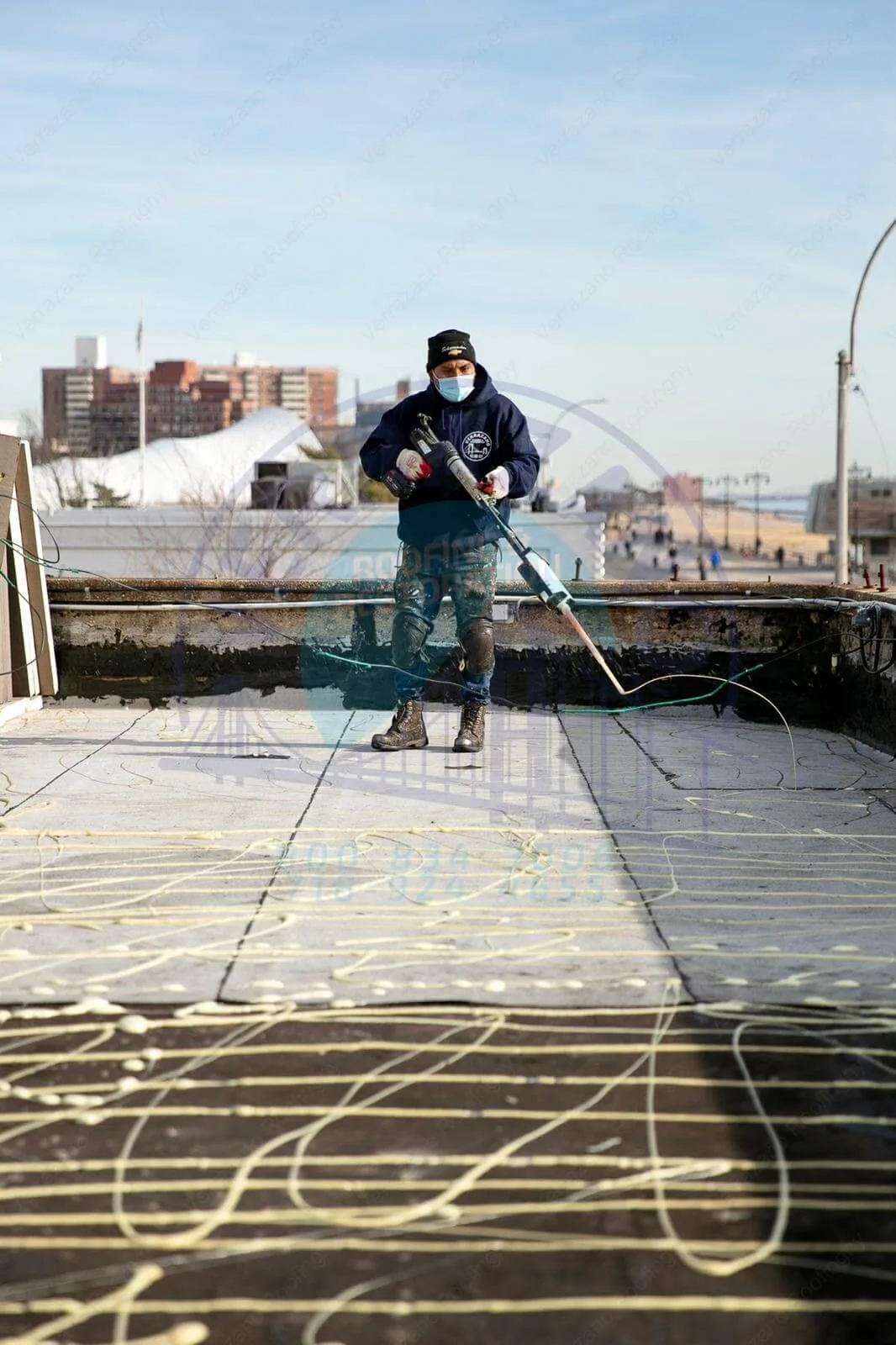
Before opening a roof section, we confirm the resident rooms, dining area, medication storage, therapy space, and staff routes below it. The facility identifies who can approve a room closure and how residents receive notice. A phased occupied-building plan states the daily tie-in, interior protection, cleanup point, and route that stays available while work proceeds.
Roof access can cross a service corridor or a controlled entry. We confirm the approved door, keyholder, cart path, and fire lane before staging materials. If a lift or debris route passes near a resident entrance, the schedule includes the closure and the person who confirms it is safe to reopen. Care staff decide the resident move; our scope identifies the roof area and the coordination needed to finish it.
Topeka’s Stormont Vail Health Campus and KU Health St. Francis Campus are major healthcare destinations. A senior property has its own circulation plan, but the same practical roof question applies: can staff reach residents and emergency vehicles reach the building during the work window? We review that property’s access map instead of assuming its route from another local facility.
Survey: How do we separate a stain from a roof defect?
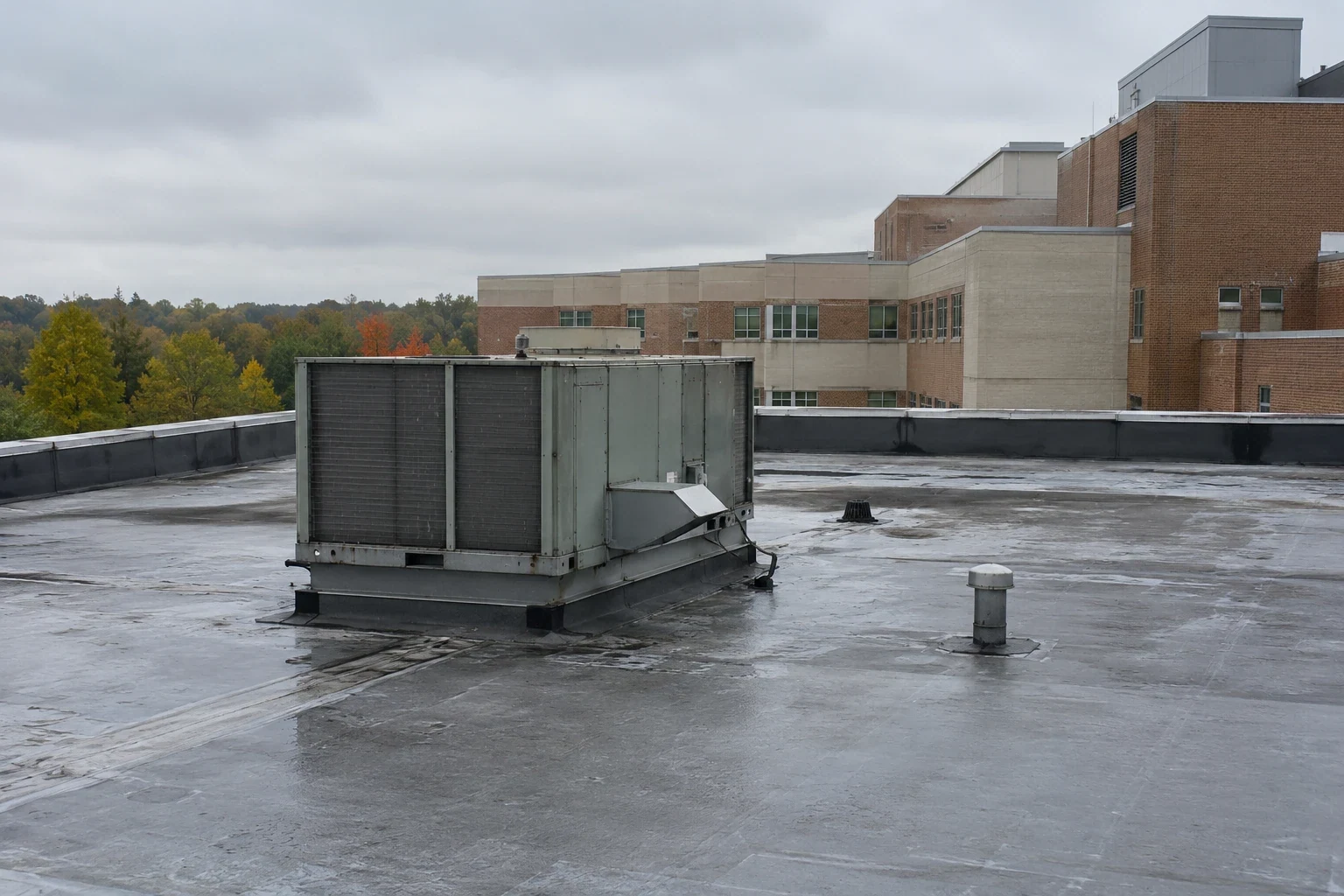
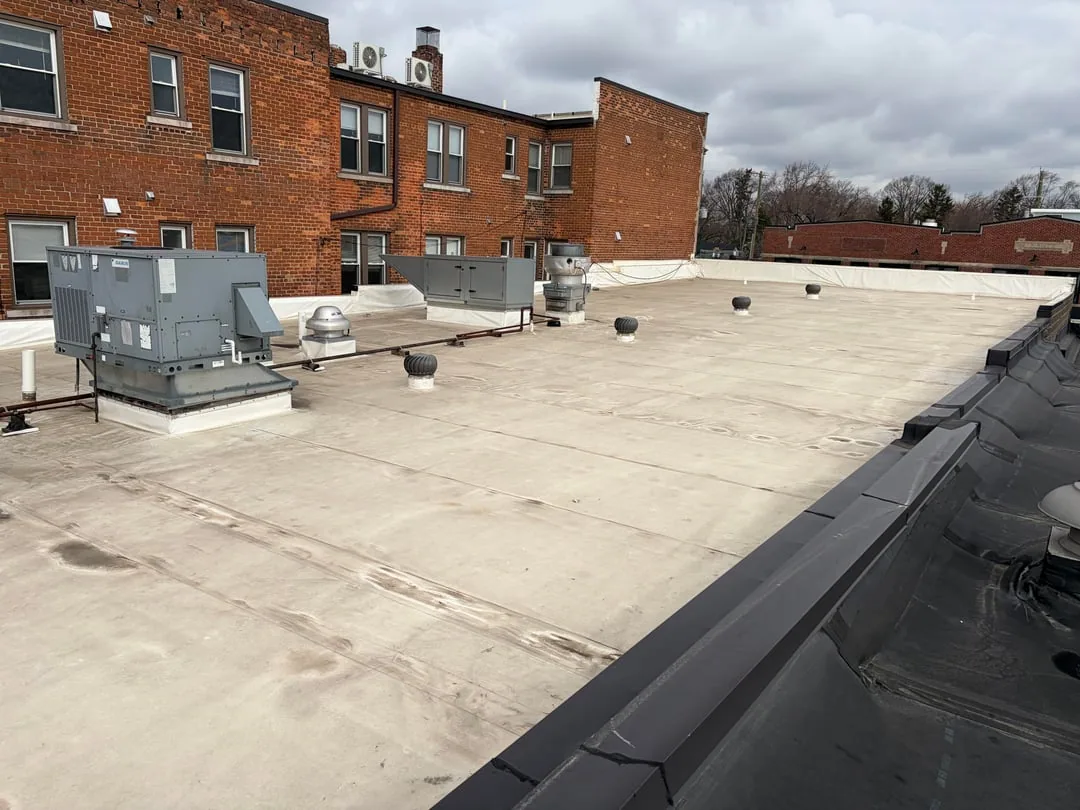
A stain on a resident-room ceiling does not locate the opening above it. We note room, floor, date, and whether water appeared during rain, thaw, or equipment service. Then we compare those reports with drains, wall edges, penetrations, and earlier repairs. A commercial roof inspection maps visible conditions and identifies the tested section.
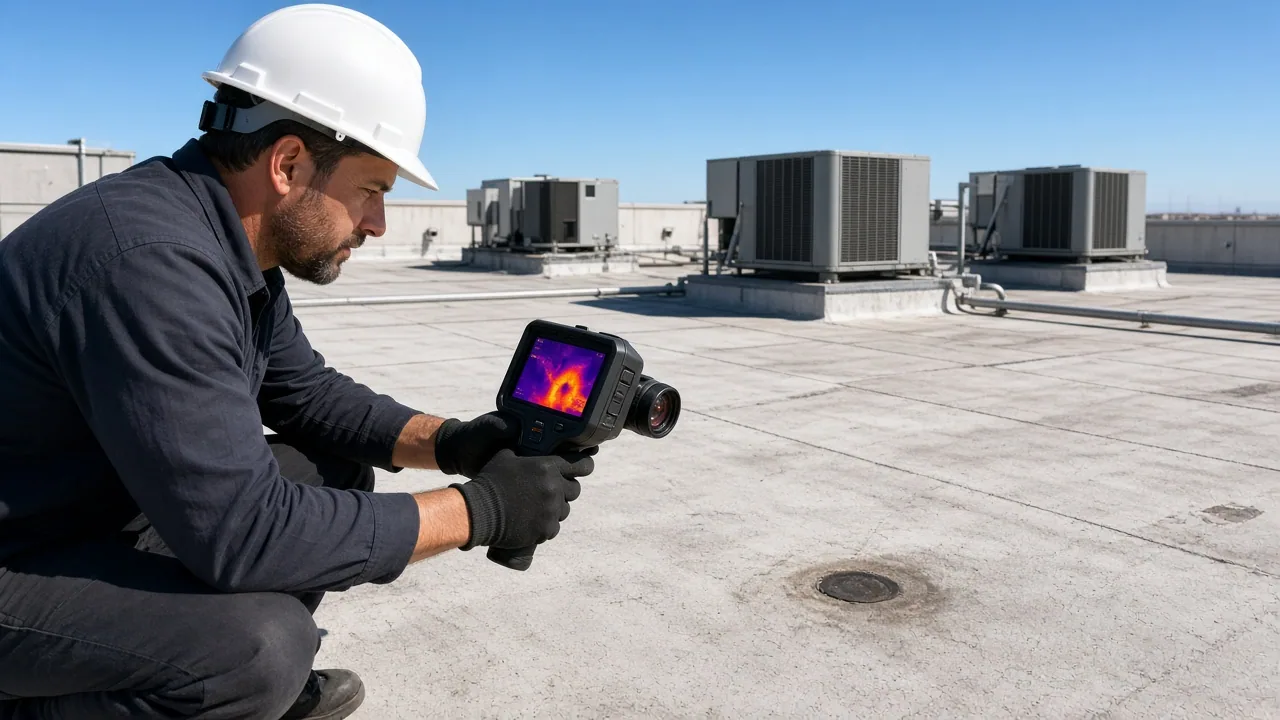
Thermal scanning gives a preliminary moisture map; any flagged zone is confirmed through an opening before removal limits are set. We record what was measured and what remained inaccessible. A moisture survey does not replace a roof-level look at the lap, curb, or flashing detail. The report ties each reading to a roof location, so ownership can approve a defined repair boundary.
Topeka climate normals show about 36.5 inches of precipitation annually, with summer storms and winter precipitation. On a senior living roof, we check whether water clears the drain bowl, whether a low area remains damp, and whether ice restricted access. The local pattern helps set a seasonal inspection window; a property finding still determines whether drainage or membrane work is needed.
Repair: What should the work order define?
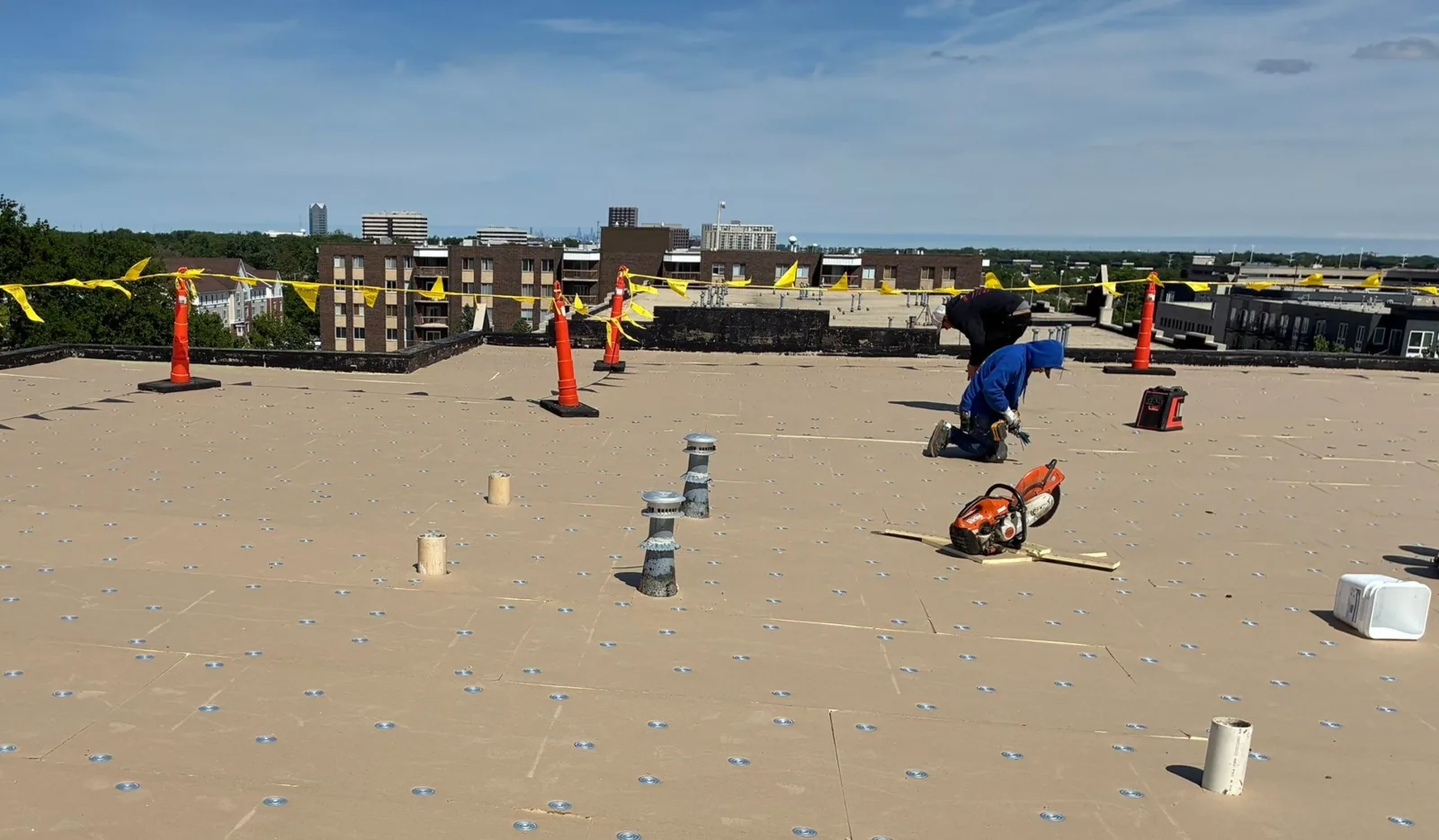
A repair order needs the opening location, material, measured dimensions, room protection, and closeout check. A localized seam or flashing defect may be suitable when nearby insulation and deck remain sound. The commercial roof repair scope names the tested area and the condition that would require added removal. That gives the administrator a clear owner decision before concealed material is disturbed.
If an opening shows wet insulation beyond the approved boundary, we protect the section and report the added condition with photographs. Management can authorize the added quantity, defer it to another resident schedule, or request more testing. We keep the temporary tie-in secure while that decision is pending. The invoice and closeout record distinguish base work from any added material or interior protection.
Emergency response can be requested at any hour, including weekends and holidays. We coordinate entry with the designated facility contact, limit exposure below the leak, and record the temporary step. Permanent roof work follows once access and installation conditions are safe. The report states which rooms or routes remain restricted rather than treating mitigation as a completed repair.
Weather: When should staff request another roof check?
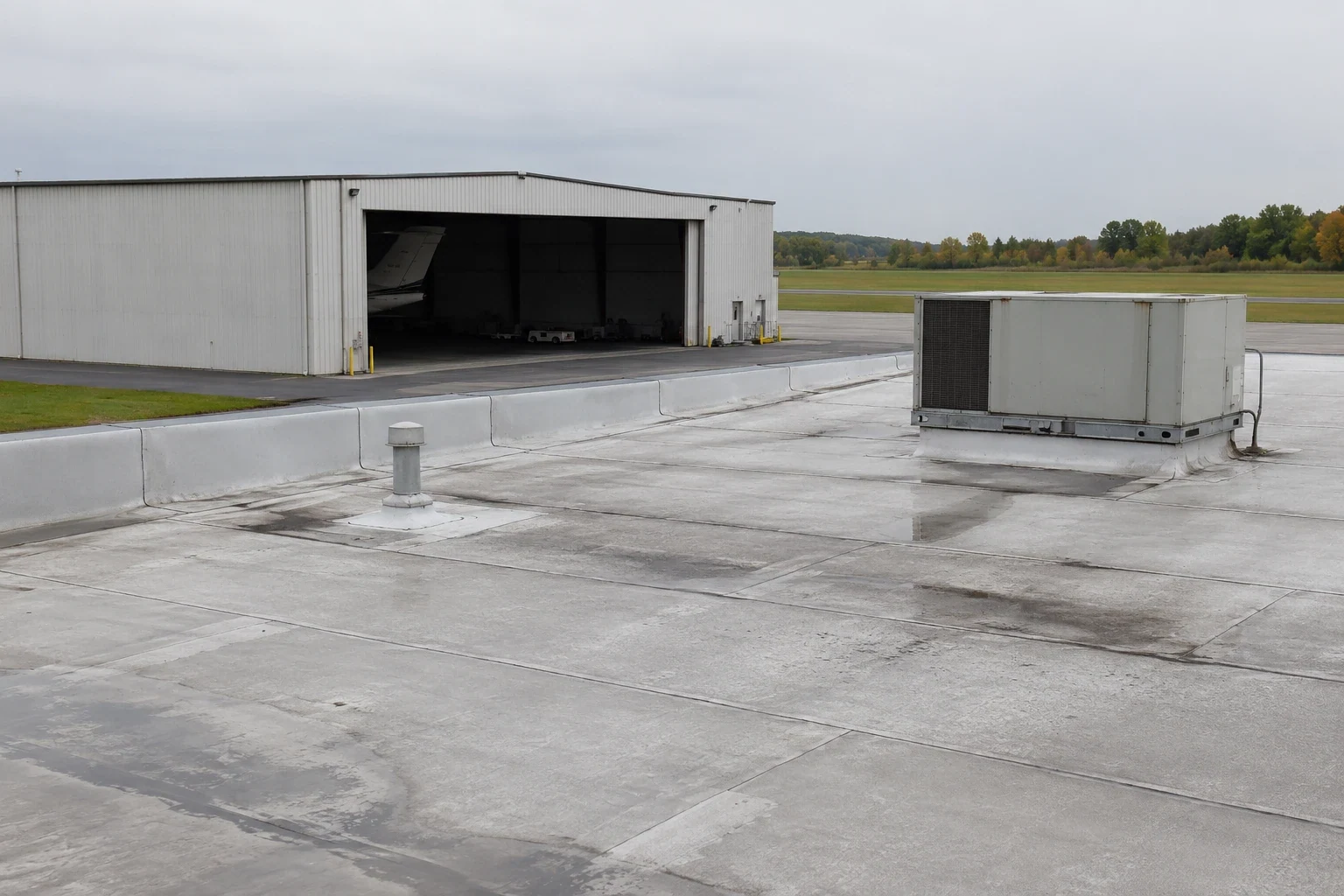
After Topeka hail or wind is reported at a senior property, we check edges, coping, seams, and mechanical penetrations for visible movement or impact. The 1966 tornado damaged or destroyed every building at Washburn University, a documented local event that shows the city’s severe-wind history. It does not describe a current property condition. We photograph present findings and keep the storm date separate from older maintenance records.
Winter precipitation creates a different inspection limit. Snow or ice can cover a drain bowl and make a roof route unsafe. We identify areas that could not be reached, protect an active leak from inside, and set a return visit when safe access is available. If a thaw leaves water behind after the outlet clears, we compare roof slope and nearby seams before pricing a drain repair.
Waiting through repeat wetting can widen interior protection needs and obscure where the original water path began. A maintenance visit should record the first report, roof condition, temporary measures, and whether the area dried after the weather changed. Those facts help distinguish a recurring detail from a new report elsewhere in the building.
Options: When should ownership compare larger work?
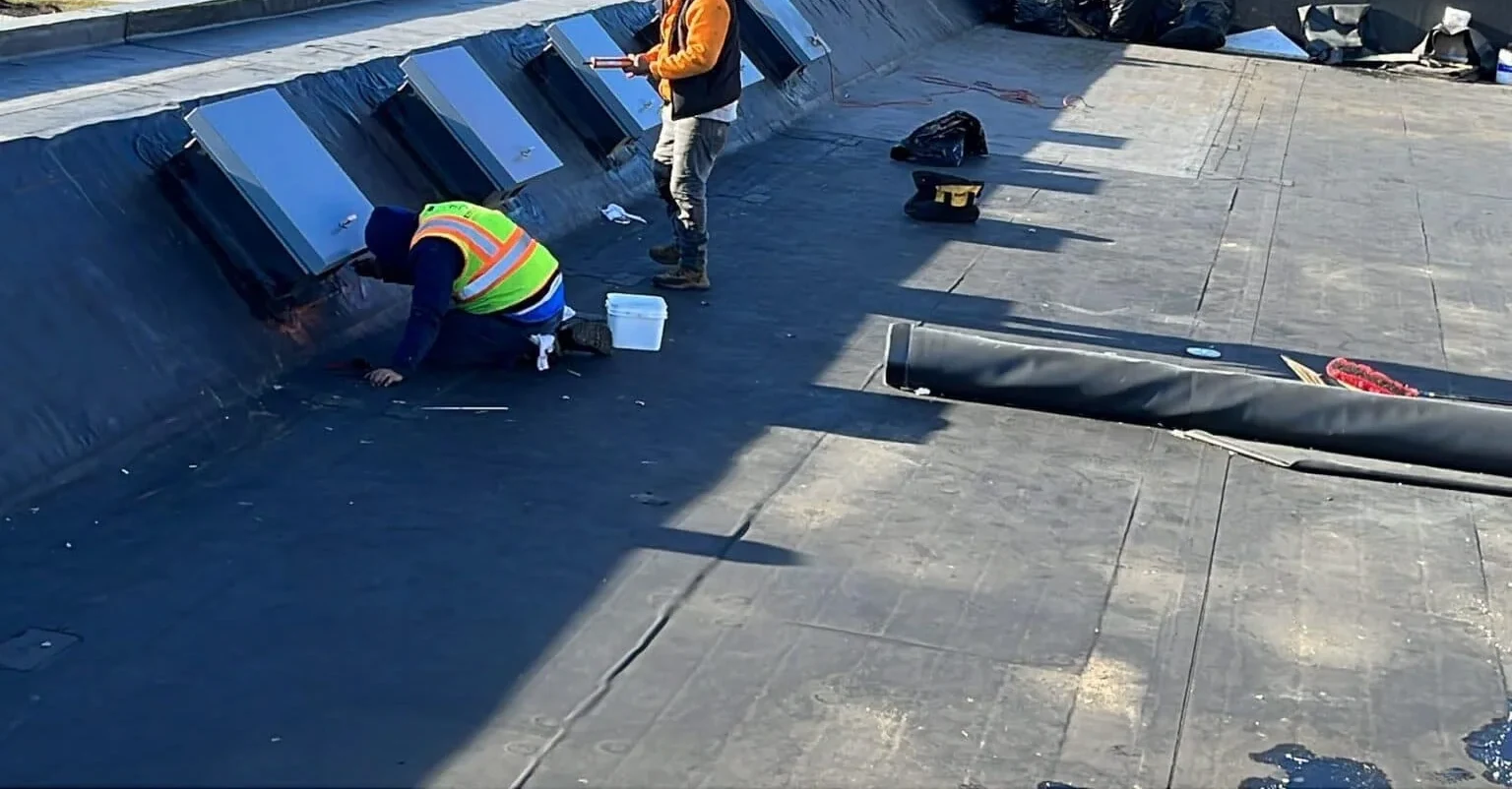
Several leaks across separate wings, moisture confirmed in multiple test areas, or repeated failures at many transitions can justify a capital review. The capital comparison measures repair, recover, and tear-off against the assembly, deck, drainage, and resident-release schedule. The proposal states the work phases and any room access assumption that changes duration or cost.
System selection follows the verified substrate and project criteria. TPO, PVC, EPDM, modified bitumen, coating, and metal systems use different seams and edge details. An EPDM option is considered only where its assembly fits the building conditions and owner requirements. We show tested findings separately from portions of the roof that were not opened.
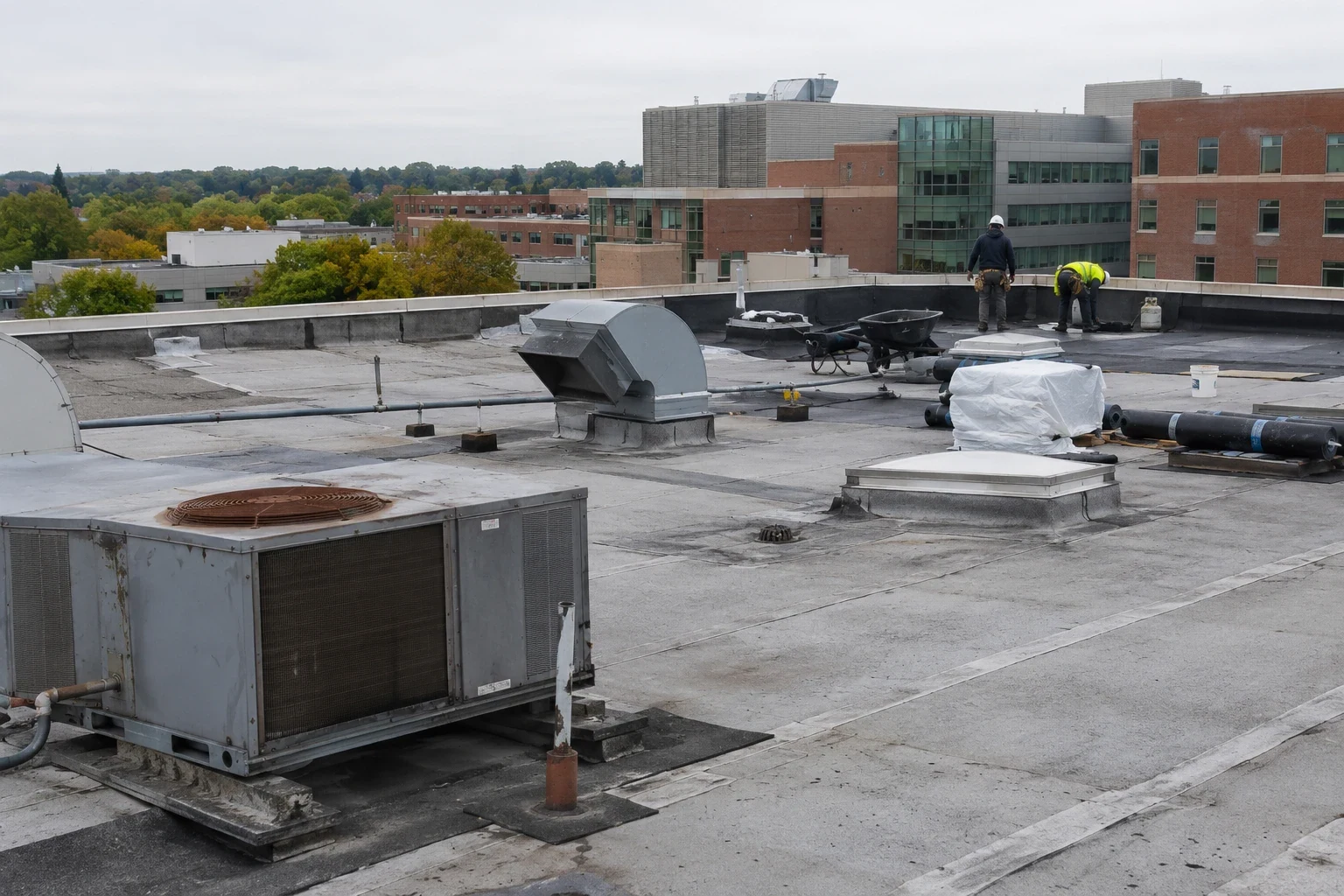
For a community tied to a wider portfolio, healthcare facility roof planning can help organize records across properties, while a hospital roof review addresses a different operating setting. Senior care has its own resident routines and room-release process. An apartment roof plan also depends on resident routes and occupied-unit phasing. We set the work sequence from those site contacts, then record the approval at each completed phase.
Record: What should the care team keep?
Retain the roof map, room reports, photographs, moisture readings, material used, and repair dimensions. Record who released each work area and when interior protection came down. Mark sections that were inspected but not tested, plus any return visit needed after snowmelt or additional rain.
When a resident report returns, compare its room and timing with the last roof repair, drain location, and nearby mechanical service. A second ceiling mark may follow a separate path. The facility record helps the next inspection start with the confirmed facts and avoid reopening a sound repair without a new test.
Send the Topeka address, affected rooms, access contact, roof plan, and available maintenance notes. We will identify the test boundary, resident coordination, and the work window needed for the next owner decision.
Commercial Roofing Questions
What details help trace a leak reported from a resident room?
Room number, floor, time, and weather help us compare the interior report with roof drains, curbs, and prior repairs. We test the suspect area before setting a removal quantity.
Can a roof crew work above an occupied wing?
A released zone can be scheduled with room protection, resident notice, and a daily tie-in. The facility identifies who approves access and when the room or route returns to use.
How do you document wet insulation over a care area?
We mark the test location, record readings or opening dimensions, and photograph the material. Added removal stays separate until management approves the measured extent.
Can someone respond after regular facility hours?
Our on-call crew can be reached at night, on weekends, and during holidays. We coordinate entry and immediate protection with the assigned facility contact, then scope lasting roof work from field findings.
What would support comparing replacement with repeated repairs?
Leaks in multiple roof zones, widespread wet insulation, or recurring transition failures can support that review. Testing and maintenance records define the areas included in each option.
Related Roofing Work
Occupied Commercial Building Reroofing
Commercial Roof Inspection
Commercial Roof Infrared Moisture Survey
Commercial Roof Repair
Commercial Roof Replacement
Healthcare System Roofing
Set a roof work window for resident care
Service Area
Topeka, Auburn, Silver Lake, Carbondale, Rossville and Shawnee County, KS
Quick Contact
Email: [email protected]
Phone: 555-555-5555
Request a Roof Assessment
Send the Topeka property address, affected rooms, facility contact, roof plan, and repair notes. We will map the tested area and resident access needs.