
Spray Polyurethane Foam Roofing in Topeka, KS
Home / Roof Systems / Spray Polyurethane Foam Roofing
Spray polyurethane foam roofing depends on a continuous foam layer and a protective coating that remains intact. We inspect both before recommending repair, recoat, or removal. In Topeka, facilities near Topeka Regional Airport Business Center and Stormont Vail Health Campus may have distinct access and operational controls. Those conditions affect inspection planning, not the technical result. We map coating wear, exposed foam, ponding, penetrations, and any areas that require testing.
Foam: What should the SPF inspection cover?
SPF creates a continuous insulation and water-control layer when applied to a suitable substrate and protected by coating. We review project records, visible foam profile, coating condition, repairs, and transitions before assigning a condition. A commercial roof inspection should map cracks, blisters, erosion, exposed foam, and coating loss by roof zone. We note whether the surface is dry and whether inspection conditions allowed close review.
Foam thickness and density can vary across a roof. When those values affect repair, energy, or code decisions, we use approved test locations or supporting documentation to establish them. At test points, record the roof zone, measured depth, substrate, coating layers, and how the opening was restored. A few measurements describe the tested locations; they should not be represented as a complete roof-wide survey.
We pay close attention to terminations, wall bases, curbs, drains, skylights, and equipment supports. These interfaces can interrupt the continuous surface and concentrate water. The inspection identifies whether coating turns up and terminates at the detail, whether the foam edge remains protected, and whether prior sealant has separated. If a penetration moves or has damaged support, the roof repair alone may not resolve the source.
Coating: Is the foam still protected?
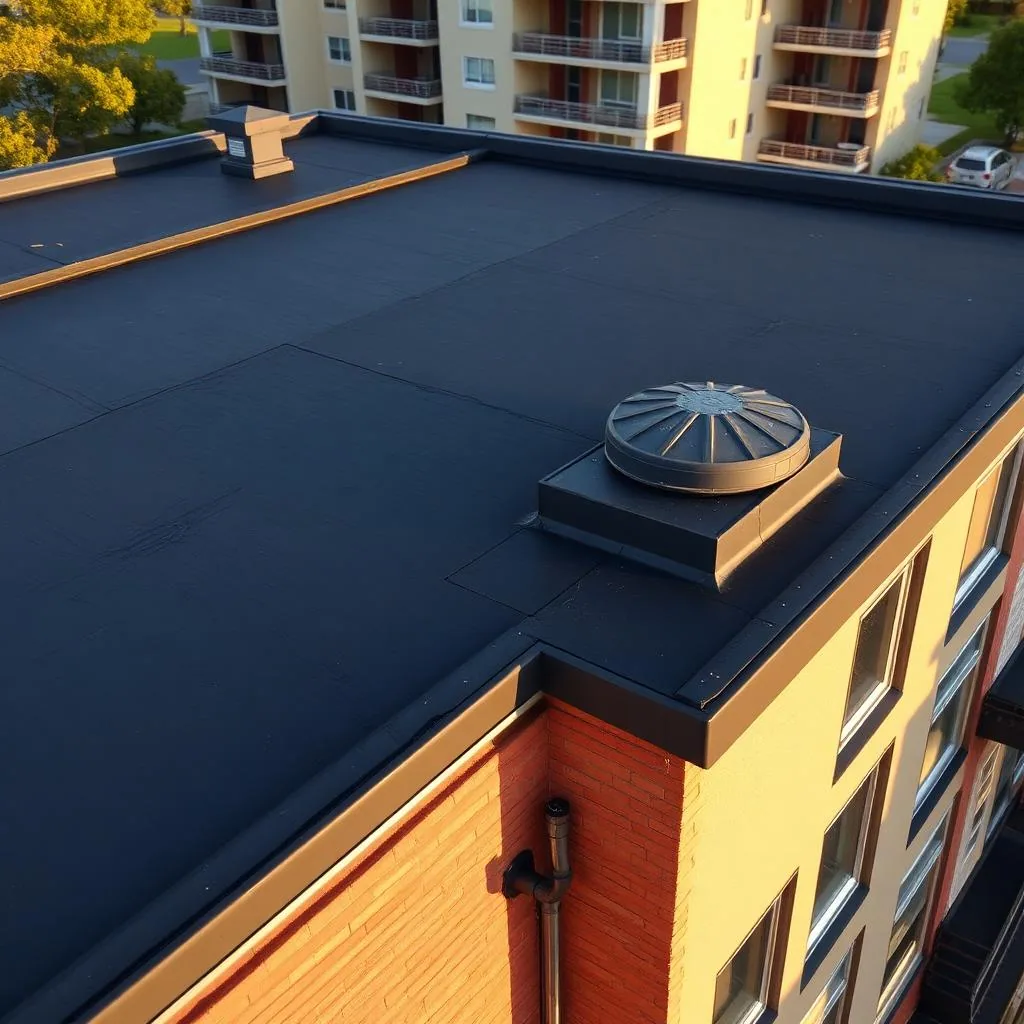
SPF requires a coating system compatible with the foam and exposure conditions. We inspect for erosion, cracking, pinholes, bare foam, weak adhesion, and prior layers that may affect recoating. A roof coating restoration scope should state preparation, primer or compatibility checks, repair materials, target coverage, and the areas excluded. Coating thickness or coverage should be measured according to the specified product and project requirements.
A fresh coating can improve protection when the existing foam is sound and the substrate is suitable. Wet insulation, failed foam adhesion, damaged decking, and unresolved drainage each need correction before coating. We separate isolated surface wear from conditions requiring removal or additional testing. Where the old coating is chalked or contaminated, the proposal includes cleaning and a test area when adhesion is uncertain.
Weather and surface preparation govern application windows. We check forecast, dew, surface temperature, and moisture according to product requirements. Topeka’s warm-season storms can interrupt open work, so the plan needs daily tie-ins and a secure end-of-shift condition. The crew records which section was prepared, coated, and left for a later pass. A phased work plan should not leave exposed foam without the specified protection.
Moisture: How do we confirm what lies below?
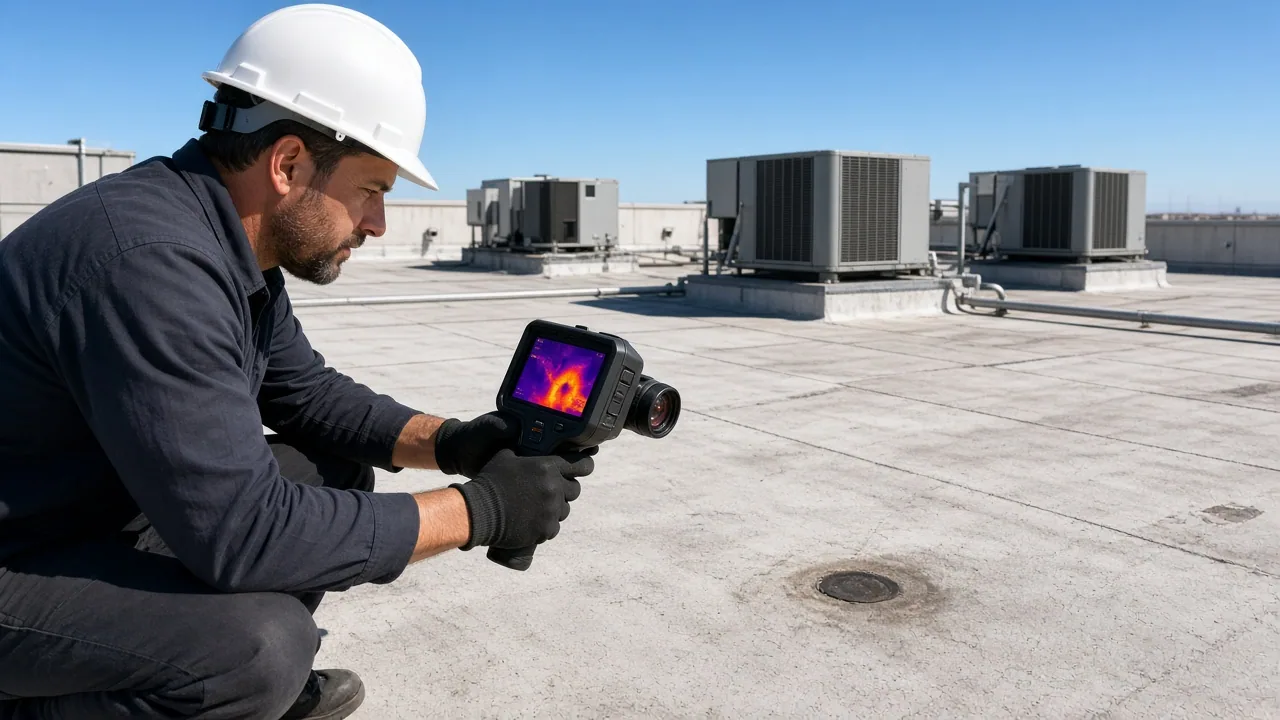
Water can enter at seams, penetrations, or worn coating and move through the foam or underlying assembly. We compare reported leaks with slopes, drains, low areas, and detail conditions. An infrared moisture survey may identify suspect zones; when readings affect removal quantities, we confirm them with a core or another approved method and mark the measured boundary.
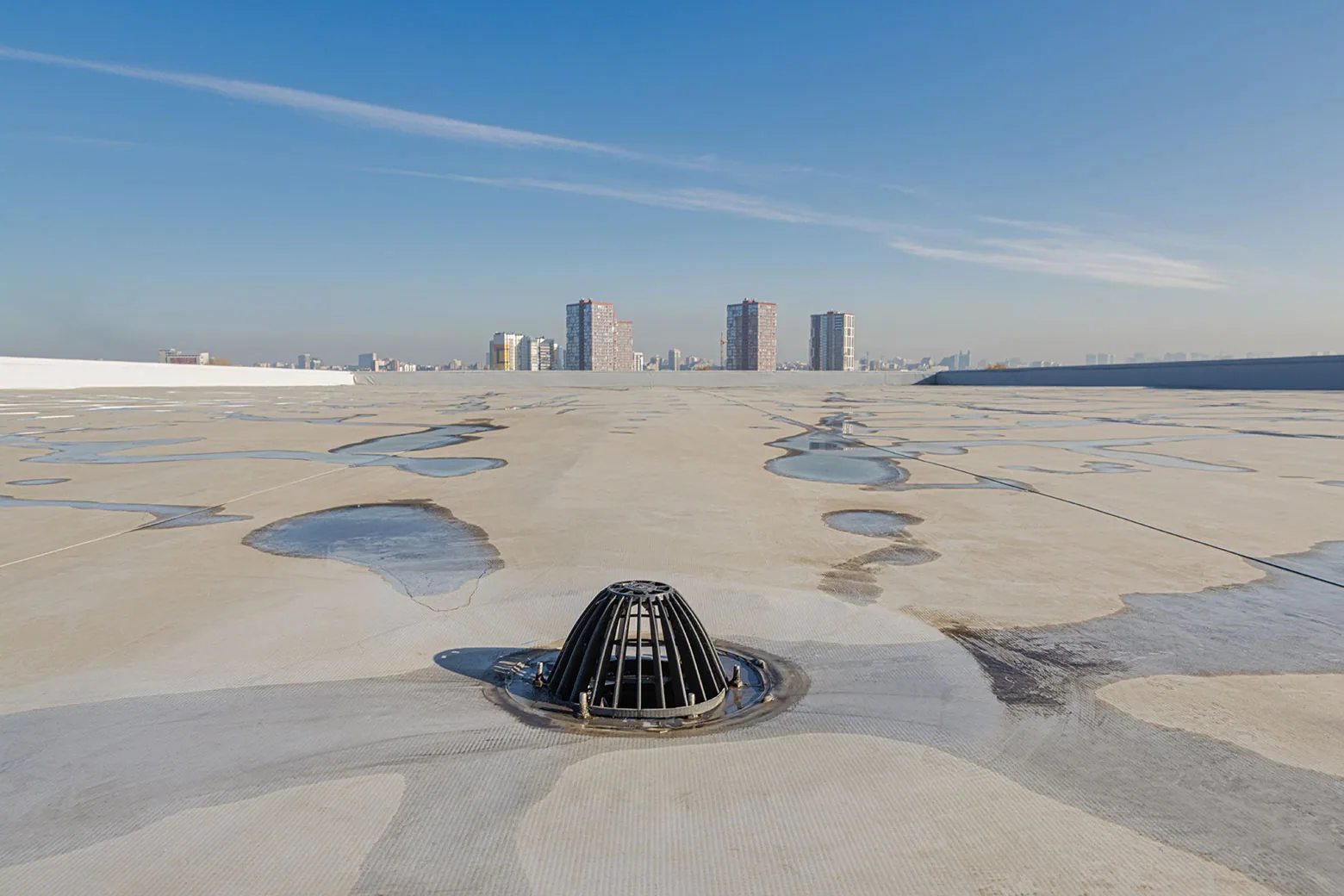
Topeka’s annual precipitation is around 36.5 inches, and the climate includes summer thunderstorms and winter precipitation. We inspect after water has had a chance to clear before calling a low area ponding. At drains and scuppers, we look for debris, reverse slope, coating failure, and separation at the outlet. A drain review can distinguish a water-management issue from coating wear or a membrane detail failure.
Interior reports should identify room, ceiling location, date, and the conditions that preceded the leak. We compare those points with roof features and recent repair history. If the roof was wet, frozen, or blocked during inspection, the report says so and names the follow-up needed. The report names the follow-up needed to complete the moisture assessment.

Repair: Can damaged foam be patched?
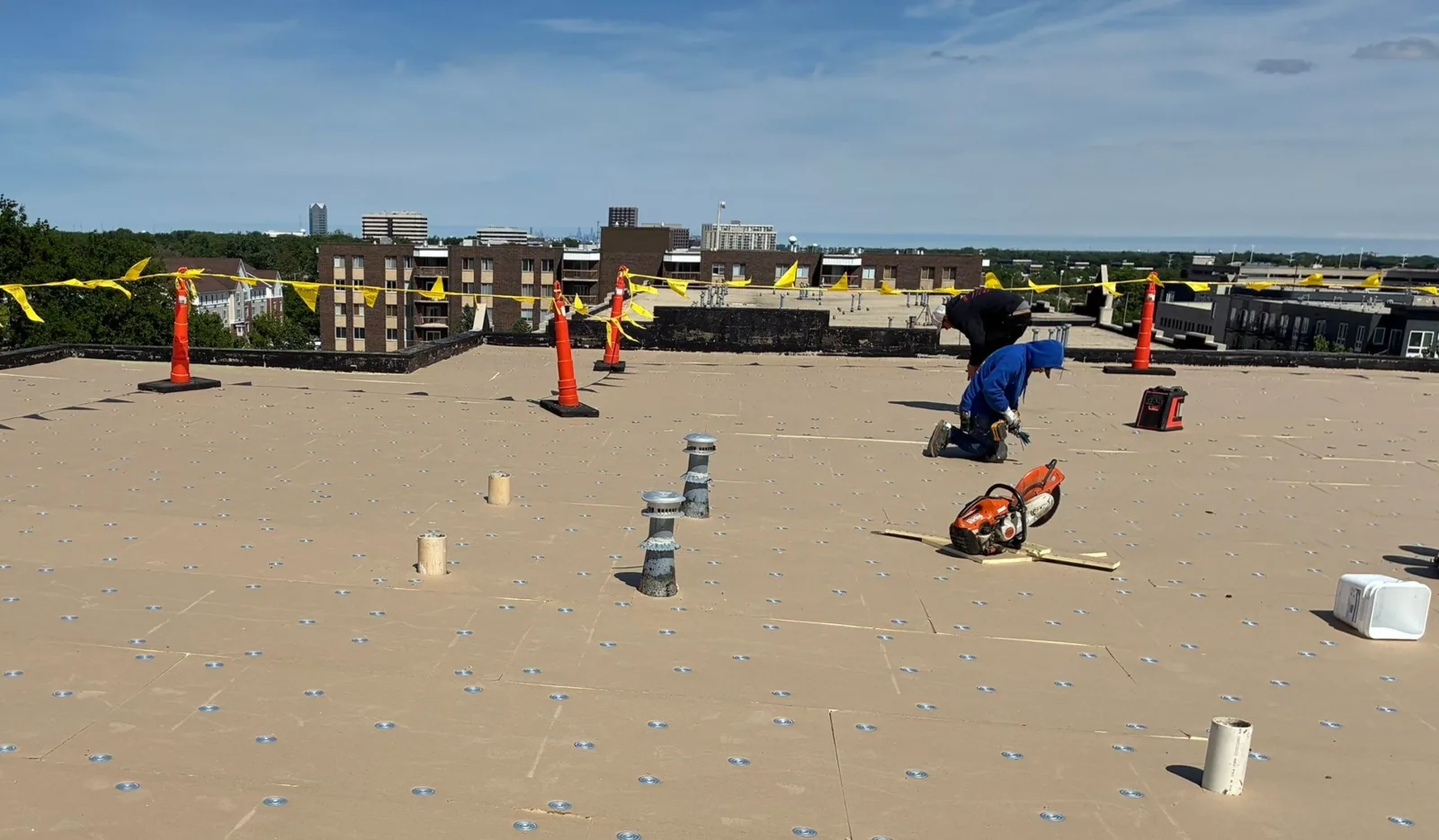
Localized SPF repair may fit when damage is limited and surrounding foam remains well bonded and dry. The crew removes unsound material to a defined boundary, restores the profile, and applies compatible protective coating. A commercial roof repair scope should include preparation, foam replacement limits, coating tie-ins, and closeout photos. The proposal should also say how hidden damage will be handled if removal reveals a wider condition.
Cracks, punctures, and isolated coating wear need different details. A crack may follow movement or a weak interface; a puncture can expose foam to water and sunlight; widespread erosion may require a recoat evaluation. We inspect the surrounding surface and nearby transition rather than filling only the visible opening. Where adhesion is in question, a test patch can inform the selected repair method.
We identify whether the repair crosses a drain, curb, wall, or equipment support. Those edges require careful tie-in and may involve another trade. The owner receives measured limits and any allowance for concealed conditions before work begins. If the approved quantity ends, the crew pauses and requests direction rather than expanding into unpriced roof area.
Recoat or replace: Which path fits the roof?
A recoat can be evaluated when foam is sound, dry, attached, and suitable for another coating layer. Widespread wetness, delamination, severe erosion, or damaged substrate may require broader repairs or removal. A replacement assessment should compare the tested conditions with the cost and disruption of recoat, partial removal, or full replacement. We state what was measured and what remains concealed.
SPF can be compared with silicone roof coatings or TPO roofing only after the existing assembly, slope, drainage, and project requirements are understood. A coating over a different substrate does not reproduce an SPF system. The scope defines insulation, attachment, surface preparation, transitions, and warranty requirements for the chosen approach.
At the Airport Business Center, tenant operations may affect scheduling; a healthcare campus has its own service and safety protocols. We confirm requirements with each property contact before setting the work window. Phasing, temporary protection, equipment staging, and daily closeout should be settled before mobilization.
Record: What should the SPF closeout show?
The file should include roof-zone plans, photographs, test locations, measured conditions, foam repairs, coating product and coverage records, and transitions completed. Note any wet or inaccessible areas and identify follow-up tests. The closeout distinguishes the repaired section from areas that still need testing.
For maintenance, record coating condition at drains, curbs, walls, and exposed foam edges. Track repairs by date and measured area, then compare future leak reports with the roof map. At Stormont Vail Events Center, event schedules would shape access coordination; another building may set different occupancy limits. The facility contact confirms release, escort, staging, and inspection timing.
Final notes identify material installed, preparation, weather interruptions, accepted exceptions, and any follow-up agreed by the owner. If a future recoat is recommended, the report should state the observed trigger and tested areas. That gives the maintenance team a usable baseline without overstating the condition of the entire roof.
Commercial Roofing Questions
How long does an SPF roof last?
Service life depends on installation, coating maintenance, exposure, and repairs. We assess current conditions and record the tested area rather than predict from age alone.
Can SPF be recoated instead of replaced?
Often it can be evaluated for recoat when the foam remains dry, bonded, and suitable. Testing may be needed where adhesion or moisture is uncertain.
Does a coating fix wet spray foam?
No. Wet or detached material needs investigation and may require removal. A coating should not conceal an unresolved moisture condition.
How do you find leaks in an SPF roof?
We compare interior reports with drains, penetrations, coating defects, and low areas. Scans can help locate suspect zones, with field confirmation as needed.
What should an SPF repair proposal include?
It should define removal limits, foam and coating materials, preparation, tie-ins, access, test areas, and the process for concealed conditions.
Related Roofing Work
Stormont Vail Health Campus
Commercial Roof Inspection
Commercial Roof Coating Restoration
Commercial Roof Infrared Moisture Survey
Commercial Roof Drains and Scuppers
Commercial Roof Repair
Test the SPF condition before choosing a coating
Service Area
Topeka, Auburn, Silver Lake, Carbondale, Rossville and Shawnee County, KS
Quick Contact
Email: [email protected]
Phone: 555-555-5555
Request a Roof Assessment
Send the Topeka address, roof plan, SPF and coating records, leak history, and access contact. We will map suspect areas and identify the tests that could change the repair or recoat scope.