
Church Roofing in Topeka, KS
Home / Property Types We Roof / Church Roofing
A water mark over a sanctuary aisle can interrupt a service before anyone knows whether the roof or a pipe is at fault. We trace the reported path, inspect the roof detail above it, and mark the section that needs testing. That location sets the interior protection and the work window. Topeka’s downtown plan names the Historic Kansas Avenue District and Capitol District. At a church property, the facility contact confirms current street access and staging limits.
Schedule: Which gatherings set the work window?
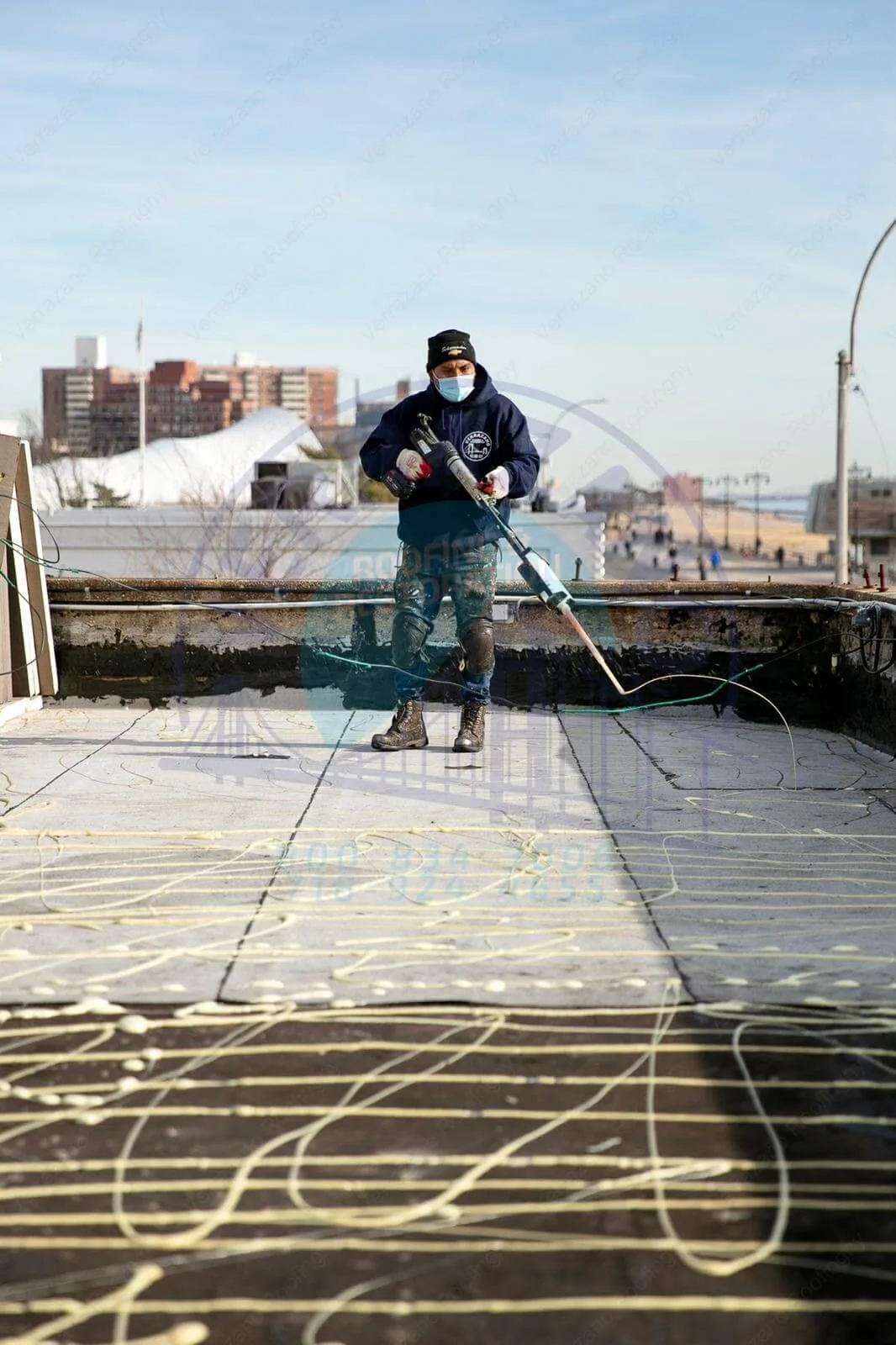
A church calendar can include services, funerals, classes, meals, and evening use in separate rooms. We ask the facility contact to identify the roof zone above each occupied space, the times when access is acceptable, and the person who can release a room. A phased occupied-building plan states what opens each day, how the roof is tied off, and when cleanup is complete.
Staging may use a shared lot, narrow side drive, or entrance that must remain open for congregants and deliveries. We confirm the lift path, material drop, fire access, and any area that needs temporary barriers before scheduling removal. If a roof section sits over a fellowship hall, the sequence can keep that room available while a separate wing is repaired. The written plan names each release point.
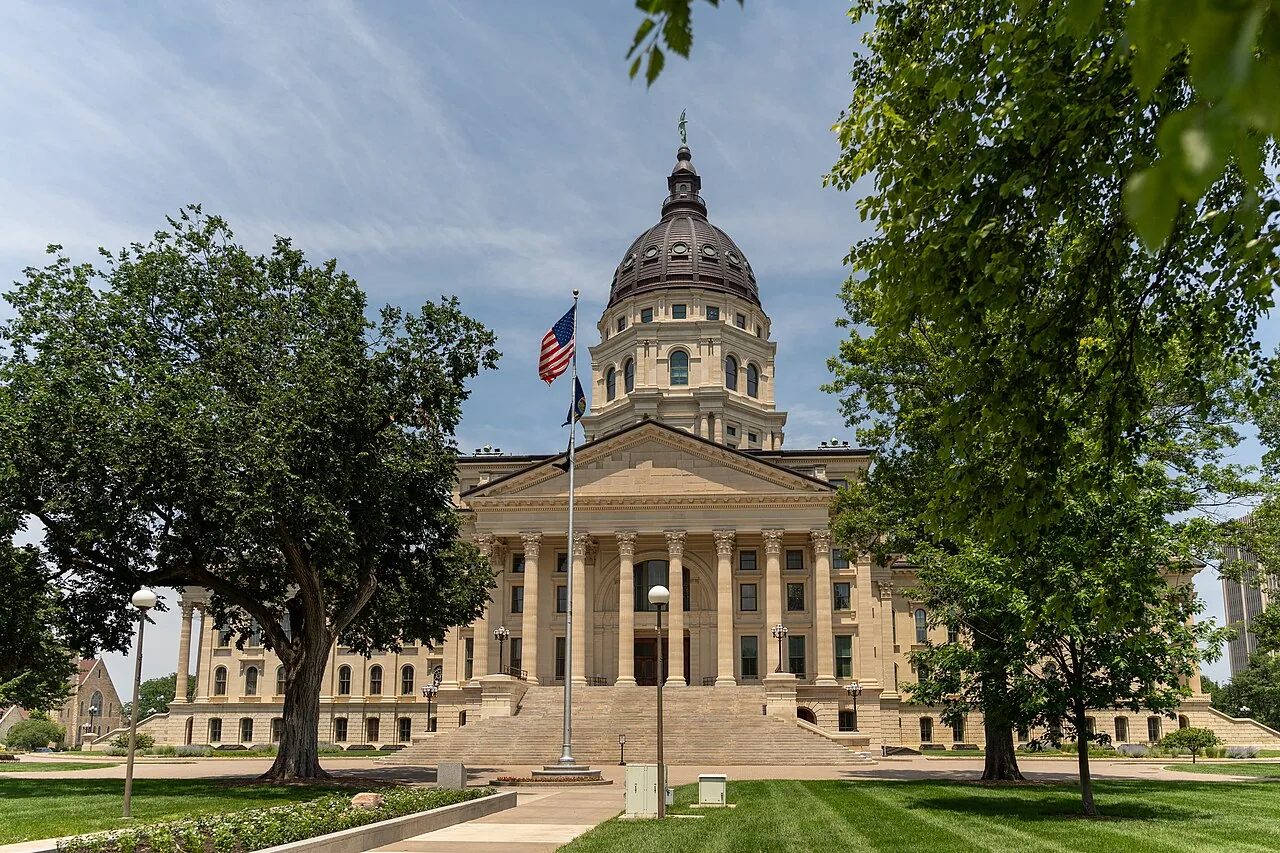
Topeka’s Capitol District is part of the downtown plan, and the Kansas State Capitol is a public destination within that district. Those civic uses illustrate the access demands of central properties; the congregation’s own service schedule and site map govern its roof work. We confirm current street and parking controls at the church address.
Inspection: Where can water enter?
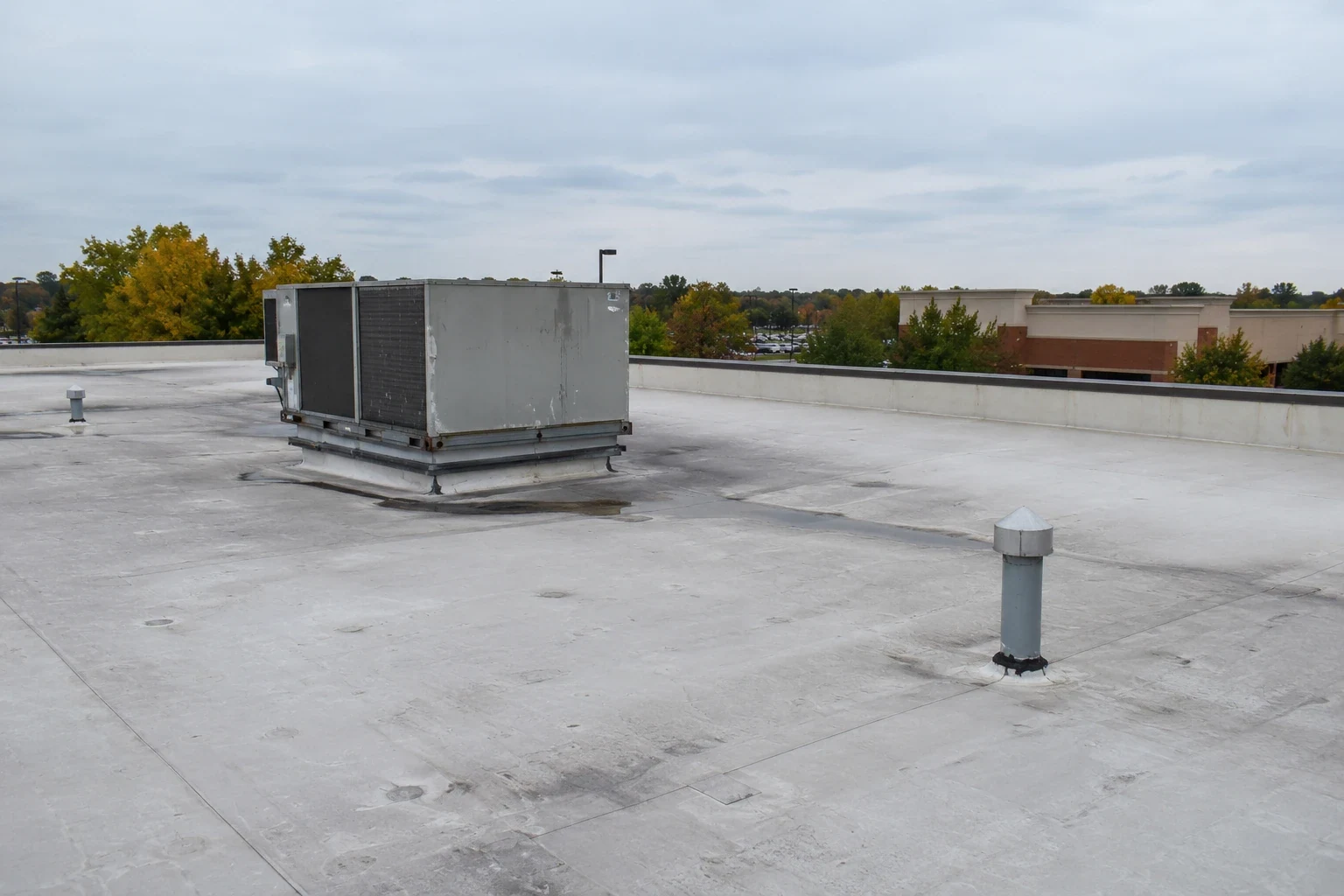
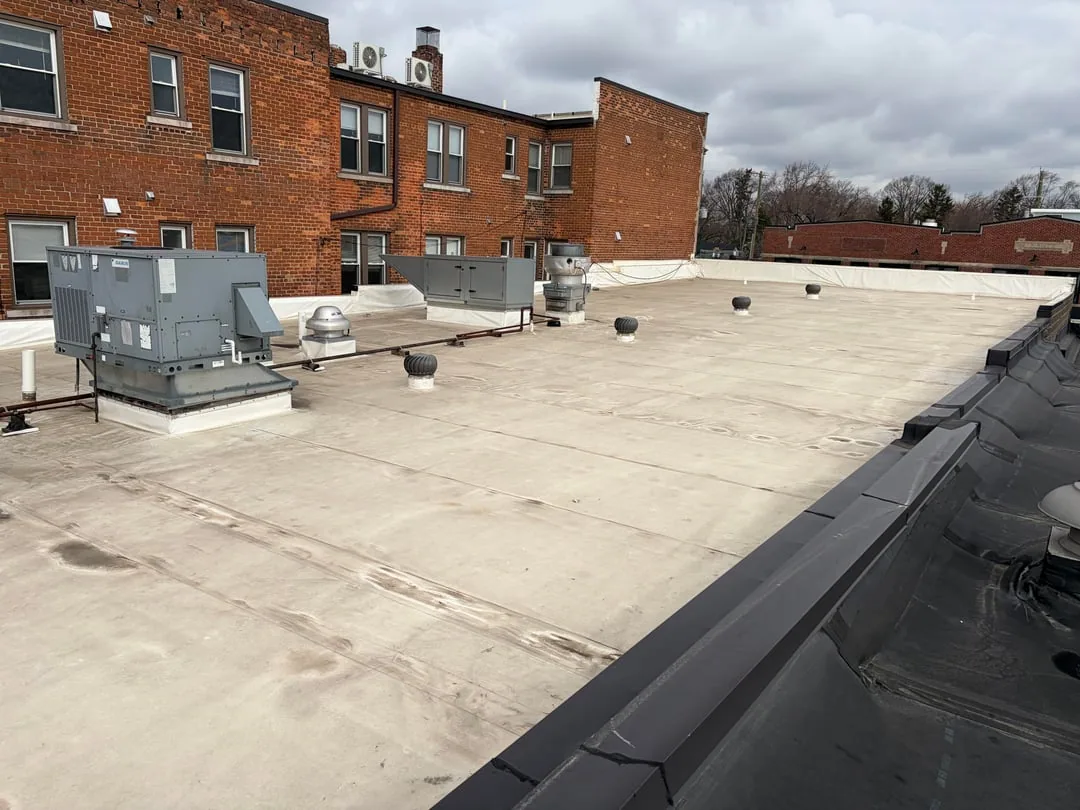
A sanctuary ceiling stain may sit several feet from the roof opening. We compare the room location with roof slope, drains, parapets, skylights, and equipment penetrations. The commercial roof inspection records the assembly, visible condition, and any area that was not reached. Testing is aimed at the suspect section, not spread across the roof without evidence.
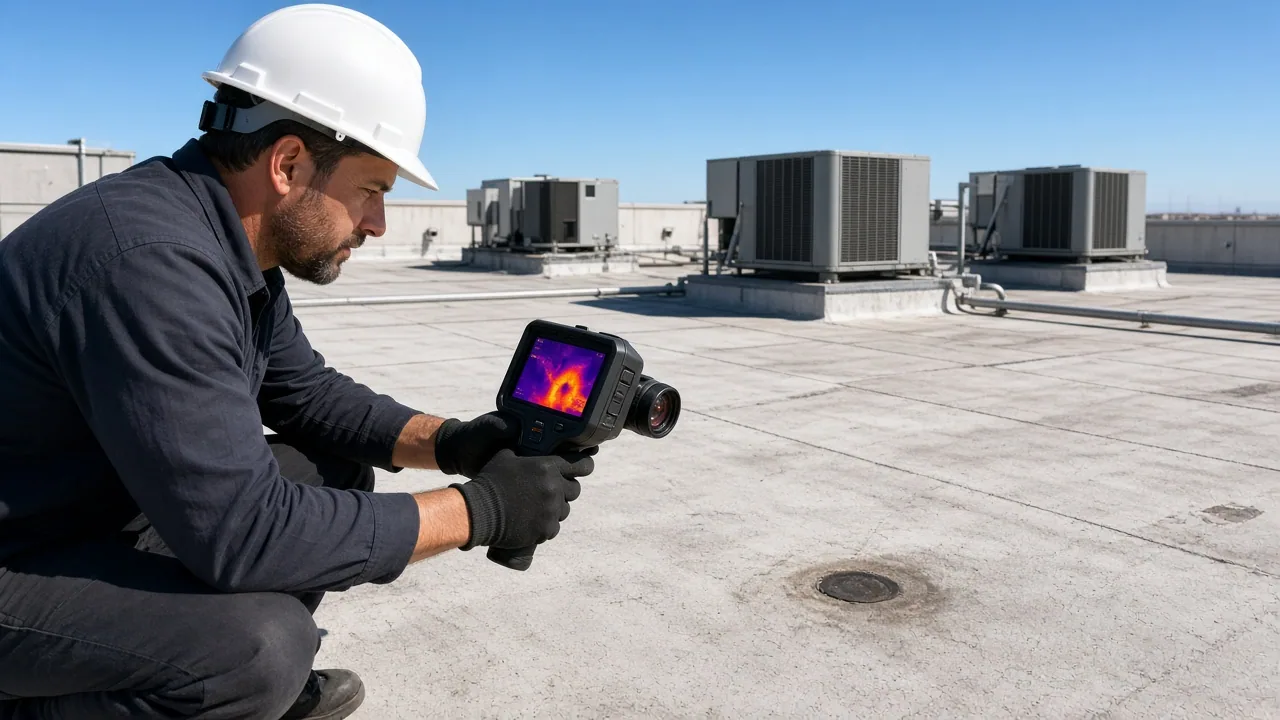
Church additions often leave multiple roof heights and different materials meeting at a wall or valley. We inspect the transition, nearby laps, curb corners, and termination bars, then look for moisture below the membrane if it changes the repair quantity. A moisture survey can help select a test opening. The report marks readings separately from confirmed wet insulation.
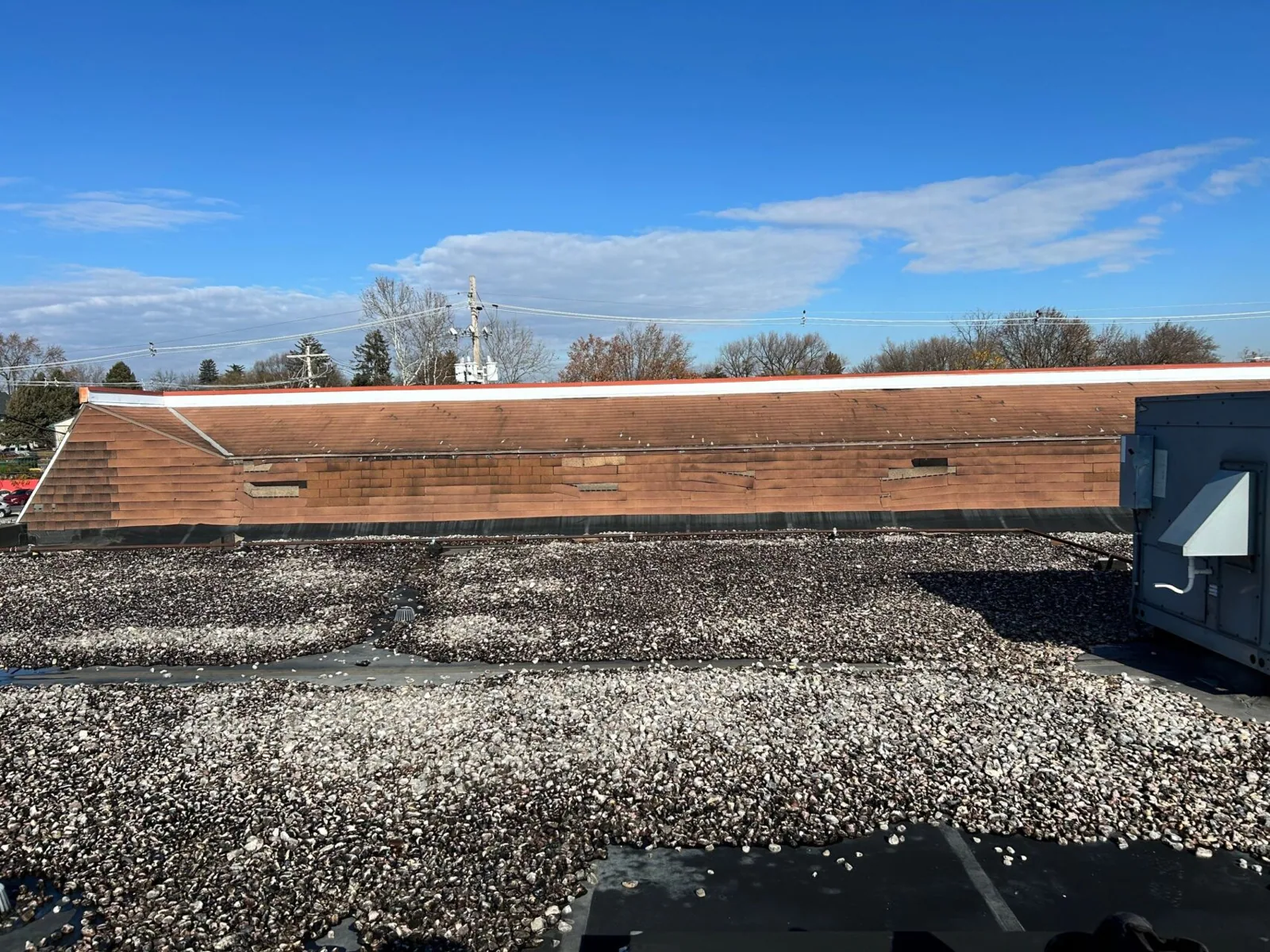
The 1966 F5 tornado crossed roughly 22 miles through Topeka, and Washburn University’s campus buildings were damaged or destroyed. That history sets the city context; a church inspection documents present conditions. After a reported hail or wind event, we photograph displaced edge metal, open seams, and punctures at the property before assigning storm-related repairs.
Repair: What must be named before removal?
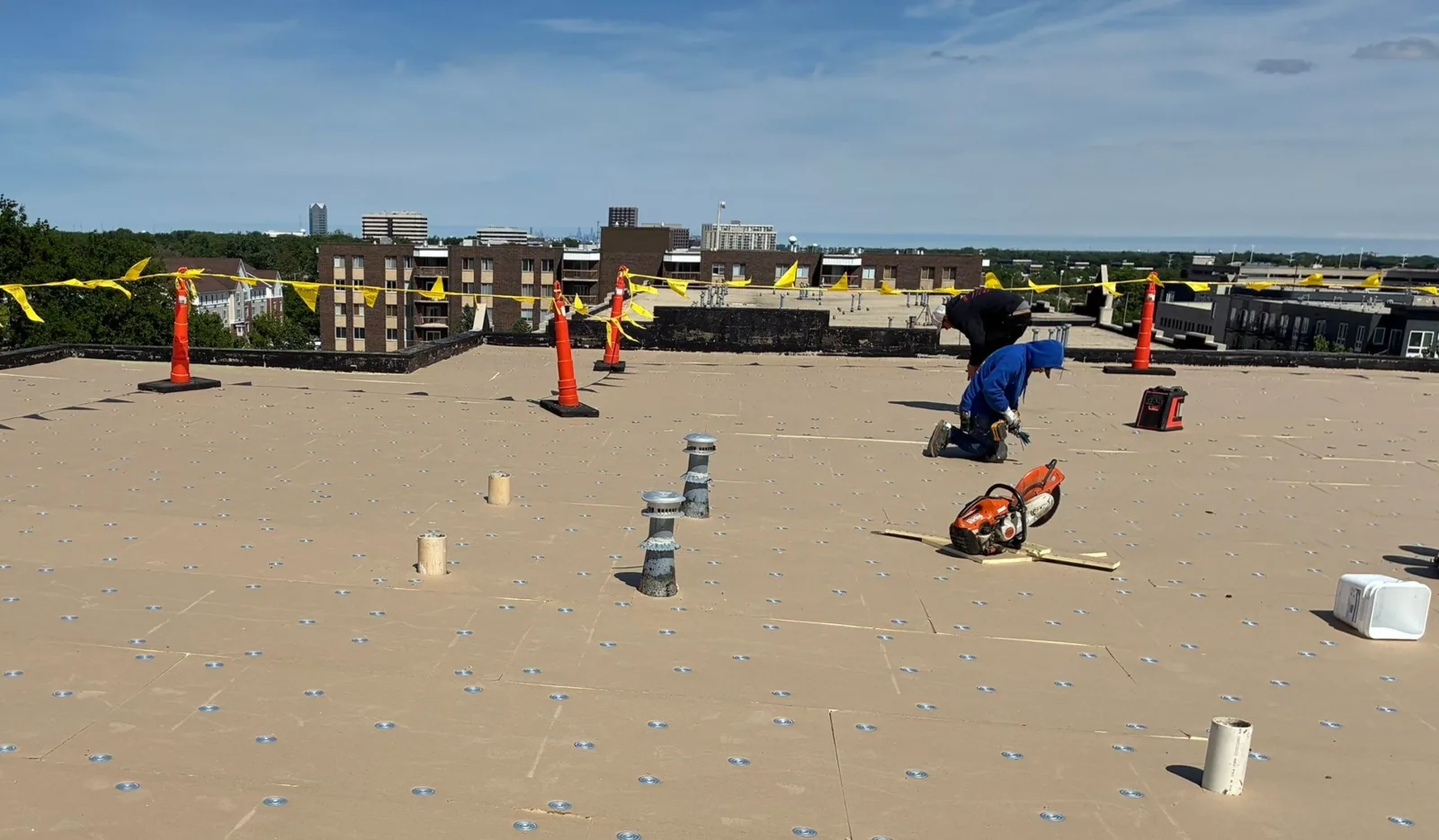
A repair proposal should identify the failed detail, preparation, compatible material, dimensions, and closeout check. The commercial roof repair scope also names interior protection and the tested boundary. When concealed material may change the quantity, the work order says who can approve added removal and how that condition will be photographed.
If wet insulation appears beneath an opening, we protect the roof and notify the authorized contact. The congregation can approve measured additional work, set another phase, or hold for a broader assessment. We keep the temporary tie-in weather-ready and state any access restriction that remains. That separates emergency mitigation from the permanent repair decision.
Emergency roof service can be requested outside regular office hours, including holidays. We coordinate entry with the church’s designated contact, cover exposed contents where needed, and note the temporary measure. Permanent work is scheduled after the roof detail and installation conditions are confirmed. The record identifies what remains open before the room is returned to its usual use.
Weather: Which conditions change the inspection?
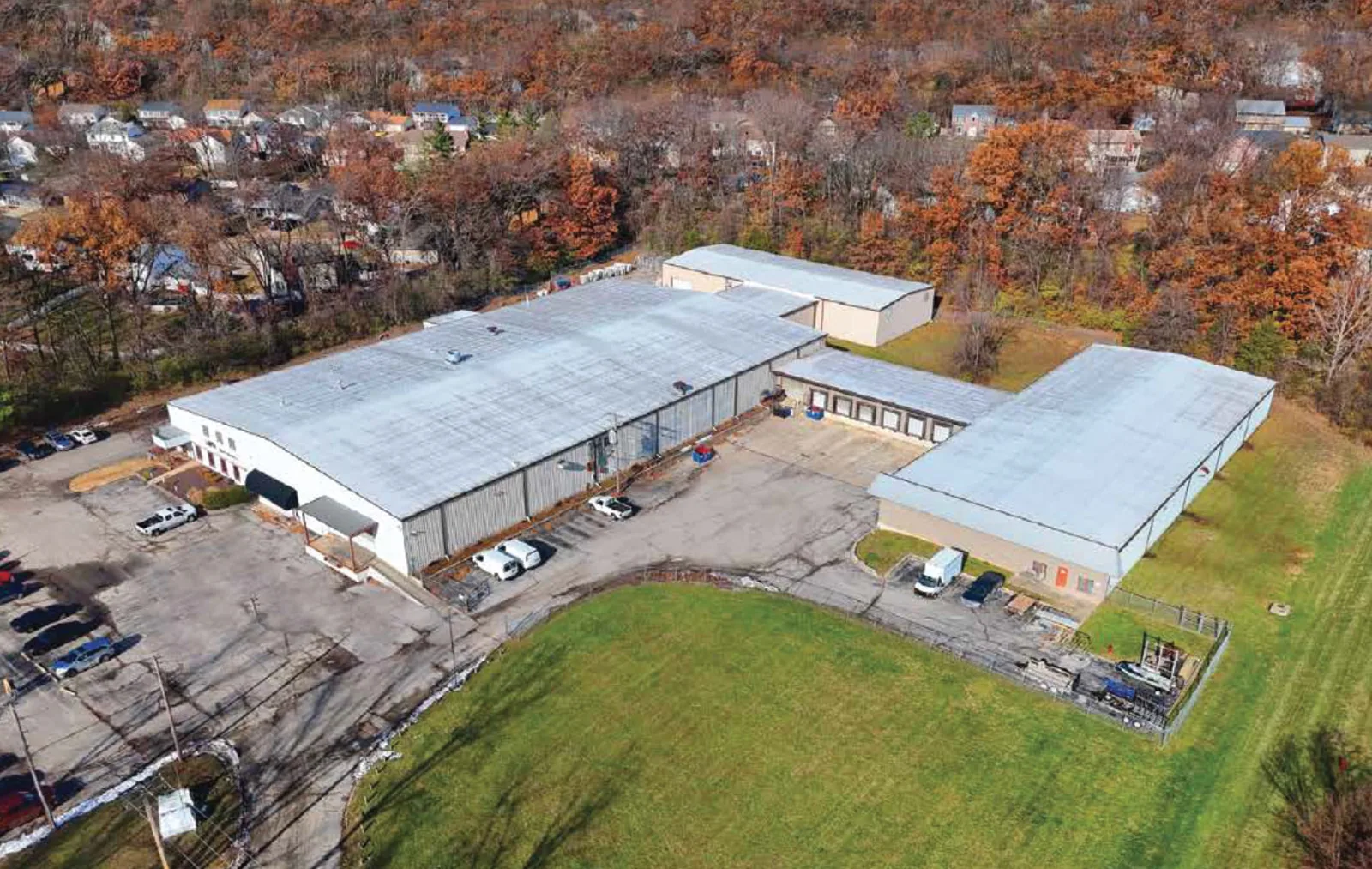
Topeka averages about 36.5 inches of precipitation each year, and the local record includes summer storms and winter precipitation. A church maintenance check should confirm that water leaves the drain bowl, clears scuppers, and does not remain at a low area after the outlet opens. Ice can make the roof route unsafe, so any inaccessible section is listed for a later visit.
Hail and wind are documented in the National Weather Service archive for northeast Kansas. After a property report, we inspect edge metal, coping, seams, and roof-mounted equipment at that location. The regional event supports a timely check; photographs and field measurements establish whether this roof has impact or movement. A storm damage inspection separates visible conditions from a repair allowance.
A leak left through repeated rain can wet insulation and change the work boundary. We note whether the stain grew, dried, or appeared in a different room after the last weather cycle. That timing helps choose between a focused opening and another observation. The written findings keep storm date, interior report, and roof test on the same record.
Compare: When does a capital option make sense?
Leaks at several roof transitions, confirmed moisture across separate zones, or recurring repairs at the same aging assembly can support a broader review. A replacement assessment compares continued repair, recover, and tear-off against deck condition, drainage, roof access, and the congregation’s calendar. Cost and schedule depend on the tested quantity and how many areas can be released together.
System selection follows the existing assembly and project requirements. TPO, PVC, EPDM, modified bitumen, built-up roofs, and metal each have different details and repair methods. A government-building scope may also require public-route planning, while a church project must account for service use and volunteer access. We show the tested facts and project assumptions for each option.
For a congregation that maintains several buildings, school roof planning offers a relevant comparison for occupied rooms and calendar-based phasing. The use and approval paths differ. Our scope maps the sanctuary, classroom, and support areas separately, then assigns the work window from the facility contact’s confirmed schedule.
Record: What should the trustees retain?
Keep the roof plan, room reports, photographs, test locations, material descriptions, and repair dimensions together. Note who approved room closures, where temporary protection was placed, and when the roof tie-in was inspected. A map should show sections that were inspected but not opened.
For a later leak, compare the room, timing, and roof feature with the previous repair. The next report may follow a different water path. A dated service file helps trustees distinguish repeat failure from a separate condition before they authorize a larger removal area.
Send the Topeka address, affected room, service calendar, access contact, and prior repair notes. We will identify the tested section, any staging limits, and a work window for the congregation’s decision.
Commercial Roofing Questions
Can roof work avoid the Sunday service schedule?
Yes, when the building contact releases a roof zone and the schedule accounts for setup, cleanup, and the room below. We record the daily tie-in and confirm reopening with the assigned contact.
How do you inspect a sanctuary leak without closing the whole building?
We connect the reported ceiling point to roof drains, transitions, and penetrations, then test the smallest useful area. Any interior barrier or room closure is listed in the phase plan.
What if roof removal finds wet insulation?
The crew protects the opening and reports the measured condition with photographs. The authorized church contact can approve added work or hold the repair at the original boundary.
Can someone respond to a leak during a holiday service?
Our on-call crew can be reached after hours and on holidays. We arrange entry through the church contact, protect the affected area, and document any permanent detail still pending.
When should trustees compare reroofing with another repair?
Repeated failures in separate zones, wet insulation beyond one opening, or widespread detail deterioration can justify a capital comparison. Testing defines the areas included in each option.
Related Roofing Work
Occupied Commercial Building Reroofing
Capitol District
Commercial Roof Inspection
Commercial Roof Infrared Moisture Survey
Commercial Roof Repair
Storm Damage Roof Repair
Choose a church roofing work window
Service Area
Topeka, Auburn, Silver Lake, Carbondale, Rossville and Shawnee County, KS
Quick Contact
Email: [email protected]
Phone: 555-555-5555
Request a Roof Assessment
Send the Topeka address, affected room, service schedule, access contact, and available roof records. We will mark the tested section and access plan.