
Commercial Roofing in Historic Kansas Avenue District, Topeka, KS
Home / Service Areas / Historic Kansas Avenue District
Retail, office, civic, and adaptive-reuse projects appear in the downtown redevelopment context around Historic Kansas Avenue District. Topeka's master plan identifies the district as one of nine in the core. That planning label does not establish the age, material, or condition of a particular roof. We begin with the building address, roof records, and current concern. Then we check the accessible assembly, trace reported water, and record tested and untested areas separately. That gives an owner a measured repair boundary without making assumptions from the district name.
Property history: Which records still fit the roof?
Roof files can span ownership changes, tenant work, and separate repair phases. We review roof plans, invoices, previous service notes, and photos, then compare them with exposed field conditions. A previous document may identify one section but not later repairs. We note the document date, roof zone, and product detail it supports. If a material remains uncertain, we list the field evidence needed to confirm it before a repair product is ordered.
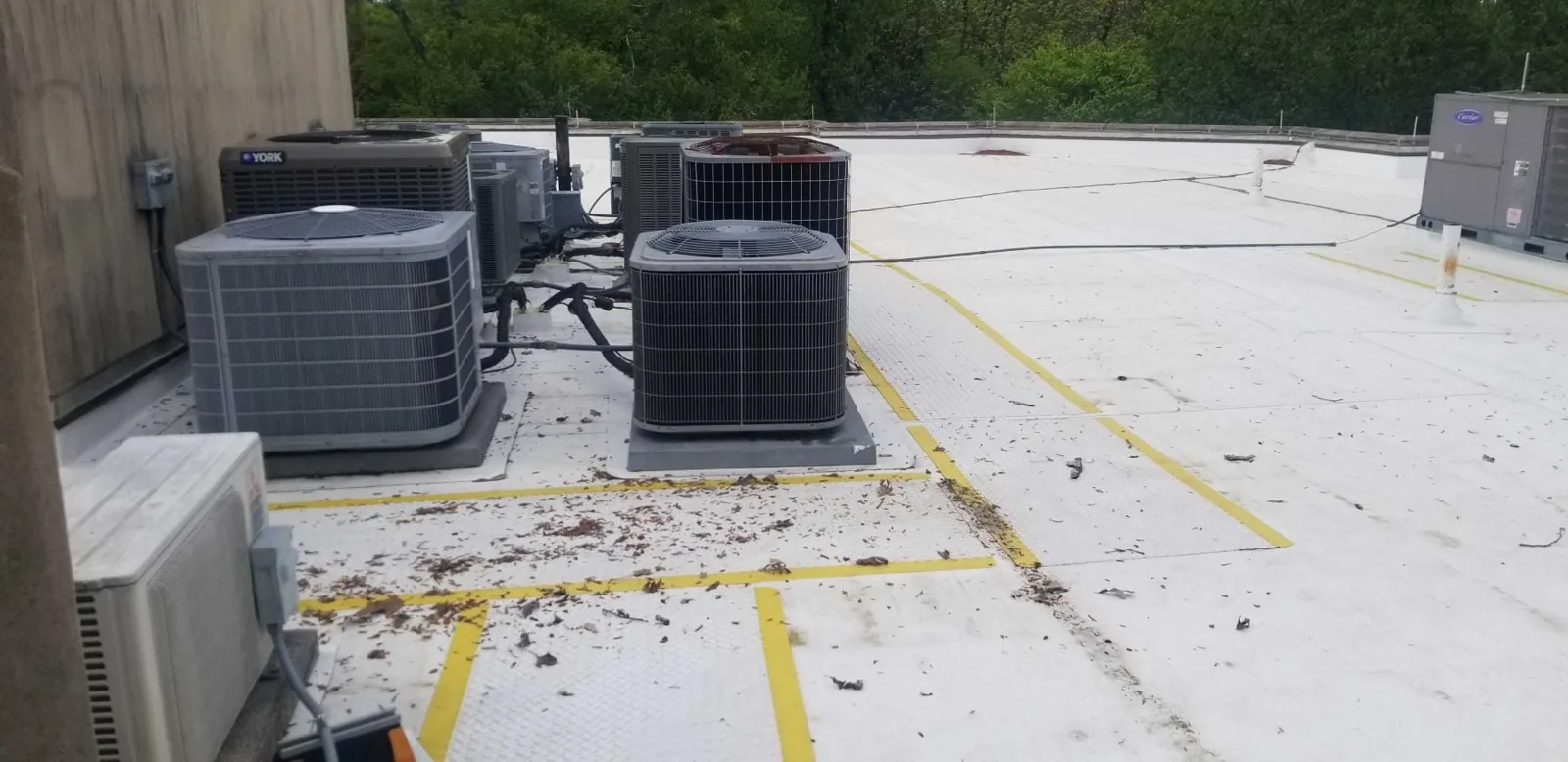
When building use or fit-out changes, new equipment, penetrations, or service routes can affect roof details. We identify proposed curbs and support points on the plan and compare them with seams, drains, and existing transitions. A curb and equipment review can help coordinate detail work before membrane is cut. For an existing leak, we first inspect the installed assembly and identify whether a previous repair is involved.
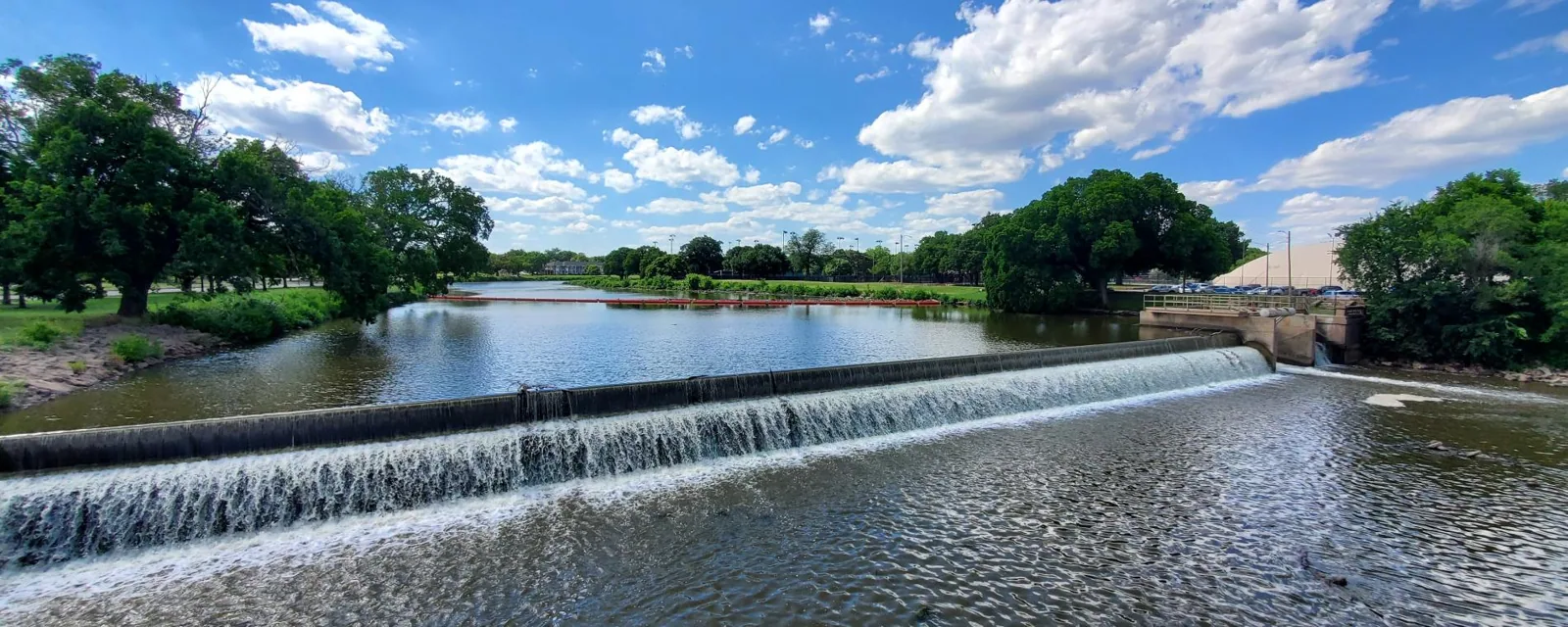
The downtown framework includes the Capitol District and River South District as distinct named areas. River South planning includes industrial, repurposed, and new-development properties. Each district and building has separate records; the work plan uses the address under inspection rather than transferring facts between locations.
Historic blocks may combine older structures, later additions, and reused commercial spaces, so visual age alone is not a reliable guide to the roof assembly. We compare available drawings and repair records with exposed edges, drains, and transitions at the building. If a parapet or concealed deck detail cannot be inspected, the report says so and identifies the access or test needed next. For occupied storefronts, staging and overhead protection are coordinated with the responsible property contact. The documented roof zone matters more than the district-wide label when pricing repair quantities.
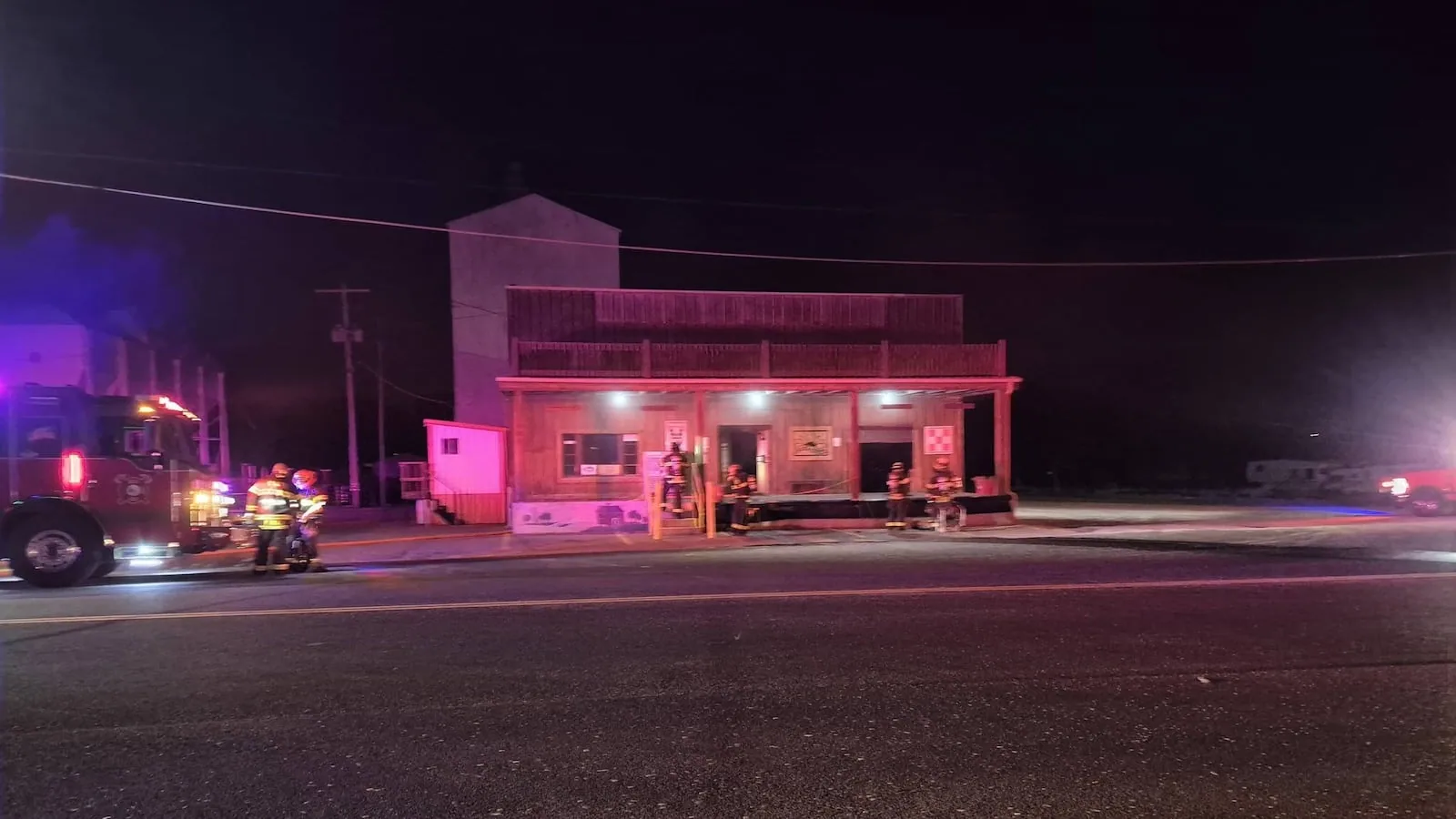
Inspection: How is the leak path checked?
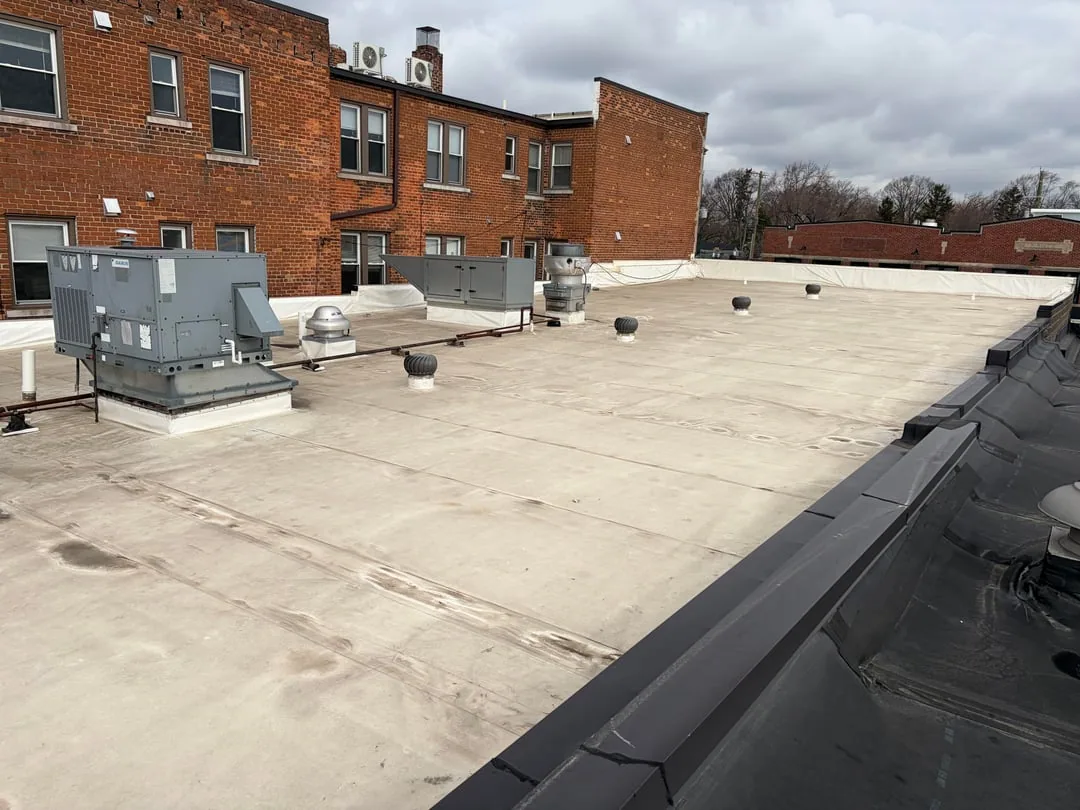
We inspect the roof covering, laps or seams, flashings, drains, scuppers, curbs, penetrations, and perimeter details. The district facts describe downtown land-use context, not an individual roof assembly. We identify membrane or metal from available records and exposed details. A commercial inspection marks zones reached, visible defects, and places that remain inaccessible.
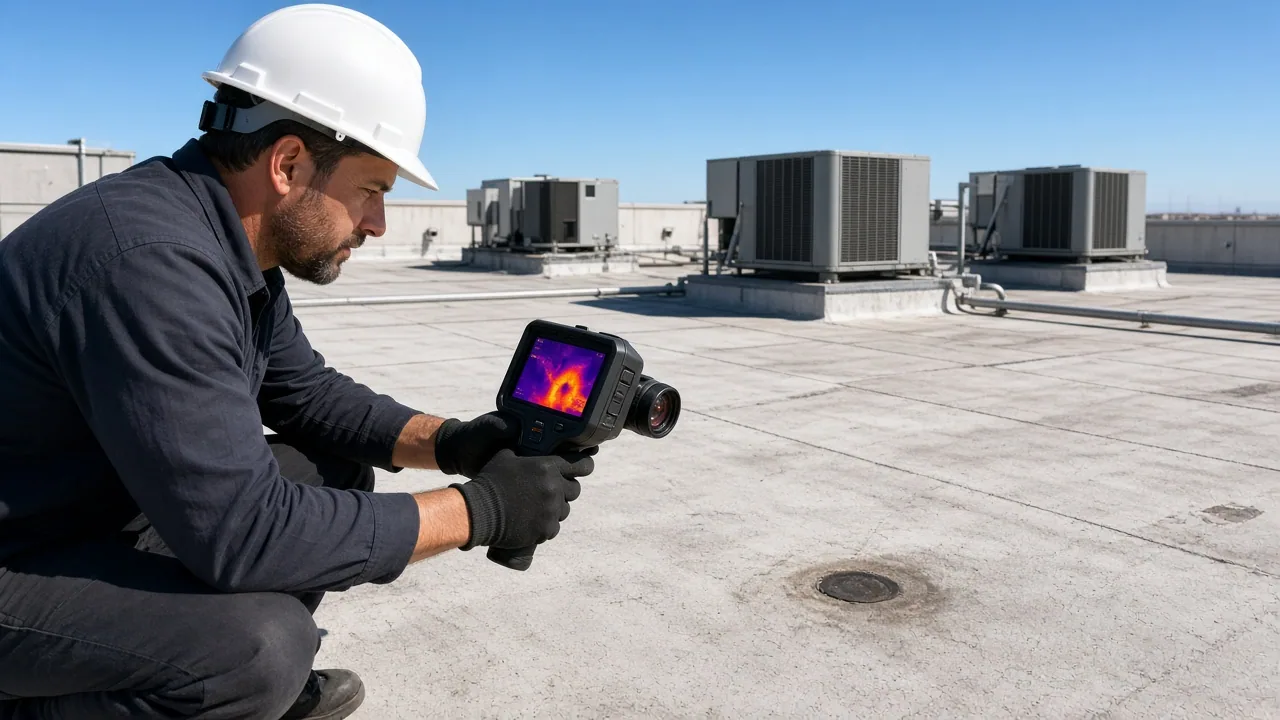
An interior water mark is one piece of evidence. Water can move along insulation or the deck before entering the room. We compare the report with drains, low areas, roof transitions, and the likely water path. If moisture beneath the membrane could change quantity, we identify a scan or opening that would answer that question. Moisture screening may help select test locations, while the report preserves the limits of each reading.
Topeka climate normals show about 36.5 inches of yearly precipitation with both warm-season storms and winter precipitation. We check drain bowls and overflow routes after water clears and note whether adjacent laps or flashing show stress. Severe hail and wind are also recorded in the region. If a weather event leads to an inspection request, we compare current impact or displacement evidence with previous patch history and dated photos. The findings remain tied to the building address.
Drainage and access: What affects future service?
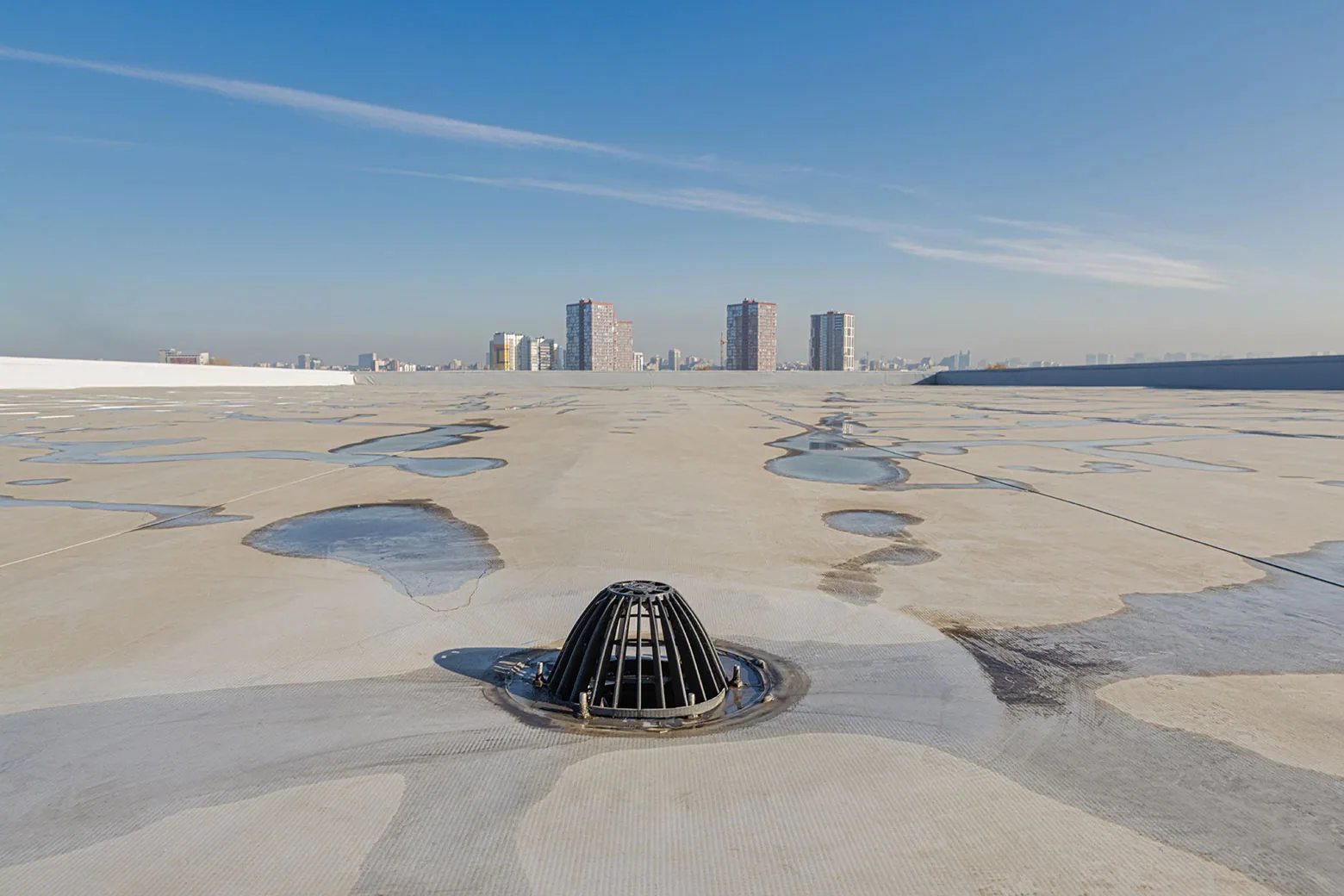
We check outlet condition, overflow capacity, slope to drains, and any low area where water remains after the outlet clears. A clogged drain, wet insulation, and failed seam need separate findings because each has a different repair method. Winter precipitation can affect safe roof entry; ice may postpone hands-on inspection. We record the access limit and schedule follow-up when the surface can be reached safely. A drainage repair scope can address a blocked or damaged outlet separately from membrane work.
Downtown Topeka includes public destinations, businesses, retail, and entertainment. A property representative can identify public hours, delivery routes, access approvals, and the area available for material staging. We confirm those procedures at each site. If work continues while occupants remain inside, a phased roof plan can identify protection, daily dry-in, and the work zone scheduled for each window.
For maintenance, we record drains, seams, flashings, previous repairs, and any change since the last inspection. A maintenance visit can set follow-up timing around observed conditions. The property file should say which sections were inspected and which remain unknown, so future staff do not rely on a broad label alone.
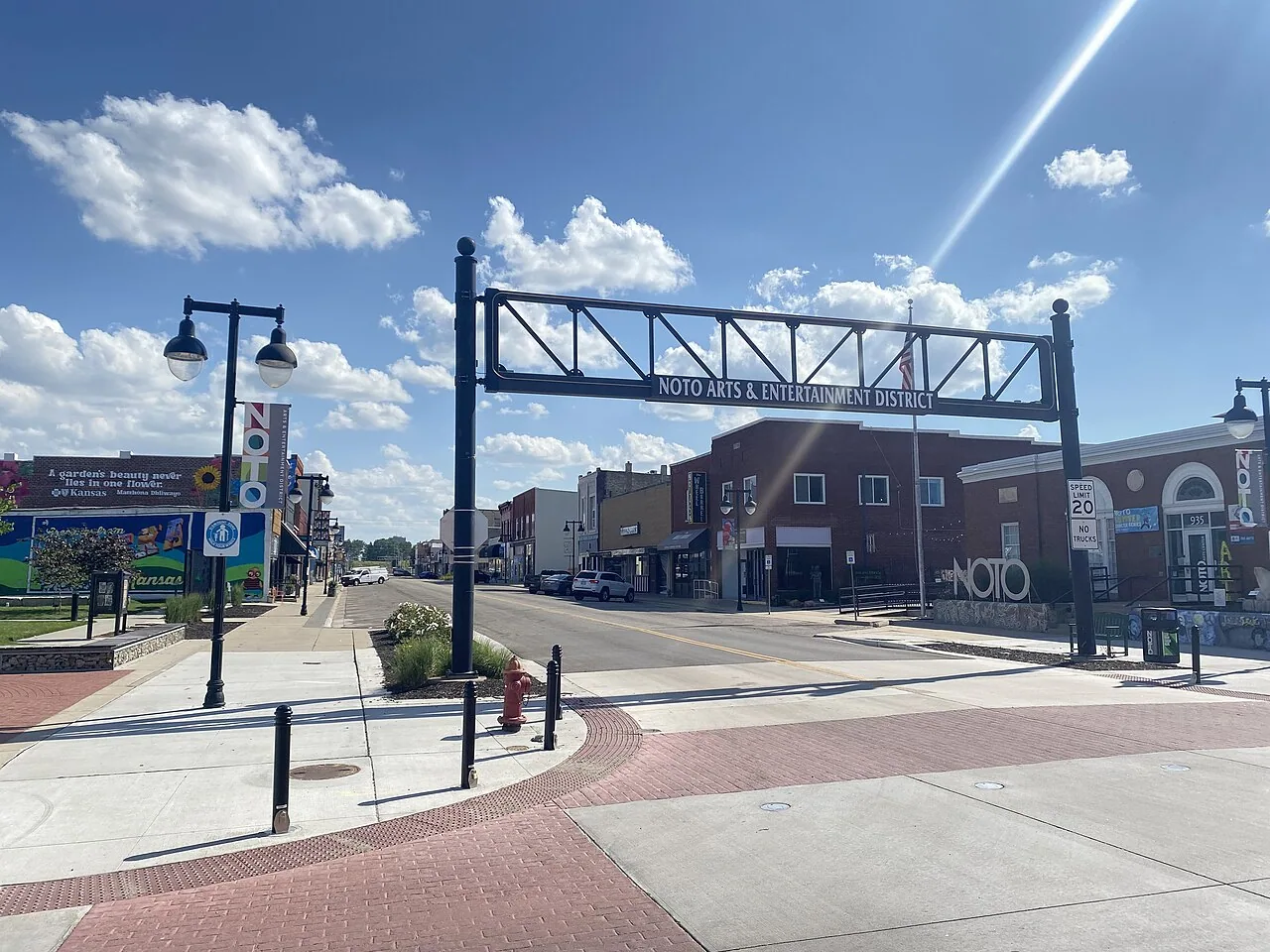
Repair options: What does the evidence support?
A localized puncture, failed flashing, or separated seam may support repair where nearby material and substrate remain sound. We remove loose material, prepare the surface, restore a compatible detail, and photograph the completed boundary. If testing identifies wet insulation, the repair may extend beyond the visible opening. If test results are dry around an isolated defect, a local correction may remain supportable. We list tested area, concealed conditions, and the result that could change quantity.
Recurring leaks, broad deterioration, failed attachment, or moisture across several zones may call for recover or replacement comparison. We inspect deck, insulation, cover board, edges, drains, and penetrations before proposing a larger scope. A recover review checks attachment and moisture. A claim-support file can retain dates, photos, and observed roof conditions when a storm is reported, without making a policy decision.
Cost and timing depend on roof height, staging, public-area protection, access hours, material handling, testing, and whether the work requires a return visit. New discoveries after opening remain separate from the approved measured scope until the owner reviews them. That keeps historic records, current conditions, and proposed work in their proper time sequence.
Closeout: What should be handed to the next manager?
Keep inspection dates, roof maps, photos, system notes, test locations, repair dimensions, access contacts, and owner approvals in the property file. Label temporary protection separately from permanent repair. A future leak can then be compared with the correct roof zone and previous work. If a section could not be reached, the closeout should state what access is needed to complete the review.
A dated condition report preserves measurements and open questions. For a manager with multiple Topeka properties, a roof asset record can keep each building's repair history separate. The report should identify whether observations were visual, tested, or based on older records. That distinction supports better scheduling and budgeting when ownership or use changes.
For service in Historic Kansas Avenue District, send the property address, concern, access contact, and available roof plans or repair notes. We will inspect the accessible section, record limits and tests, and explain the next owner decision.
Commercial Roofing Questions
Does the word historic tell you the building's roof age?
No. The district name does not establish an individual building's roof age or assembly. We use available records and field conditions to identify the system and repair history.
Can roof repairs be planned while businesses remain open?
The property contact confirms work hours, entrances, staging, and interior protection. We sequence repairs by roof zone and record the daily closeout plan.
How do you handle roof records from several renovation phases?
We connect each plan, invoice, and photo to its date and roof zone, then compare that record with what is installed now. Unconfirmed details remain listed for testing.
What can winter weather change about the inspection?
Snow, ice, and wet surfaces can limit safe roof access. We record what could not be reached and schedule a return when hands-on inspection is safe.
When should an owner consider more than a spot repair?
Repeated defects, broad attachment problems, or wet insulation across several areas may justify additional testing or replacement pricing. We show the evidence and separate options.
Related Roofing Work
Commercial Rooftop Equipment Curbs and Supports
Capitol District
River South District
Commercial Roof Inspection
Commercial Roof Infrared Moisture Survey
Commercial Roof Drains and Scuppers
Review the roof record and current condition
Service Area
Topeka, Auburn, Silver Lake, Carbondale, Rossville and Shawnee County, KS
Quick Contact
Email: [email protected]
Phone: 555-555-5555
Request a Roof Assessment
Provide the Historic Kansas Avenue property address, current concern, access contact, and available project or repair records. We will inspect the affected zone and set a measured scope.