
Duro-Last Commercial Roofing in Topeka, KS
Home / Roofing Manufacturers / Duro-Last Commercial Roofing
A Duro-Last roof can arrive with factory-welded seams and custom-fabricated sheets, but field transitions still need inspection. We check the installed PVC, corners, penetrations, drains, and repair history before selecting compatible material. The roof layout and current condition set the boundary, even when old closeout files show a completed custom package. Topeka has documented hail and wind events, and winter precipitation adds seasonal drainage checks. A property near North Topeka East has an industrial maintenance context; buildings in the Capitol District have a public and downtown setting. The operator confirms current access and staging rules.
Fabrication: What does the custom layout change?
Duro-Last manufactures PVC membrane and describes custom-fabricated roof sections with factory-welded seams. That can reduce field seams, but site-made transitions and later repairs still need inspection. We compare available roof plans with sheet dimensions and seam positions in the field. A repair may affect a factory seam, field weld, flashing, curb wrap, or an earlier patch, and each condition has its own repair boundary.
The custom sheet layout also makes accurate roof measurements useful. We record roof zones, dimensions, penetrations, drains, edges, and changed panels. If records identify the membrane, we check that information against the exposed sheet and accessories. If the file is incomplete, we describe the observed PVC system and list what still needs confirmation. We compare current panels and details with the original fabrication records, and mark any changed or unconfirmed section.
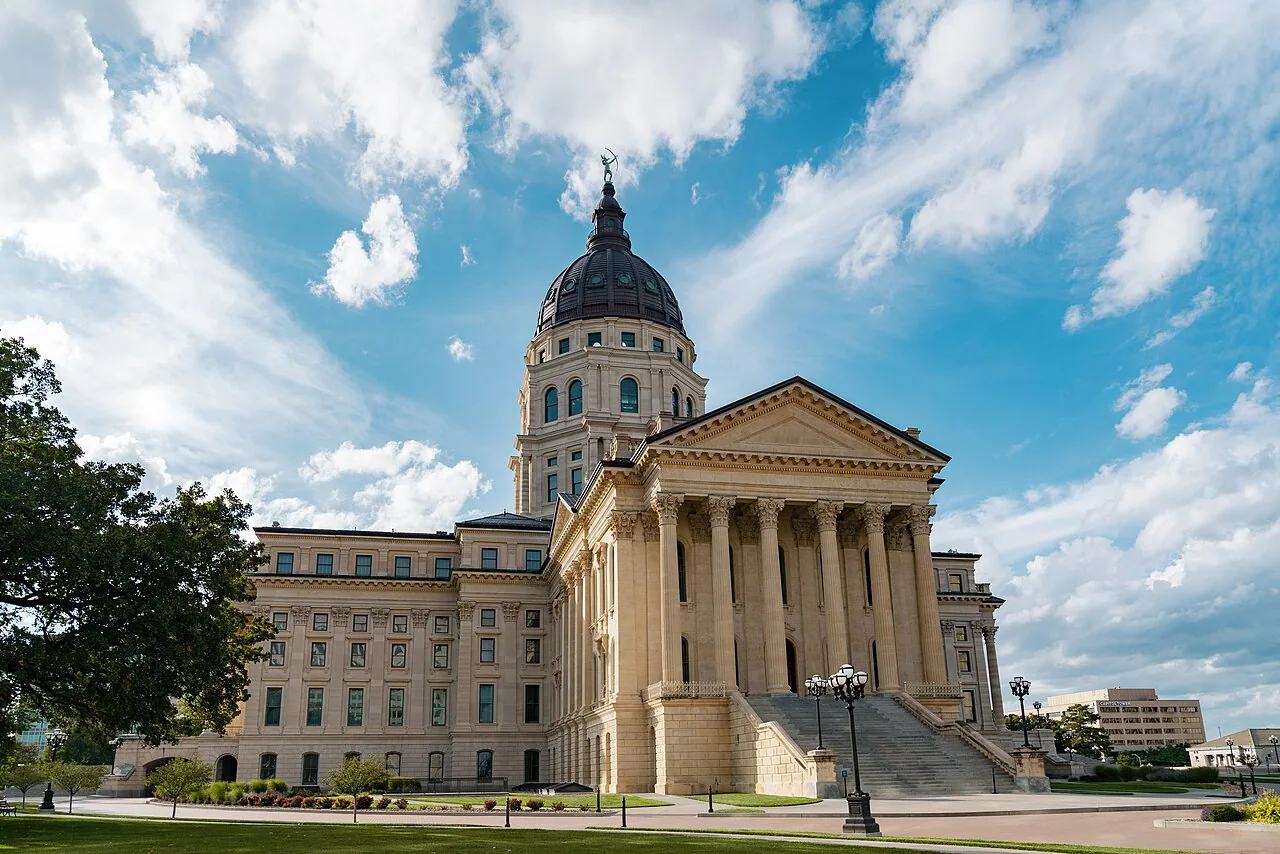
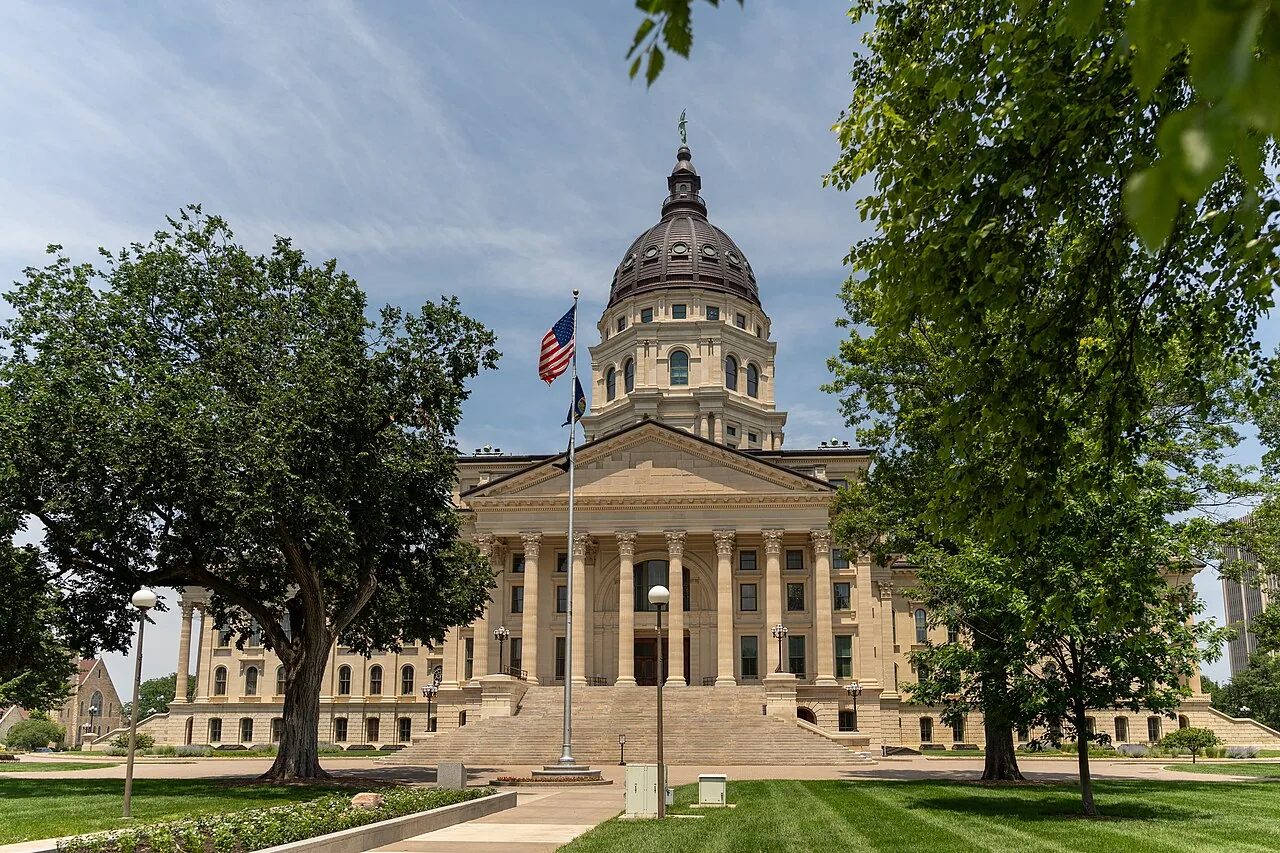
At BNSF Topeka Shops, railroad records identify a locomotive maintenance shop. At the Capitol District, the downtown plan identifies a mix of office, civic, retail, and adaptive-reuse properties. These details make access and schedule questions relevant, but do not tell us the roof assembly at any address. We confirm procedures with the property's contact. A roof inspection maps the roof sections reached and identifies details that need a closer test.
Field inspection: Which detail is failing?
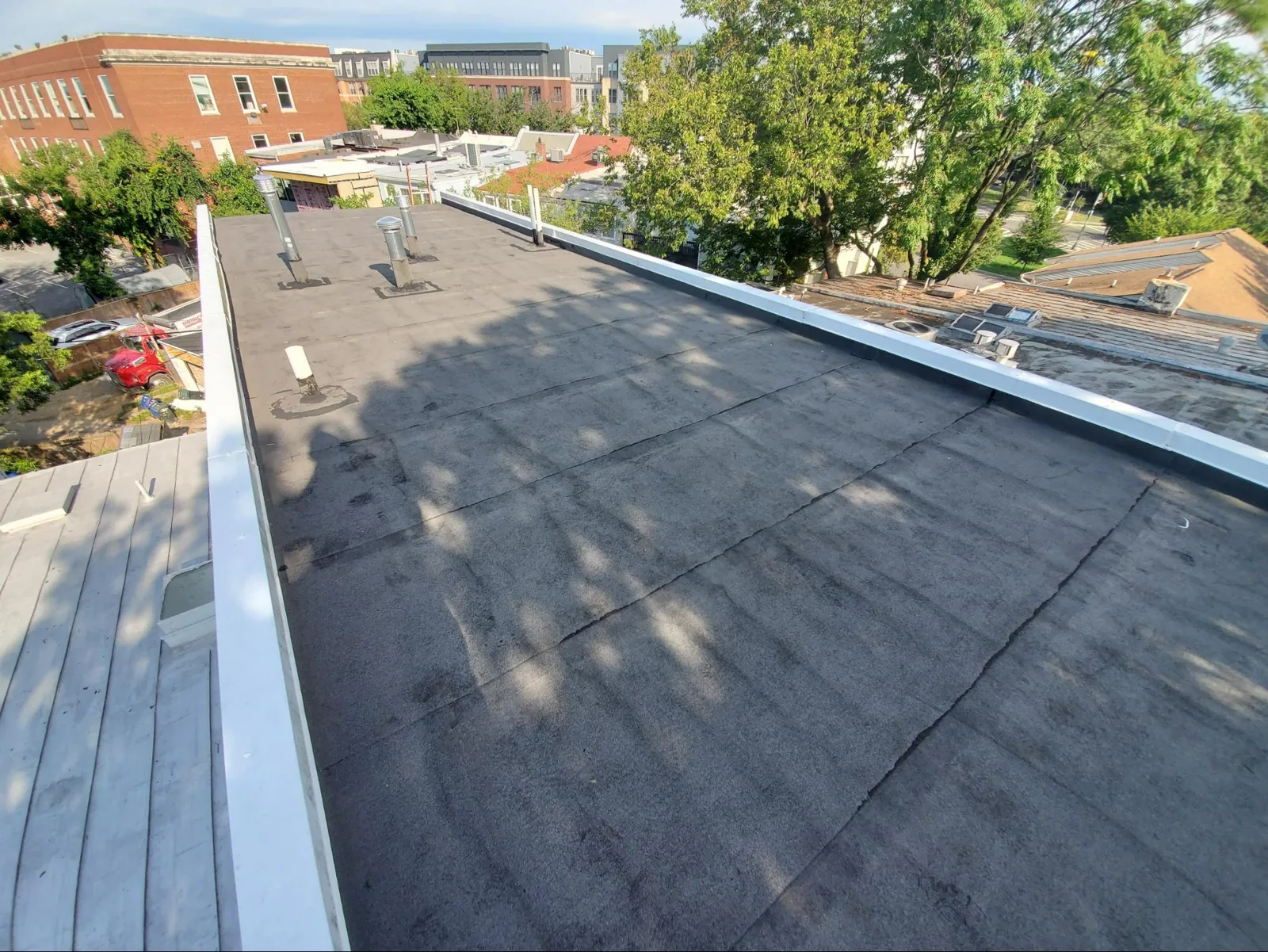
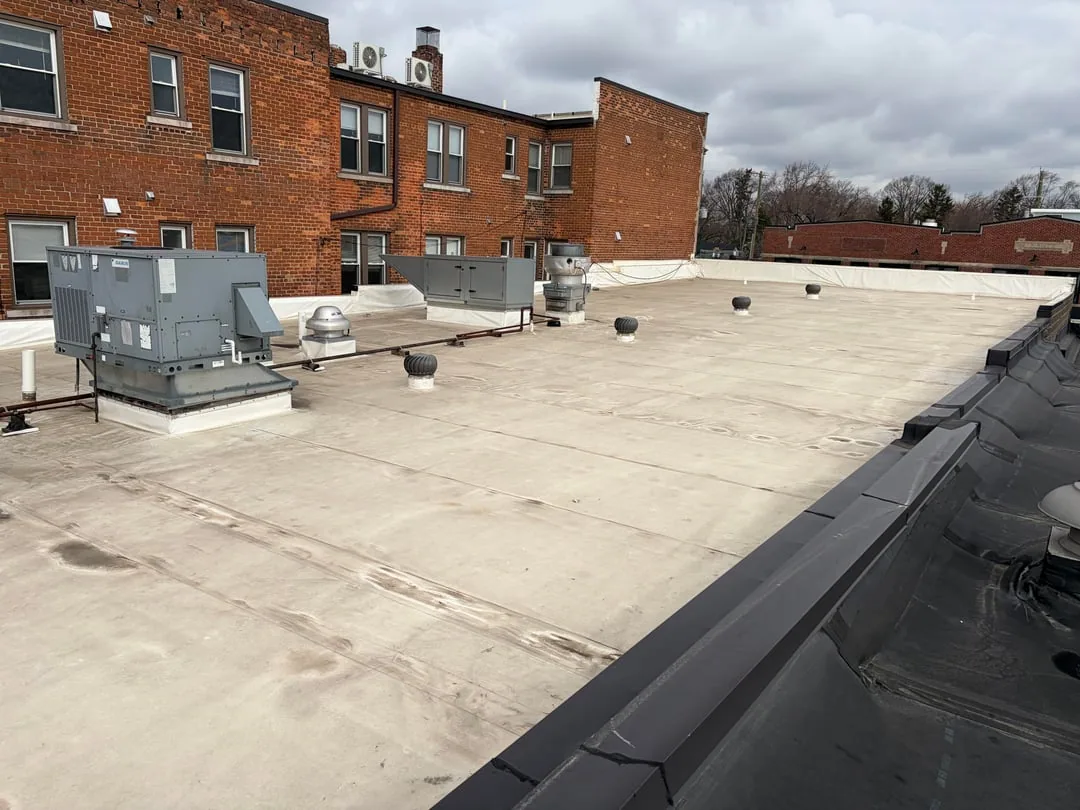
We inspect PVC field sheet, lap edges, flashings, pipe penetrations, curbs, drains, roof edges, and previous repairs. Factory seams can remain sound while a curb or termination opens. A leak report below should be compared with the roof's water path, not assigned directly to the nearest penetration. Photos show nearby features and the tested section. If a repair has covered an earlier detail, the scope may need a selected opening to see which layer is still intact.
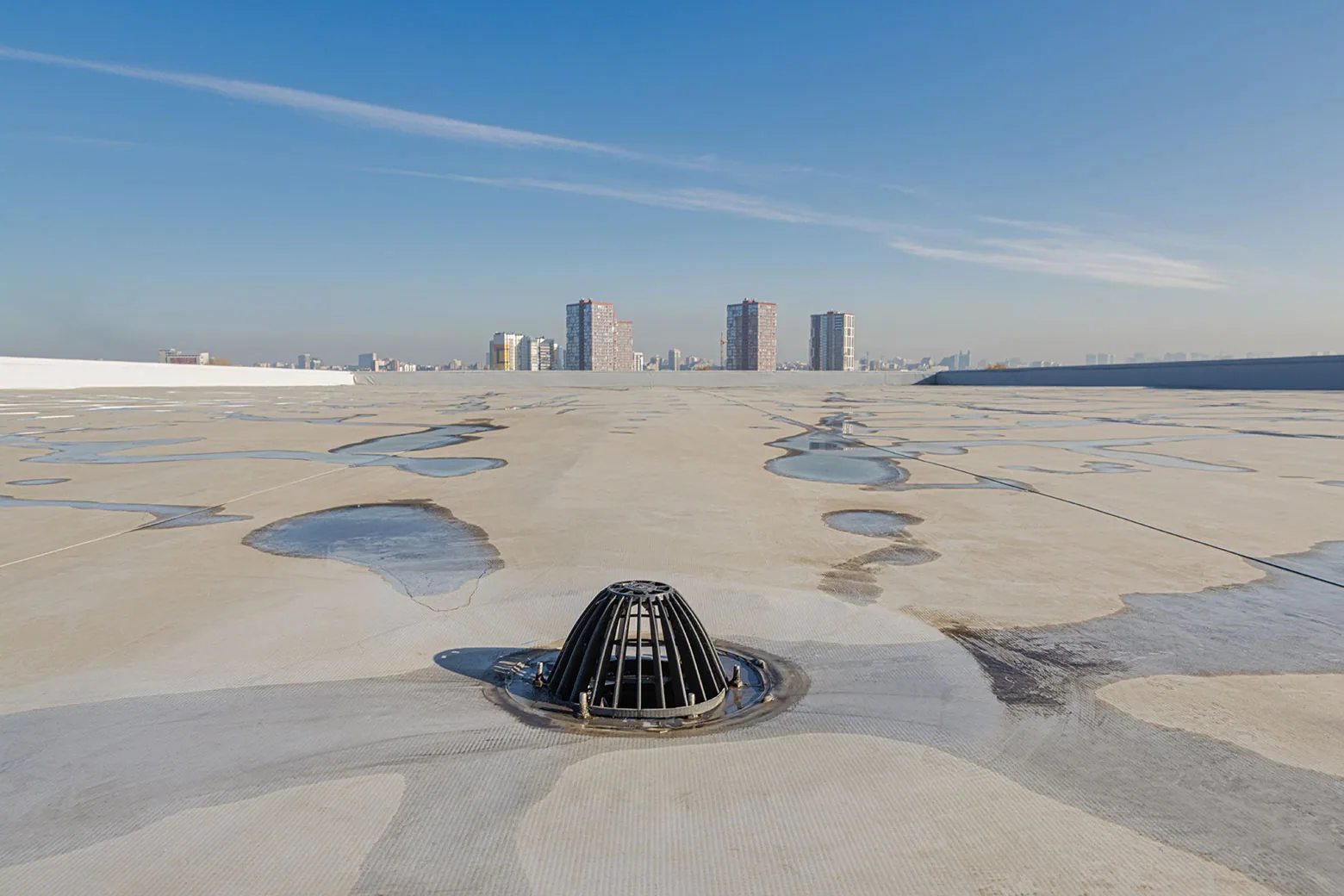
Topeka's annual precipitation averages about 36.5 inches and includes summer thunderstorms and winter precipitation. We look for debris in the drain bowl, a slow outlet, low areas, and seam or flashing conditions exposed to standing water. Ponding does not by itself establish membrane failure. If moisture could be concealed below the PVC, infrared screening or test cuts can help define the area. A test point represents its location, not the full roof. We separate tested results from visible observations and uninspected areas in the report.
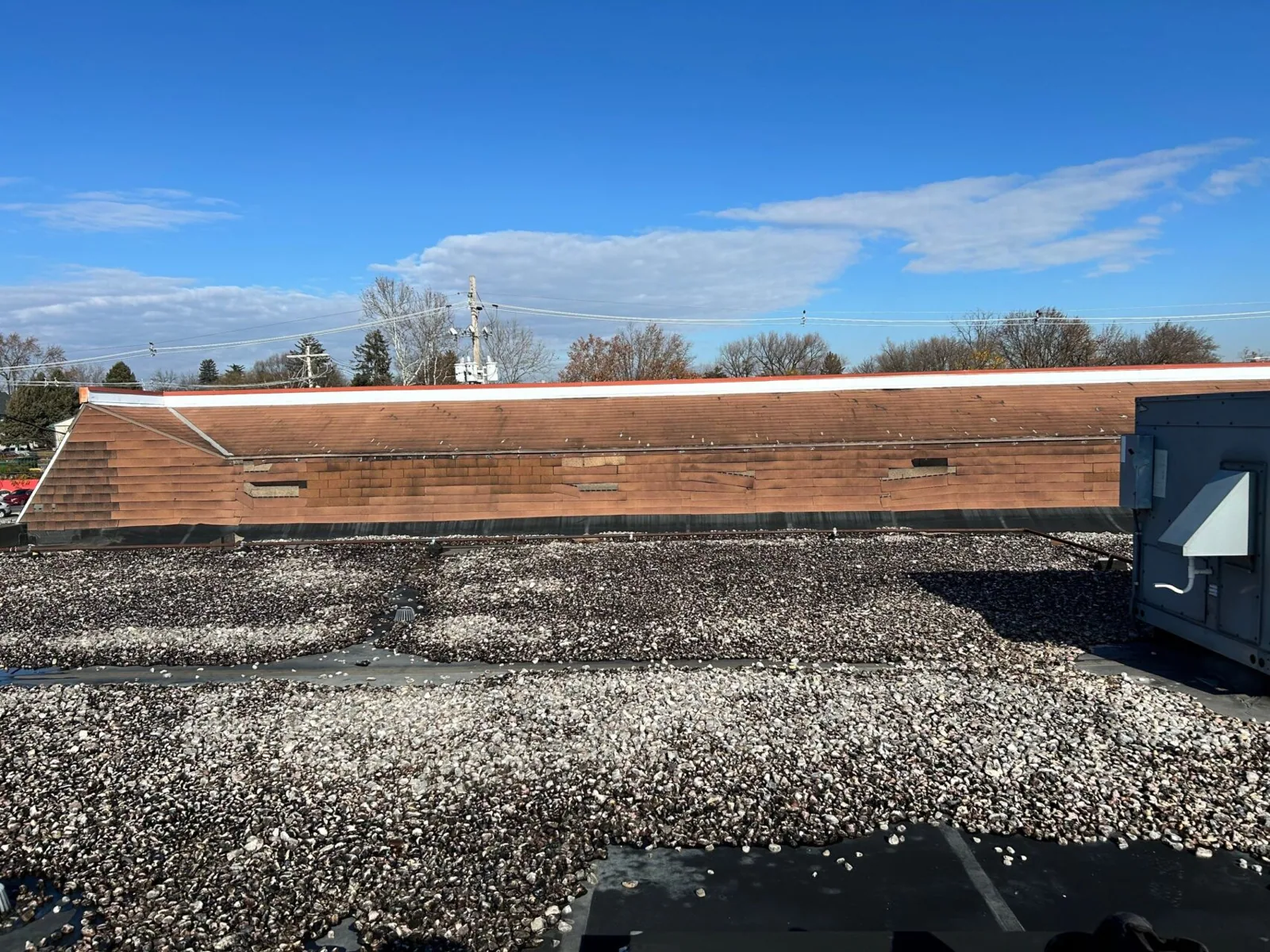
Wind and hail appear in the local National Weather Service event archive. Following a reported storm, we inspect for impact, lifted edge metal, punctures, loose terminations, and pre-existing wear. A storm damage review documents what is present at the property without assigning cause from the regional record alone. If the roof has a previous Duro-Last repair, we compare that area with the new defect and identify whether the existing weld or patch remains intact.
Repair detail: How is the PVC restored?
We prepare the membrane and select compatible PVC material for the actual detail. Loose or contaminated sheet is removed to sound material, then the patch or flashing is positioned with the needed overlap. Field seams are heat welded and checked after cooling. Corners, T-joints, curb returns, and edge terminations receive close review because a small transition can control the water path. The closeout record includes location, measured size, preparation, material type, and photos.
Repair size depends on more than the visible split. If moisture testing finds wet insulation, the work may extend to dry material and restore the layers below the sheet. If the insulation is dry and the defect is isolated, a local patch can be compared with continued monitoring. If the membrane has repeated failures, brittle areas, failed attachment, or moisture across multiple sections, the owner may need a broader estimate. Each option identifies the evidence behind its quantity and any condition that could change after opening.
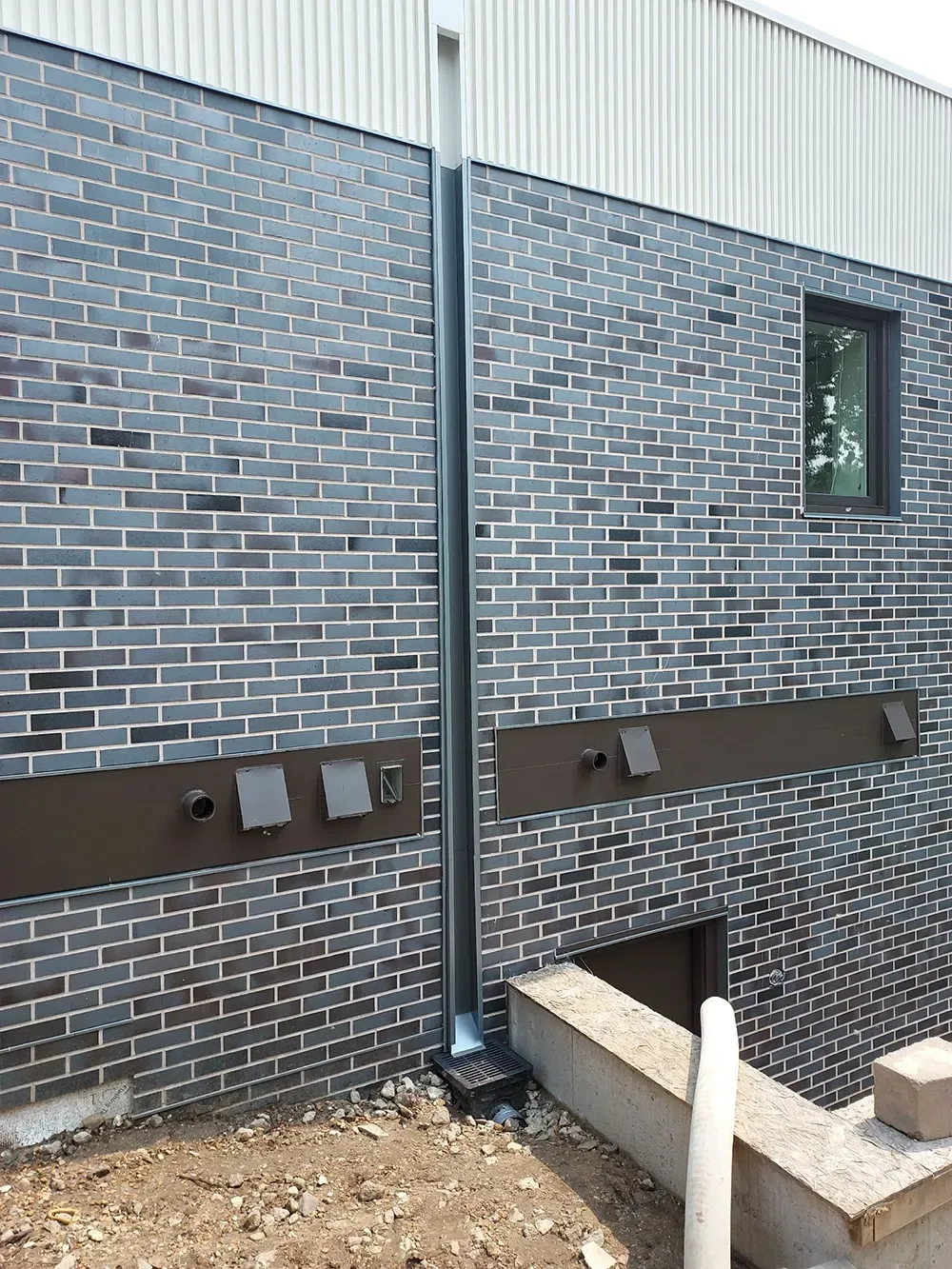
Drainage and perimeter details are part of the assembly review. A successful field patch will not correct a loose edge, failed curb, or drain connection. We check nearby flashing and termination points, then include them where inspection supports additional work. A perimeter detail review or drainage repair scope can address those interfaces. We keep separate quantities when the roof sheet and a metal or drain component need different repair steps.
Options: Repair, test, or replace?
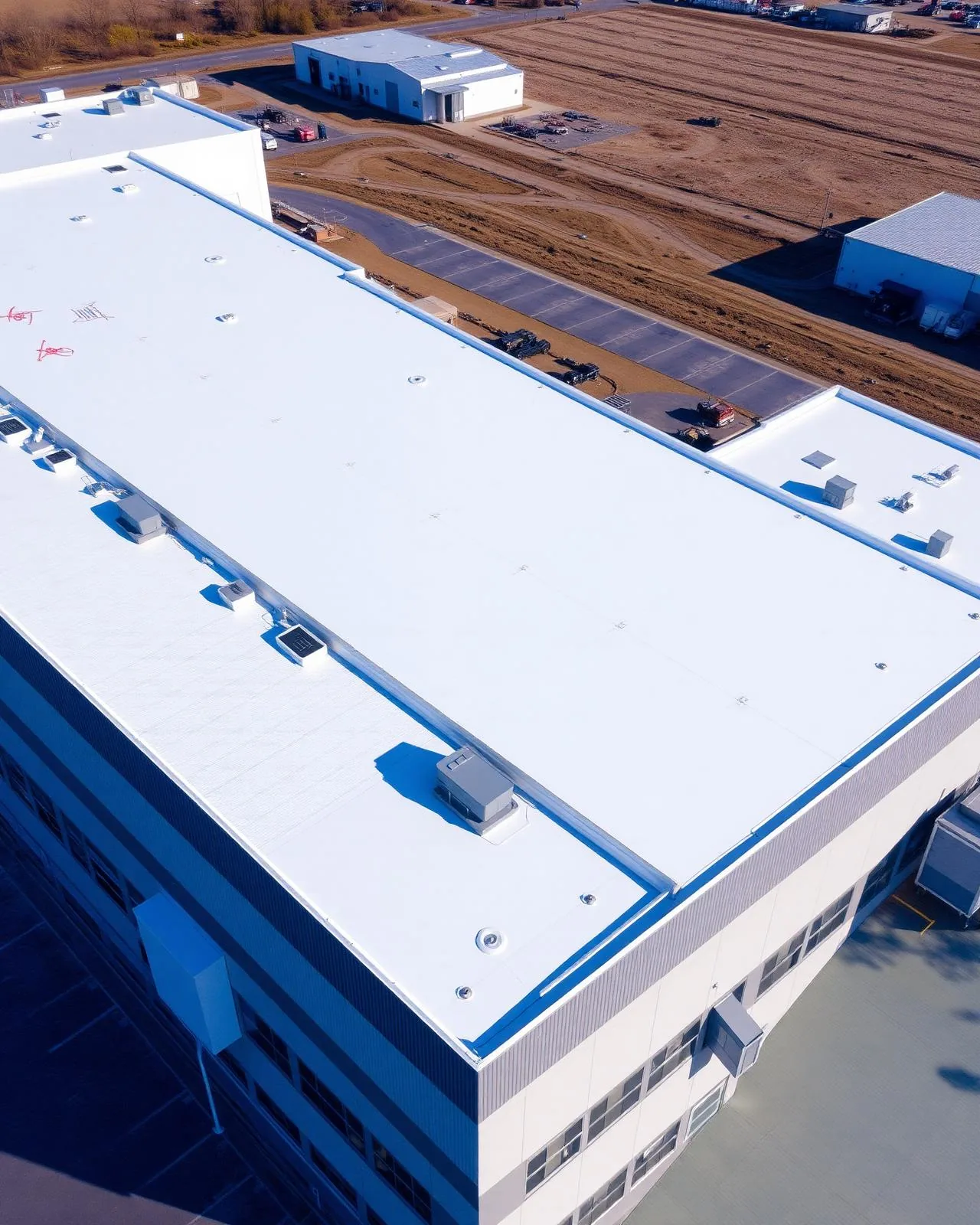
A repair is appropriate when the defect has a bounded edge and adjacent PVC can accept a compatible weld. Further testing is useful when wet insulation, deck condition, or a concealed transition could change scope. Replacement may be considered when failures recur across multiple zones or when testing finds a broader wet assembly. We state the evidence, quantity, access assumptions, and owner approval point for each option. A product description alone does not select the right path.
Access, sheet dimensions, curb and edge work, drains, substrate repair, staging, and occupant protection affect cost and timing. Factory fabrication can inform a new layout, but field measurements and current roof conditions still matter. We identify whether a proposal includes only the tested section or a broader reroof. If the owner needs a phased replacement, a phased work sequence can define daily boundaries and temporary weather protection.
Owners comparing PVC products may review Sika Sarnafil membrane options and Versico PVC systems. The assembly, attachment, substrate, drainage, and access remain part of that choice. Manufacturer literature may describe available components; project documents and inspection determine the appropriate specification. Warranty applicability and term follow the submitted project documents and the manufacturer’s written requirements.
Closeout: What should stay in the roof file?
Keep the roof plan, product documents, inspection photos, repair boundary, test results, closeout pictures, and the person who approved the work together. Mark the date and roof zone for each item. A future leak can then be compared with previous repairs instead of treated as the same defect by default. The file separates temporary protection, completed work, test results, and inaccessible areas.
A dated roof condition report can preserve measurements, test locations, and open questions. A multi-building maintenance file can group records while keeping each property's roof map separate. The BNSF industrial shops and downtown Capitol District illustrate the different types of operating environments in Topeka, but current access rules come from the property. We record those confirmed site rules with the roof inspection rather than copying them between buildings.
For a Duro-Last assessment, send the Topeka address, leak or damage location, access contact, and any original fabrication or repair records. We will identify the observed membrane, check the affected section, and document a measured repair boundary with unknown conditions listed separately.
Commercial Roofing Questions
Do factory-welded Duro-Last sheets eliminate field seams?
Custom fabrication can reduce the amount of field seaming in the planned layout, but field connections, flashings, and later repairs still require inspection. We compare the original layout with roof conditions now present.
Can any PVC patch be used on a Duro-Last roof?
We confirm membrane compatibility and detail before selecting repair material. Surface preparation, overlap, heat-weld settings, and the condition beneath the sheet all affect the repair.
Will an interior stain show which factory sheet leaked?
Not necessarily. Water can travel beneath the membrane or along the deck before it appears inside. We inspect nearby seams and transitions, then map tests and confirmed openings by roof zone.
How do you evaluate a Duro-Last roof after a Topeka storm?
We document address-level evidence such as punctures, lifted edges, displaced details, and existing wear. A regional event record provides context but does not determine the condition of a specific building.
What should I provide before pricing a custom-sheet repair?
Send the address, roof plan or fabrication records, reported leak, previous repair notes, photos, and access contact. Field measurements confirm whether the proposed scope matches the current layout.
Related Roofing Work
North Topeka East
Capitol District
Commercial Roof Inspection
Storm Damage Roof Repair
Commercial Roof Edge Metal, Coping, and Gutters
Commercial Roof Drains and Scuppers
Measure the PVC repair boundary
Service Area
Topeka, Auburn, Silver Lake, Carbondale, Rossville and Shawnee County, KS
Quick Contact
Email: [email protected]
Phone: 555-555-5555
Request a Roof Assessment
Provide the Topeka property address, current roof concern, access contact, and any Duro-Last fabrication or repair records. We will inspect the affected sheet, test where needed, and document compatible work.